Eski Pano
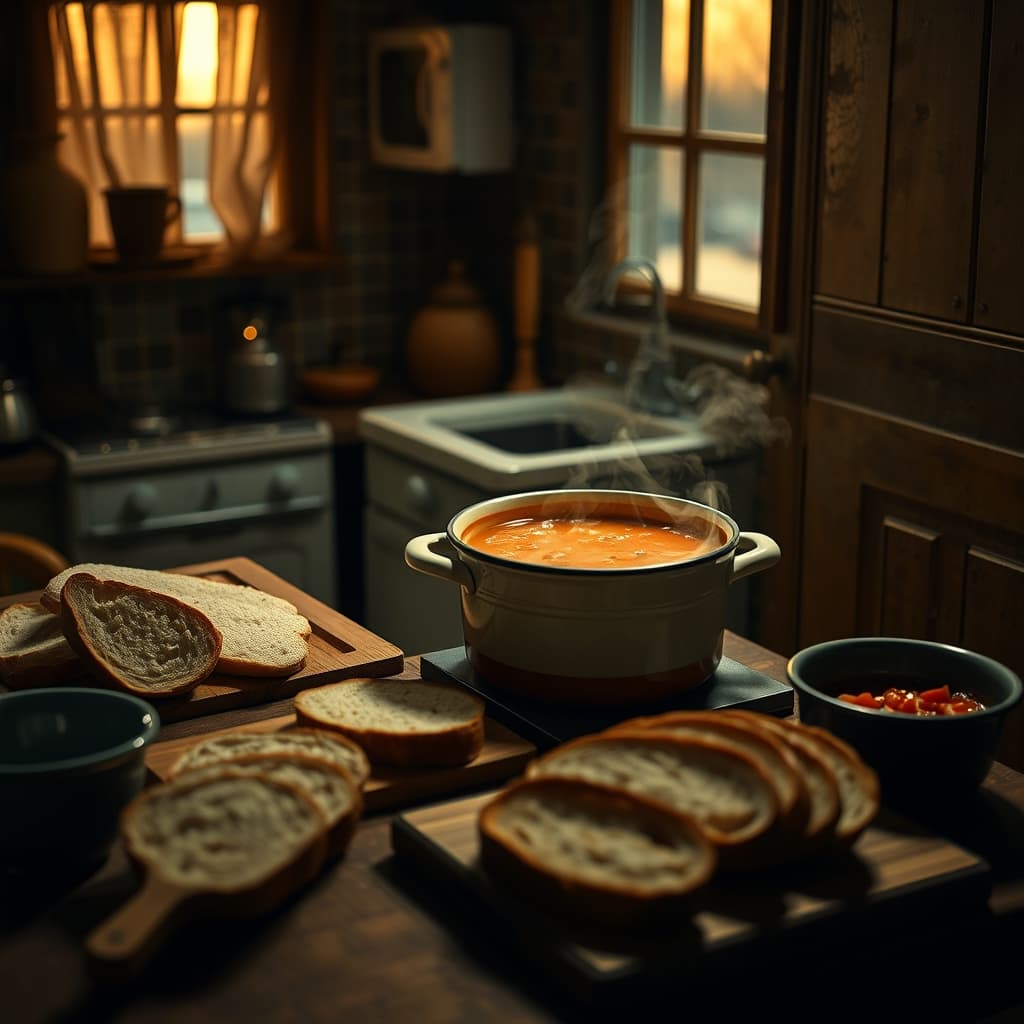
Some soups are remembered less for satisfying hunger than for their power to gather a household together. Homemade tomato soup held exactly that place on crowded family tables. The smell of butter rising from the kitchen in the late afternoon, the warmth of flour gently toasting, and the familiar scent released the moment tomatoes touched the pot all announced that the table would soon be laid. As the soup thickened slowly, bread was sliced, the tablecloth spread, spoons arranged, and children were called to wash their hands. In those moments the soup was not simply a first course. It was a signal calling the family to the same hour and the same table. That is why its taste survives in memory not only on the tongue, but beside the faces once gathered around it.
As taste memory, homemade tomato soup is one of the clearest carriers of older kitchen habits. Before packaged shortcuts accelerated domestic life, soup in many homes began with tomatoes being grated, paste being sautéed, and the contents stirred patiently in the pot. Some houses added vermicelli, others passed the mixture through a sieve for a smoother texture. Pepper, a little cheese, or cubes of toasted bread varied according to preference. Yet one thing did not change: the soup demanded effort, and in doing so it strengthened the idea of a common table. Tomato soup represented a form of care hidden inside everyday simplicity.
The reason it calls back forgotten kitchen habits lies not only in the familiarity of its taste. What returns with it are often the small and regular gestures once performed in the kitchen. Tomatoes dipped in hot water so their skins could be loosened, the wooden spoon turning slowly so nothing would catch, bread toasted on the side, the large pot ladled carefully so each person would receive an equal serving. Each of these actions shows that food in older homes was not prepared only to fill stomachs, but also to sustain the order of living together. A child understood from the smell that evening had arrived. Adults heard in that same aroma the tables of their own childhoods. If there were guests, the soup made the house seem warmer and more generous.
Part of the bond between crowded family tables and tomato soup comes from the reassurance of simplicity. Even if the meal was not abundant, a well-made hot soup could make a house feel complete. On winter evenings, or in the coolness after school, it was often the first warm welcome. The steam fogging a pair of glasses when the lid was lifted, the bread dipped into the bowl, the sound of the spoon touching ceramic: these were the subtle yet enduring details of an older kitchen culture. Today's kitchens may work faster, but as speed increases, the sound of certain rituals grows fainter. Homemade tomato soup recalls the past precisely because within it are hidden time, handwork, and the discipline of sitting down together.
From the present, it becomes easy to see why this soup is still remembered with such tenderness. It is not merely a recipe. It is the memory of time spent in the kitchen, of gathering at one table, of generosity built from simple ingredients. A single spoonful can carry a person back to enamel pots, fogged windows, and crowded evening meals. Some foods do not end in the mouth. They carry the order and intimacy of family life along with them. That is why homemade tomato soup can still summon forgotten kitchen habits. Together with its taste, it recalls an entire way of living.
Homemade Tomato Soup Remembered with the Unforgotten Taste of Crowded Family Tables: How Does It Call Back Forgotten Kitchen Habits?