Eski Pano
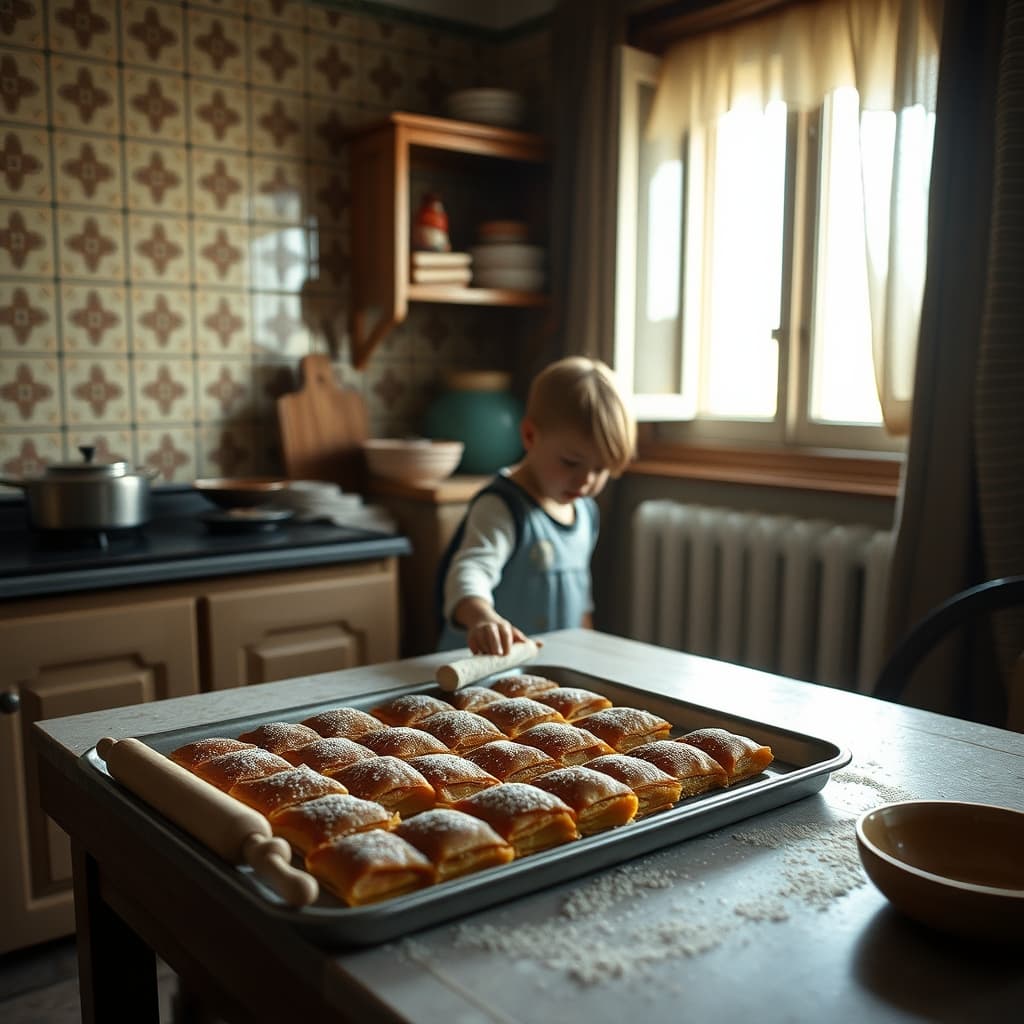
There was a time when what welcomed a child returning from school was not only the opening of the door, but the feeling of safety rising from the kitchen with the scent of butter, syrup, and thin pastry. A schoolbag would be dropped in the corridor, shoes removed in haste, and before the words "wash your hands" were even finished, the eyes would drift toward the tray on the kitchen table. If homemade baklava had been prepared that day, even the air of the house seemed altered. The traces of starch on the counter, the rolling pin resting quietly to the side, the faint crackle of the fresh layers from the oven, and the shine left by syrup on the surface all described the character of the home kitchen without saying a word. The first spoon reaching toward the plate after school was not reaching only toward dessert, but toward the generosity, order, and warmth of the household itself.
Within the memory of taste, homemade baklava holds a special place because it is not only flavor, but also a culture of preparation and sharing. Unlike a dessert bought ready-made, baklava prepared at home requires time, labor, and care. Rolling the dough thin, opening each piece one by one, distributing the butter in the right measure between the layers, and balancing the syrup so that it is neither too hot nor too cold all testify to a wisdom formed in the kitchen. This knowledge is rarely learned from a written recipe alone; it survives through the eye, the hand, and the silent teaching passed from one generation to the next. For that reason, homemade baklava is not merely a dessert brought to the table. It is a mirror of the kitchen's character, showing how a family works, how it pays attention, and how it chooses to share.
The scene of the first spoon reaching the plate after school makes that character visible within the everyday. For a child, baklava is often not as formal as a holiday treat, yet just as joyful a surprise. Even whether a slice is eaten with a small fork or a spoon can vary according to household custom. In some homes tea must be ready first; in others someone warns, "The top is still hot"; in others a sweet competition begins over who will get the crispiest corner. Such details show that the home kitchen is not a uniform place, but one with temperament and voice. A tray of baklava carries together the patient hands of that house, its understanding of hospitality, the small share of delight reserved for children, and the invisible order built in the kitchen.
One reason homemade baklava remains powerful in memory is its sensory richness. The sound of the thin layers breaking, the satisfying fullness of walnut or pistachio, the sticky yet balanced touch of syrup, and the image that appears after hours of preparation are remembered together. Yet what lasts most is the feeling of home that gathers around the dessert. The thin cloth laid over the tray, the afternoon light entering through the kitchen window, the small plates set on the table, and the sentence "let's send some to the neighbor" turn baklava into part of the household character. That is what the home kitchen truly is: not only a place where food is cooked, but a place where sharing, measure, and a quiet tenderness are translated into daily life.
Today many desserts can be bought easily, and recipes can be watched on a screen within minutes. Even so, the scene of homemade baklava and the first spoon reaching the plate after school still carries a distinct warmth. What is remembered here is not only a taste. What is remembered is the way a home described itself through its kitchen. The patience required to roll the dough thin, the affection needed to place the finest piece on a child's plate, and the order involved in preserving the remaining slices carefully for the next day all belong to the same character. Homemade baklava is therefore not only a recipe, but a form of household upbringing. And sometimes a single spoonful is enough to tell that whole story in silence.
Homemade Baklava and the First Spoon Reaching for the Plate After School: How Does It Describe the Character of the Home Kitchen?