🇹🇷 Türkçe | eski terazi ve bayram temizliğinde yeniden parlayan yüzü: ustalık ve sabrın izini neden hâlâ taşıyor
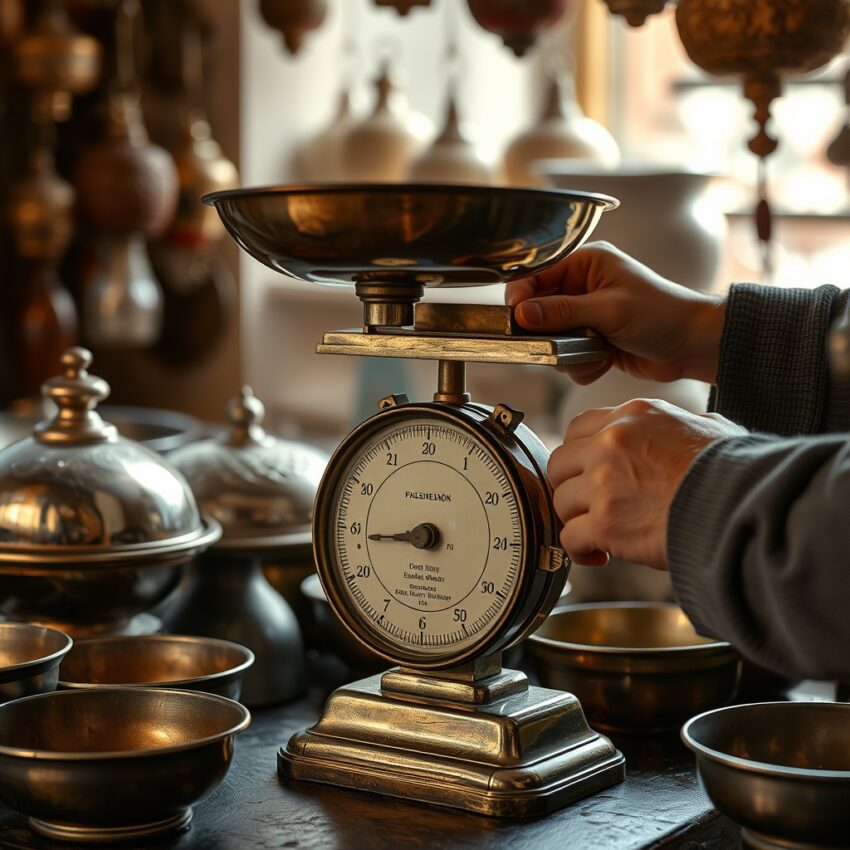
Bir zamanlar dükkânların ya da evlerin bir köşesinde duran eski terazi, yalnız bir ölçü aleti değil, gündelik hayatın düzenini temsil eden sessiz bir objeydi. Pirinç kefeleri, ince ibresi, ahşap gövdesi ya da metal tablası ile bulunduğu yere ciddiyet verirdi. Bayram temizliği yaklaştığında raflardan indirilir, özenle silinir, kararmış yüzeyi kül rengi bezlerle parlatılır ve yeniden görünür bir yere konurdu. O parlatma işi yalnız temizlik için yapılmazdı; eşyanın hakkını vermek, emeğe saygıyı göstermek ve eve gelen misafire düzen hissi sunmak için de gerekli görülürdü. Terazinin ışıkta yeniden parlayan yüzü, ustalıkla yapılmış nesnelerin zamanla değil, ihmal ile solduğunu hatırlatırdı.
Obje Hikayeleri içinde eski terazinin yeri, kullanım kadar tasarım ve terbiye ile de ilgilidir. Bugünün hızlı ve görünmez ölçüm araçlarından farklı olarak o terazi, işleyişini saklamazdı. Ağırlıkların tek tek konması, kefelerin dengeye gelmesi, ibrenin yavaşça ortalanması, nesnenin hem mekanik zekâsını hem de sabır talep eden doğasını açık ederdi. Eski bakkallarda, aktar dükkânlarında, manifaturacılarda ya da ev içi mutfaklarda bu aletin kullanımı, ölçünün yalnız miktar belirlemek değil, doğruluk göstermek anlamına geldiğini de anlatırdı. Bayram temizliği sırasında yeniden öne çıkarılması, ailenin ya da esnafın kendi düzenini görünür kılma isteğinin bir parçasıydı. Temizlenen terazi, eve ve dükkâna yalnız parlaklık değil, güven de verirdi.
Bu objenin hâlâ ustalık ve sabrın izini taşımasının nedeni, üretildiği dönemin malzeme anlayışında saklıdır. Kalın metal, dengeli mekanizma, elde işlenmiş küçük parçalar ve uzun yıllar kullanılmak üzere kurulmuş bir mantık, teraziyi sıradan bir eşya olmaktan çıkarır. Onu temizleyen eller de bu yapıya saygı gösterir; kefeleri sertçe çarpmaz, ibreyi eğmez, pirinci matlaştırmadan parlar hâle getirmeye çalışırdı. Çocuklar çoğu zaman bu temizliği merakla izler, büyüklerden teraziye neden dikkat edilmesi gerektiğini öğrenirdi. Bayram öncesi evlerde ya da dükkânlarda görülen bu sahne, eşyayla kurulan ilişkinin ne kadar öğretici olduğunu gösterir. Nesneye gösterilen özen, aslında işin kendisine ve hayatın ölçüsüne gösterilen özenin devamıdır.
Eski terazinin yüzünde kalan izler, yalnız kullanımın değil, kuşakların bıraktığı bir hafızanın da işaretidir. Kimi yerde bir bakkalın yıllarca şeker, pirinç, kahve tartmasının izi vardır; kimi yerde annenin mutfakta reçel malzemesi ölçerken gösterdiği dikkat saklıdır. Bayram temizliğinde o izler tamamen silinmez, yalnızca saygıyla aydınlatılır. Çünkü amaç eşyayı yeni gibi yapmak değil, onun geçmişini bugüne yakışır biçimde taşımaktır. Eski nesnelerin kıymeti biraz da buradan gelir: zamanın üstlerinden geçmesine rağmen kendi işlev ve karakterlerini korurlar. Terazi de tam bu nedenle yalnız nostaljik bir görüntü değil, çalışma ahlakının ve ölçü duygusunun somut bir hatırlatıcısıdır.
Bugün dijital göstergelerin hızında yaşayan dünyada eski terazinin neden hâlâ etkileyici göründüğünü anlamak zor değildir. O nesne bize, doğru ölçünün yalnız sonuçla değil süreçle ilişkili olduğunu söyler. Bayram temizliğinde yeniden parlayan yüzü, geçmişte eşyanın da insan gibi hürmet gördüğünü, bakımın bir yük değil kültürel bir alışkanlık olduğunu hatırlatır. Ustalık, onu üreten elde; sabır, onu kullanan ve temizleyen kişide yaşamaya devam eder. Bu yüzden eski teraziye bakarken yalnız bir obje görmeyiz. Ölçülü yaşamanın, işini düzgün yapmanın ve emek verilmiş bir nesneyi kuşaktan kuşağa taşımanın sessiz ahlakını görürüz.
🇬🇧 English | The Old Scale and Its Surface Shining Again in Holiday Cleaning: Why Does It Still Carry the Trace of Craftsmanship and Patience?
There was a time when the old scale standing in a corner of a shop or a house was not merely a measuring device, but a quiet object representing the order of daily life. With its brass pans, fine needle, wooden body, or metal tray, it gave seriousness to the place where it stood. As holiday cleaning approached, it was taken down from the shelf, wiped with care, its darkened face polished with ash-colored cloths, and placed once again where it could be seen. That polishing was not done only for cleanliness. It was also considered necessary to honor the object, to show respect for labor, and to present a sense of order to guests entering the home. The surface of the scale shining again in the light reminded people that well-made things do not fade through time alone, but through neglect.
Within the stories of objects, the old scale matters as much for design and discipline as for use. Unlike today’s fast and nearly invisible measuring devices, it did not hide how it worked. The placing of weights one by one, the balancing of the pans, the slow centering of the needle all revealed both its mechanical intelligence and its demand for patience. In old groceries, herb shops, dry-goods stores, or household kitchens, the use of such a scale also showed that measuring was not only about quantity, but about correctness. Bringing it forward again during holiday cleaning was part of a family’s or a shopkeeper’s wish to make their sense of order visible. A cleaned scale restored not only brightness to a house or store, but trust.
The reason this object still carries traces of craftsmanship and patience lies in the material understanding of the era in which it was made. Thick metal, balanced mechanisms, hand-finished small parts, and a logic built for decades of use lift the scale beyond being an ordinary household item. The hands that cleaned it respected that structure as well. They did not strike the pans harshly, bend the needle, or try to make the brass shine at the cost of its character. Children often watched the cleaning with curiosity and learned from their elders why the scale deserved care. This scene, seen in homes and shops before the holiday, shows how instructive the relationship with objects once was. The attention given to the object was in fact an extension of the attention given to work itself and to the measure of life.
The marks remaining on the face of an old scale are signs not only of use, but of a memory left by generations. In one case there may be the trace of a grocer weighing sugar, rice, and coffee for years; in another, the care of a mother measuring ingredients for jam in the kitchen. During holiday cleaning, those marks are not erased entirely, but gently illuminated. The aim is not to make the object look new, but to carry its past into the present with dignity. Part of the value of old objects comes exactly from this quality: time passes over them, yet they preserve both their function and their character. The scale therefore remains not only a nostalgic image, but a concrete reminder of work ethic and the sense of proper measure.
It is not difficult to see today why the old scale still feels compelling in a world ruled by the speed of digital displays. The object tells us that accuracy belongs not only to the result, but to the process. Its face shining again during holiday cleaning reminds us that in earlier times objects, like people, were treated with regard, and maintenance was not a burden but a cultural habit. Craftsmanship lives in the hands that made it, patience in the person who used and polished it. That is why, when we look at the old scale, we do not see only an object. We see the quiet ethic of measured living, of doing work properly, and of carrying a labor-shaped thing from one generation to the next.
🇧🇷 Português (Brasil) | A Balança Antiga e sua Face que Volta a Brilhar na Limpeza de Festa: Por Que Ainda Carrega o Rastro da Habilidade e da Paciência?
Houve um tempo em que a balança antiga colocada num canto da loja ou da casa não era apenas um instrumento de medição, mas um objeto silencioso que representava a ordem da vida cotidiana. Com seus pratos de latão, sua agulha fina, seu corpo de madeira ou sua base metálica, ela dava seriedade ao lugar onde ficava. Quando a limpeza de festa se aproximava, era retirada da prateleira, limpa com cuidado, sua superfície escurecida era polida com panos opacos, e então voltava a um ponto visível. Esse polimento não era feito só por higiene. Também era entendido como uma forma de respeitar o objeto, de mostrar consideração pelo trabalho e de oferecer sensação de ordem aos visitantes da casa. A face da balança voltando a brilhar na luz lembrava que as coisas bem feitas não perdem o brilho apenas pelo tempo, mas pelo abandono.
Dentro das histórias dos objetos, a balança antiga importa tanto pelo uso quanto pelo desenho e pela disciplina que carrega. Diferentemente dos medidores rápidos e quase invisíveis de hoje, ela não escondia o próprio funcionamento. Colocar os pesos um a um, ver os pratos se equilibrarem, acompanhar a agulha se centralizando aos poucos revelava tanto a inteligência mecânica da peça quanto sua exigência de paciência. Em antigos armazéns, lojas de especiarias, casas de tecido ou cozinhas domésticas, o uso da balança também mostrava que medir não significava apenas calcular quantidade, mas demonstrar correção. Trazê-la novamente para a frente durante a limpeza de festa fazia parte do desejo da família ou do comerciante de tornar visível o próprio senso de ordem. Uma balança limpa devolvia não só brilho à casa ou à loja, mas confiança.
O motivo de esse objeto ainda carregar rastros de habilidade e paciência está na compreensão dos materiais do tempo em que foi produzido. Metal espesso, mecanismo equilibrado, pequenas peças acabadas à mão e uma lógica construída para durar longos anos elevam a balança acima da condição de simples utensílio. As mãos que a limpavam também respeitavam essa estrutura. Não batiam com força nos pratos, não entortavam a agulha, nem tentavam arrancar um brilho que apagasse o caráter do latão. As crianças muitas vezes observavam essa limpeza com curiosidade e aprendiam com os mais velhos por que a balança merecia cuidado. Essa cena, vista em casas e lojas antes da festa, mostra como a relação com os objetos já foi profundamente educativa. A atenção dada à peça era, na verdade, continuação da atenção dada ao trabalho e à medida da vida.
As marcas deixadas na superfície da balança antiga são sinais não apenas de uso, mas também de uma memória construída por gerações. Em um caso pode haver o rastro de um comerciante que pesou açúcar, arroz e café por anos; em outro, a delicadeza de uma mãe medindo ingredientes para compotas na cozinha. Durante a limpeza de festa, essas marcas não são apagadas por completo, apenas iluminadas com respeito. O objetivo não é fazer o objeto parecer novo, mas trazer seu passado ao presente com dignidade. Parte do valor dos objetos antigos vem exatamente daí: o tempo passa por eles, mas eles preservam sua função e seu caráter. Por isso a balança permanece não só como uma imagem nostálgica, mas como um lembrete concreto da ética do trabalho e do senso de medida.
Hoje, num mundo guiado pela velocidade dos mostradores digitais, não é difícil entender por que a balança antiga ainda impressiona. Ela nos diz que a precisão não pertence apenas ao resultado, mas também ao processo. Sua face voltando a brilhar na limpeza de festa nos recorda que, em outros tempos, os objetos, assim como as pessoas, eram tratados com consideração, e a manutenção não era um peso, mas um hábito cultural. A habilidade vive nas mãos que a fabricaram; a paciência, em quem a usou e a poliu. É por isso que, ao olhar para a balança antiga, não vemos apenas um objeto. Vemos a ética silenciosa de viver com medida, de fazer o trabalho direito e de levar uma peça moldada pelo esforço de uma geração à seguinte.