Eski Pano
There was a time when certain mornings did not begin in an ordinary way. Before daylight had fully settled, wooden shutters would be pushed open, and behind thin curtains a movement toward the square could already be sensed. While water warmed in a copper ewer on the stove, mothers straightened collars, fathers buttoned their jackets, and grandmothers called out, “Go early, it will be crowded.” A day of official ceremony meant that the city square would step out of its daily self and take on a more orderly, more attentive, more curious appearance. Those mornings that made people open the windows remained in memory for exactly that reason: even before stepping into the street, the city had already shifted into another rhythm through the excitement felt inside the houses.
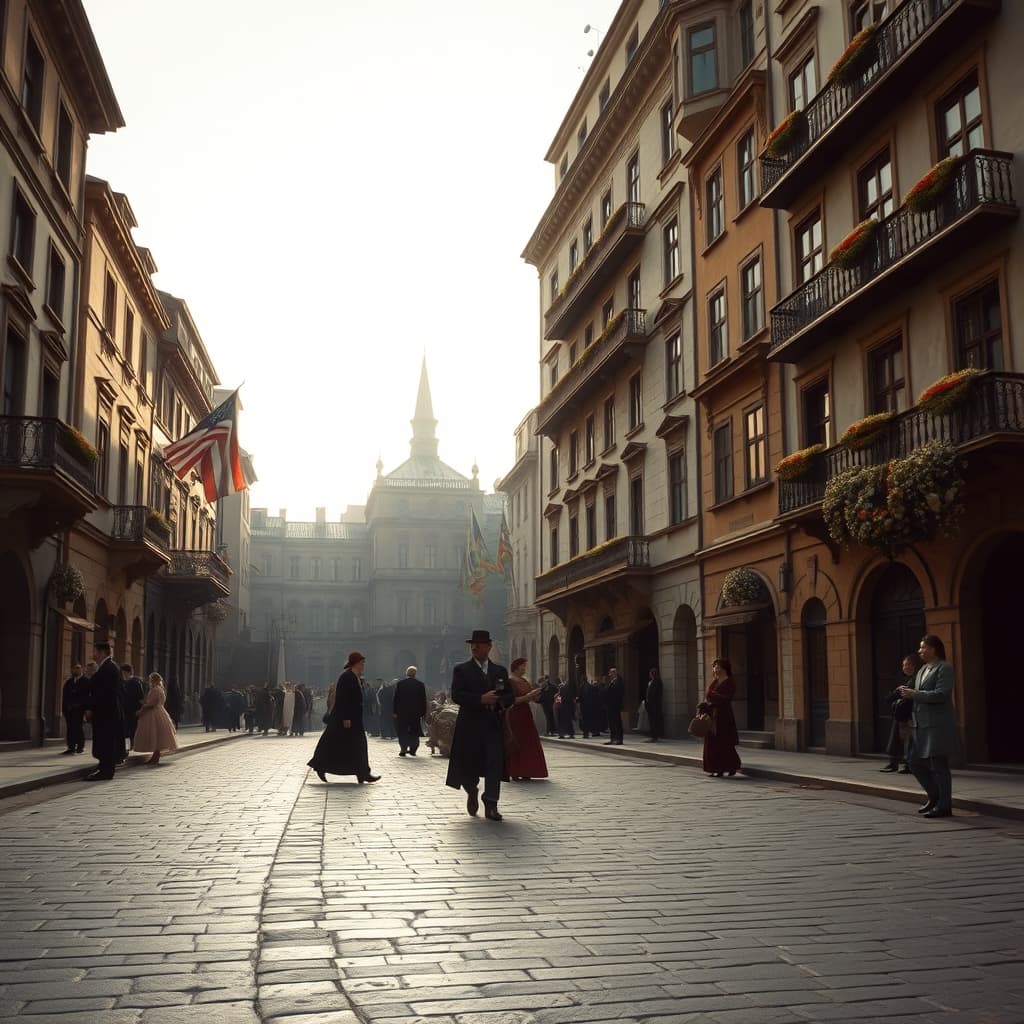
Seen through the lens of time, official ceremonies in city squares were not only moments when public authority displayed its seriousness. They were public scenes that created a shared sense of time in old urban life. Flags were hung across the square, municipal loudspeakers were tested, and shopkeepers opened their shutters halfway so they could watch the crowd first. Newspaper sellers appeared a little earlier than usual, and vendors with simit or roasted chickpeas tried to guess where the gathering would be thickest. People did not go only to watch the ceremony; they also went to feel again that they belonged to the city. For that reason, the state of preparation mixed with the chill of morning stayed in urban memory not merely as an event, but as a shared sense of civic order.
The details of those mornings can still be pictured with ease. Children were taken early so they could see the front rows, school clothes were worn with extra care, hair was combed with water, and shoes had often been polished the night before. On the streets leading to the square, neighbors leaned on balconies, while those waiting in front of shops asked one another, “What time does it begin?” The first distant sound of the marching band hurried breakfast inside the home; tea glasses were left half full on the table, and bread was finished in quick last bites. The excitement of official ceremonies grew precisely there: the city gathered its ordinary untidiness and suddenly gained a face that felt more measured, more visible, more shared. Even those who never went down became part of the collective mood by watching from the window.
Part of the reason these ceremonies remain so vivid is that visual order and everyday life appeared in the same scene. Uniforms, flagpoles, polished shoes, morning light striking the paving stones, and announcements echoing through loudspeakers built a powerful image in the minds of children. Yet what truly endured was the small human movement inside that larger picture. A mother dusting her child’s shoulder, an elderly man looking for shade with his cane, a grocer nodding to a neighbor as he returned to his shop after the ceremony, all carried warmth inside the official formality. On such days the city square became not just an administrative place, but a common stage bringing together different classes and generations within the same morning. Those window-opening mornings remain vivid because of that mingling.
Today city squares may fill with different speeds and different crowds, yet the effect left by those ceremonial mornings has not fully vanished. The habit of dressing a little more carefully on important days, children looking at public space for the first time with serious attention, the custom of gathering by the window to watch below, and the old feeling that a square is not only a place one passes through but a place one looks at together all reached the present from those years. What keeps those mornings alive in memory is not only the ceremony itself, but the way the city briefly became more attentive, slower, and more collective. The excitement official ceremonies once created in old city life still returns like the first morning breeze that makes someone reach for the window latch.
The Days in Old City Life When Official Ceremonies Filled City Squares with Excitement: Why Do Those Mornings That Made Windows Open Still Remain So Vivid in Memory