Eski Pano
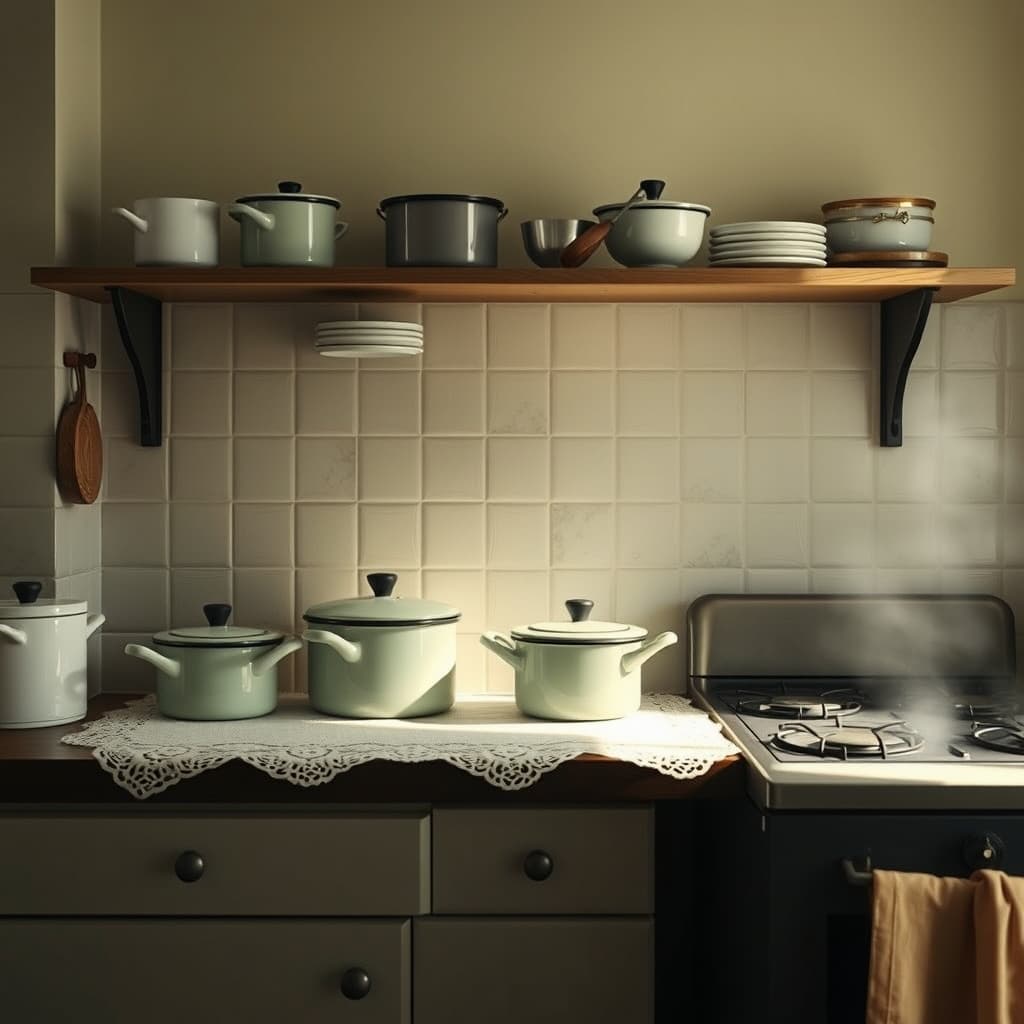
There was a time when the kitchen was not merely a place where food was cooked, but a chamber of memory holding the sound, scent, and order of the home. One of the most visible parts of that memory was the enamel pot. Cream-colored with blue lines, white with small red flowers, or plain with a modest shine, these vessels revealed the character of a household even while standing in rows on the shelves. In the first light of morning, the brightness slipping through the curtain touched the enamel surface, and the order of the shelves turned into a kind of quiet splendor. Looking at them, one saw not simply kitchenware, but the rhythm of a life repeated day after day.
From the perspective of object stories, the enamel pot is one of the strongest examples of how function and aesthetics intertwined in older homes. With its gently shining surface, easy-to-clean body, colorful rim decoration, and durability that kept it in use for years, it settled into life not only as a cooking tool but as an object of reassurance in daily routine. Around it there were always other details: shelf cloths, jar lids trimmed with lace, wooden spoons hanging on the wall, a kettle waiting beside the stove. Yet the enamel pot stood at the center of that entire scene. It carried the order established in the kitchen and the rituals repeated there.
What shaped the rituals of home life was not only the food prepared, but the pattern of preparation that accompanied it. While lentils were sorted, the lid was set on the counter; while morning soup simmered, steam lightly clouded the glass; at noon plates were taken down from cupboards; by evening leftovers were placed back into the same enamel vessel. At times a plate of food was sent to a neighbor in one of these pots; at other times holiday preparations continued inside them for days. The sound of the pot, the light strike of the ladle on its side, the full note of the lid closing, all formed part of the kitchen’s daily music. In that way the object produced not only use, but emotional closeness through repetition.
One reason this quiet splendor remains unforgettable lies in the unpretentious elegance of enamel. It is not as shining as stainless steel, nor as assertive as copper, yet precisely for that reason it carries the humble aesthetic of domestic life. A chipped edge, a slightly faded pattern, or the small traces left by time do not make the object seem worn out, but lived in. An enamel pot standing on a kitchen shelf often represented the sense of order of a mother or grandmother: clean, measured, useful, yet pleasing to the eye. The rituals of the household became visible through such objects, and each repetition added another layer to the memory of the kitchen.
Looking back now, the meaning carried by the enamel pot is more than nostalgia. It belongs to an everyday culture that built the rhythm of home with slow but steady gestures. The quiet splendor hidden on the shelves represents a kind of attention easily missed in the speed of modern life: everything in its place, labor sustaining the house without demanding to be seen, and the kitchen serving not only to feed but to gather. That is why the enamel pot is still remembered. On its surface there still shines not only food, but also the patience, taste, and domestic rituals of an entire era.
The Quiet Splendor Hidden in Enamel Pots and Kitchen Shelves: How Did It Shape the Rituals of Home Life?