 Eski Pano
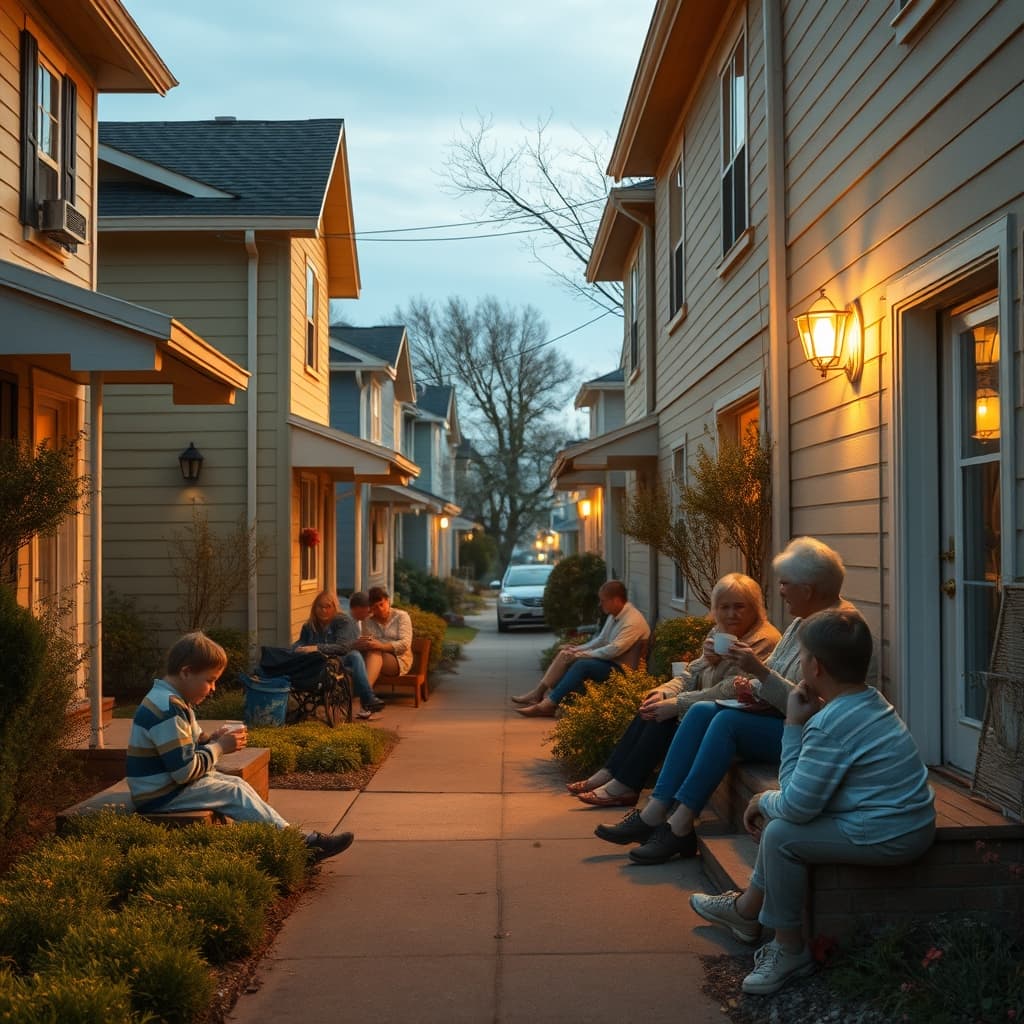
When the first truly mild evenings of spring arrived, it was as if an invisible signal had been given across the neighborhood. Doors that stayed shut all day remained open a little longer, cushions placed by windows spread outward, and chairs from inside the home slid slowly toward the threshold. At just those hours doorstep conversations began, the hard boundaries of the street softened, and everyone stood a little closer to one another’s lives. The scent of tea rose from one house, the cool soap smell of freshly washed laundry came from another, children’s voices stretched along the paving stones, and the speech of adults filled the evening air. The street became a shared home at the beginning of spring through precisely this natural and repeated closeness.
From the perspective of neighborhood culture, doorstep conversations are among the most visible and warmest scenes of communal life. They were not planned meetings, but spontaneous extensions of the day itself. While dinner was being prepared, a stool would be brought outside, a task of sorting vegetables would continue on the threshold, and along with a plate passed to the neighbor, conversation would begin to circulate as well. Whose child had fallen ill, which shop had received new goods, where an engagement was being prepared, who had left early that morning for the hometown, all the small news of life was shared quietly at these doorways. In that way the street ceased to be merely a place of passage and became a half-open sitting room where collective memory was made.
One of the most unforgettable aspects of this culture was the balance it created between domestic privacy and public space. People were neither fully inside nor entirely outside. The doorstep was a field of closeness standing between the two. Women spoke while knitting, older residents leaned their chairs against the wall and greeted those passing by. Children played hopscotch on chalk lines, chased balls, received a scolding from one elder and candy from another. Shopkeepers stopped by for a few words while closing up, and young people formed their own small circles a little farther down the street. The street thus became a living space woven by the loose yet strong bond of people aware of one another.
The beginning of spring held a special place in this scene. The inward order of winter loosened, the air of the house exchanged places with the air outside, and because evening light lingered longer, the conversation did too. Geraniums returned to the windowsills, thresholds were washed, and even when children were told not to stay out late, they were still given a wider field of movement. The street became a shared home partly because of this mood opened by the season. People stepped outside not only to see one another, but also to share the relief that spring itself provided. In such moments the neighborhood gained a belonging larger than apartment numbers or street names.
The reason these conversations are remembered with longing today is not merely the slowness of older days. It is that the small community formed at the doorstep gave people an unnoticed sense of safety. Who was ill, who was joyful, who needed help, all could be felt through these exchanges. The feeling of a shared home was built exactly there: each person had a separate door, yet the air of the street belonged to everyone. Those conversations beginning on spring evenings reminded people that where walls ended, social closeness began. That is why doorstep conversations still endure as one of the warmest inheritances of neighborhood life.
Doorstep Conversations at the Beginning of Spring: How Did They Turn the Street into a Shared Home?