 Eski Pano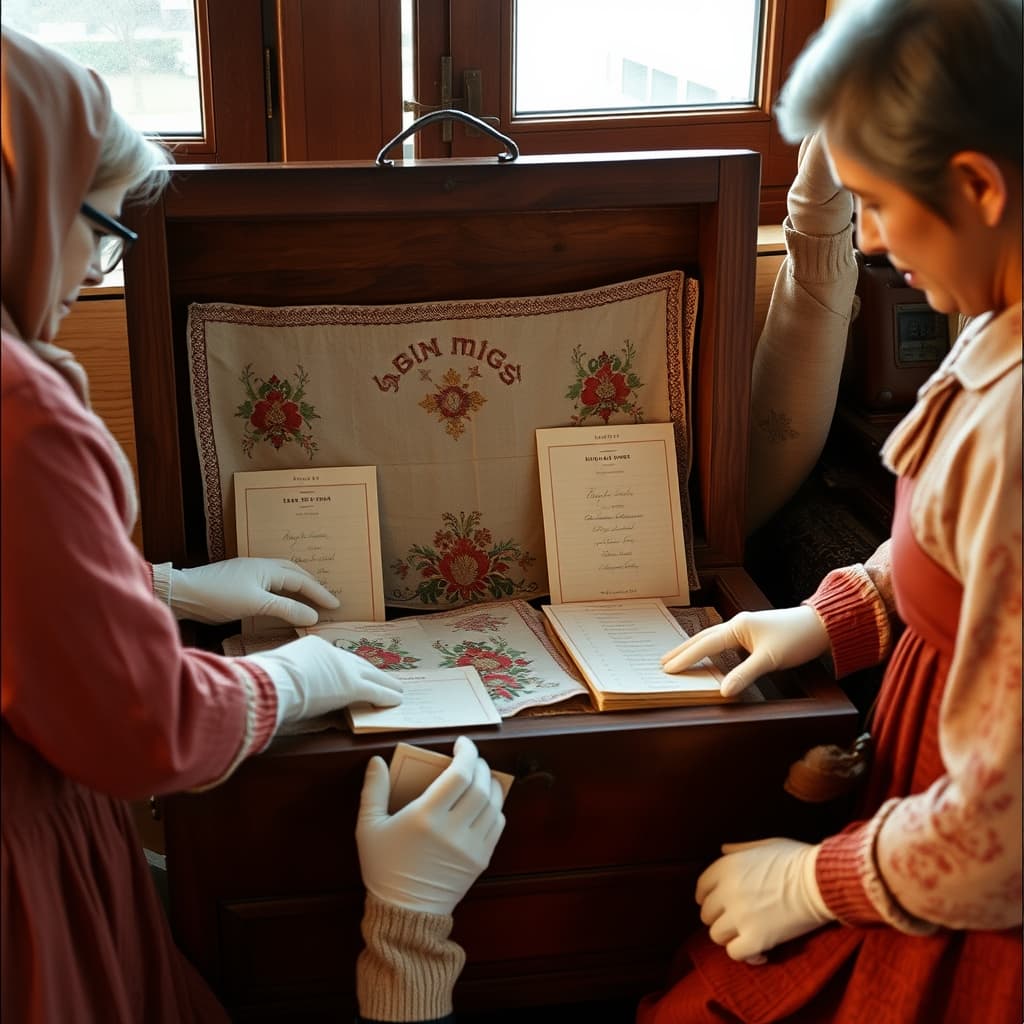
Opening a dowry chest can reveal embroidery, linen, jewellery, photographs, recipes, letters, receipts, and unfinished work. It can also expose private relationships, unequal labour, family disagreement, and objects whose ownership was never formally settled. Before lifting the first layer, families should agree that discovery does not automatically grant permission to keep, display, scan, sell, or publish.
Begin with provenance. Record who used the chest, where it stood, when it entered the household, who made or bought each item, and how it passed between generations. Mark uncertainty honestly. A phrase such as probably made by an aunt is more responsible than turning a guess into fact. Invite several relatives to contribute memories, because one confident account may conceal another person's work or claim.
Ownership and Memory Are Not the Same
Legal ownership, emotional attachment, authorship, and the right to disclose information may belong to different people. A granddaughter may own the chest while an uncle owns a letter stored inside; the maker of a photograph may hold copyright while those pictured have privacy interests. Contested pieces should remain clearly labelled and temporarily undisturbed while the family seeks agreement or appropriate professional advice.
Dowry traditions often represent skilled work by women whose names were omitted from household records. Catalogue stitches, repairs, alterations, materials, tools, and unfinished sections as evidence of knowledge and time, not merely decoration. Avoid romantic language that treats compulsory preparation, financial pressure, or restrictive gender expectations as universally happy. Record affection and pride alongside constraint, refusal, migration, divorce, loss, and changing custom.
Inspect Before You Rearrange
Photograph the closed chest, exterior damage, lock, lining, and each layer before removing anything. Give every object a temporary number and keep detached labels, envelopes, ribbons, and fragments associated with it. Note dimensions, material, condition, inscriptions, stains, repairs, and original position. Do not wash, iron, polish, glue, unfold a brittle document, or separate a bundle merely to make a prettier picture.
Use a clean, dry, well-ventilated table away from food, direct sun, pets, and open windows. Mould, insect remains, rodent contamination, sharp pins, unstable dyes, and historic pesticide residues can present risks. If there is active mould, heavy dust, a chemical smell, wet material, or extensive pest damage, close the area, avoid sniffing or brushing, and consult a conservator or relevant safety professional.
The Chest May Not Be Safe Storage
Wood, metal fittings, acidic paper, coloured tissue, mothballs, and old lining can damage textiles over time. Separate materials with suitable archival tissue and supportive boxes after receiving conservation advice. Store the chest in a stable, dry, moderate environment above floor level, away from radiators, pipes, exterior walls, and sunlight. Heavy textiles should be supported rather than hung; brittle documents should not be forced flat.
Create a catalogue that distinguishes observed facts from family testimony. Include an object number, description, maker if known, approximate date, materials, measurements, condition, related people, story source, rights holder, access limits, and digital-file location. Preserve the original wording of labels, then add a careful translation or explanation separately. Back up the catalogue in more than one secure place and review names and dates with relatives.
Digitisation improves access but does not remove ethical duties. Scan only after condition assessment, use gentle supports, retain colour and scale references outside the public crop, and keep preservation files separate from edited copies. Obtain permission before sharing letters, addresses, health details, financial information, adoption histories, or intimate photographs. Redaction, delayed access, a family-only copy, or a decision not to publish can be the correct archival choice.
A Digital Nostalgia Archive should show how an object was made, used, inherited, disputed, repaired, and interpreted. It should name makers when evidence allows, respect living people, and leave room for conflicting memories. The aim is not to empty a chest into a public gallery, but to build a trustworthy record in which material care, consent, cultural context, and shared responsibility protect the stories for those who come next.