Eski Pano
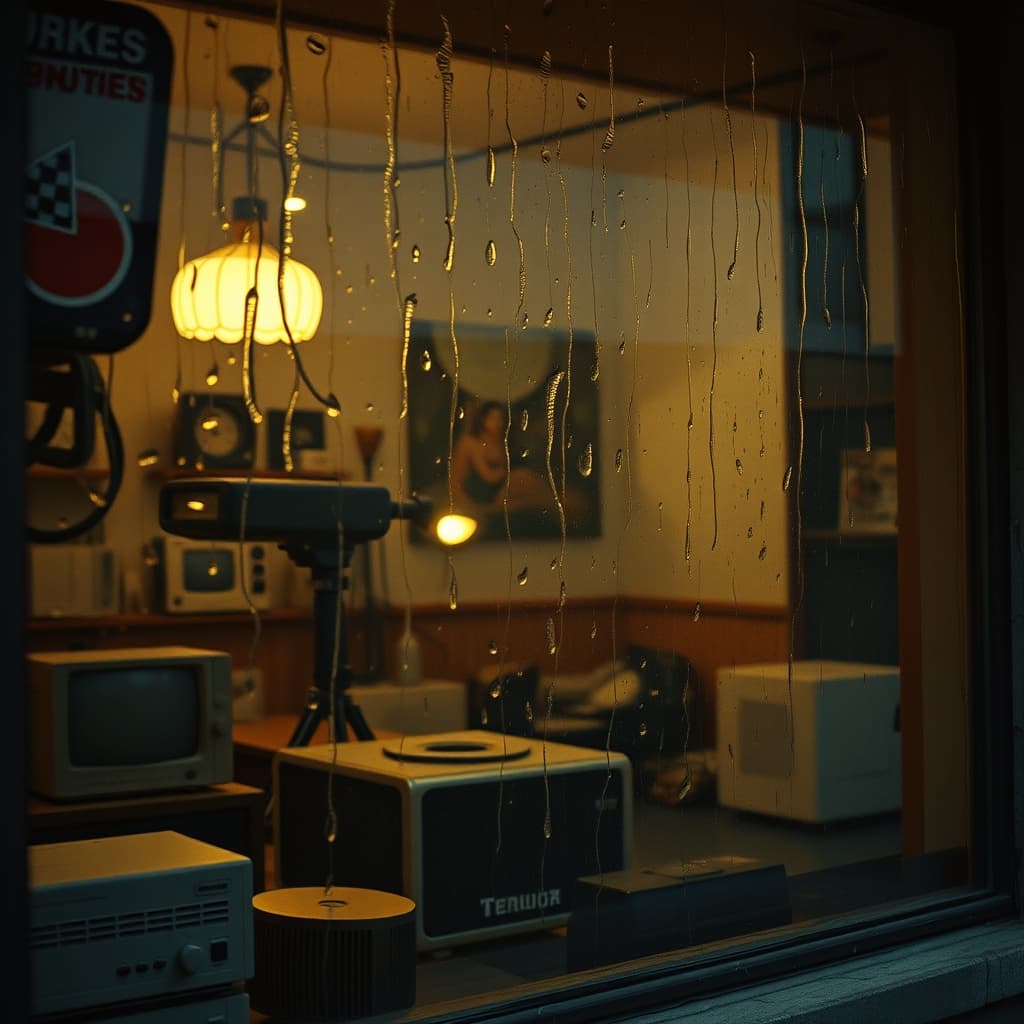
There was a time when the city shone differently after a spring rain, and the trails of water left on shop windows gave everyday life a faintly cinematic glow. No one walking past the row of electronics shops could pass without looking at the cassette decks, the metal bodies of cameras, and the slide projectors waiting a little farther back in the display. Looking out at us from behind the glass, the projector was not merely a technical device; it was the silent messenger of illuminated memories that would later fall across a wall. The hours spent beside a slide projector were special moments of gathering as a family, of reviving travel memories, and of learning the patience of waiting for an image. The reason it still evokes the unforgotten excitement of the analog age is that this waiting followed not a mechanical rhythm, but an emotional one.
From the perspective of technological heritage, the slide projector was one of the emblems of a period when images required preparation before they could be consumed. Film had to return from development, be placed into frames, arranged in order, and then the screen or blank wall had to be prepared while the room was darkened. Only then did the warmed light inside the machine make the stored moments visible. Unlike the hundreds of photographs scrolled past in seconds today, even looking at a single image once demanded ceremonial attention. The sound of the fan, the small mechanical click as each slide advanced, and the delicate adjustments made to sharpen focus were all inseparable parts of the viewing experience. The excitement of the analog age came partly from this very material process: the image felt precious not because it was available instantly, but because it had been brought into visibility with care.
The fact that those hours remain unforgettable also has much to do with family sharing. The living room light would go out, children would creep closer over the carpet, and adults would guess who might appear in the next frame. A seaside view from summer vacation, a portrait from an engagement day, or a family photograph taken on a snowy winter morning would appear on the wall, and everyone would be looking at both the past and one another at the same time. The pictures did not merely show events; they summoned the sound, scent, and season of that day. The laughter caused by an upside-down slide, the brief anxiety when the image came out blurred, and the satisfaction when focus was restored were all parts of the emotional bond built around technology. The technical side of the machine and the memory of the family were never separate things.
That is why the image of a projector looking at us from a shop window after the spring rain says so much. The person standing before that window was not gazing only at an appliance not yet purchased, but at a feeling of time they longed to enter. Picking up slides from the neighborhood photo studio, renting a projector, or borrowing one from an acquaintance also created a small social network around the device. The bulbs, carrying cases, spare magazines, and cleaning brushes sold beside it showed that technology did not live alone, but through a surrounding culture of maintenance. The renewed interest in vintage devices today is not accidental. People are trying to recover not merely an old machine, but the slower sense of time that treated images with respect.
Now screens are endless, transitions are smooth, and memories are light enough to carry in a pocket. Yet the hours spent beside a slide projector do not disappear from memory. They remind us that technology once gathered people in the same dark room around the same beam of light. The excitement of the analog age was a mix of expectation and uncertainty, of joy woven through small technical disruptions, and of patient attention to the moment when an image settled onto the wall. The projector looking out from a rain-washed shop window still seems to whisper this: some technologies do not merely display images, they shape the way an entire generation remembers together.
Hours Spent Beside the Slide Projector: Telling the Unforgotten Excitement of the Analog Age While Looking at Us from a Shop Window After the Spring Rain