 Eski Pano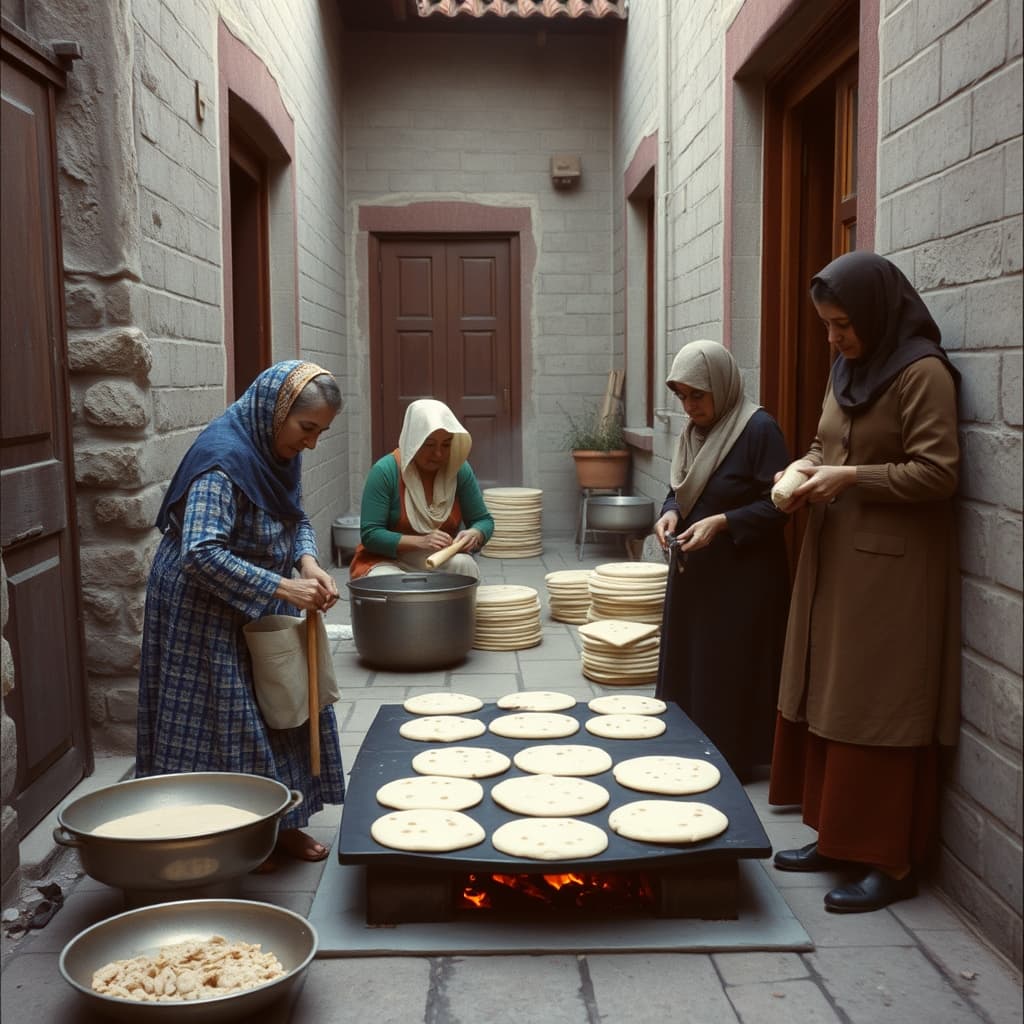
A courtyard yufka morning worked less like an informal gathering than a temporary cooperative bakery. Flour arrived in quantity, dough was divided, low tables were arranged, rolling pins passed from hand to hand, the griddle remained hot, and finished breads accumulated in careful stacks. The warmth people remember came from coordinated production as much as conversation.
Yufka varies by region, household, grain, flour extraction, dough formulation, thickness, size, baking surface, intended storage, and serving use. Some breads are made for immediate eating; others are dried and later softened. Related flatbreads and names should not be treated as identical. Maker, place, date, flour, water, salt, leavening if any, dimensions, heat source, and storage method belong in the record.
Division of Labour Created Rhythm
One person mixed or kneaded, another cut equal portions, others rolled, dusted flour, tended the sac, turned bread, cooled it, counted stacks, and prepared food for the workers. Experienced hands matched the pace of rolling to the heat so dough did not dry out or the griddle stand empty. A bottleneck at one stage affected everyone.
Skill appeared in pressure and timing: rotating a thin sheet without tearing, maintaining roundness, using enough dusting flour without burning excess, reading surface bubbles, and lifting bread at the right moment. Describing this as effortless tradition hides years of observation, physical endurance, eye-hand coordination, and correction among women.
The Courtyard Was a Workplace
Low seating, repetitive rolling, flour dust, smoke, heat, lifting, and long hours strained backs, shoulders, hands, eyes, and lungs. Children and older relatives might help, but age, mobility, pregnancy, respiratory conditions, and fatigue changed safe participation. Breaks, water, shade, stable work surfaces, and tasks suited to each person matter.
The courtyard also served residents who were not baking. Tables, fuel, dough, stacks, and visitors could block doors, paths, ramps, play areas, or emergency access. Consent, clear routes, reasonable hours, noise control, and full cleaning were necessary. Today's housing complex is not colder merely because open-fire production is restricted; density, governance, insurance, accessibility, and fire codes have changed.
Fire and Food Safety Cannot Be Recreated Casually
Traditional griddles may use wood, gas, or another heat source, each with burn, fire, smoke, carbon-monoxide, and fuel-storage risks. Open flame should not operate in enclosed or poorly ventilated areas, under unsafe balconies, near combustibles, or where children can reach. Stable equipment, trained operators, extinguishing provision, ventilation, permissions, and emergency clearance are essential.
Food hygiene includes potable water, clean hands and cloths, protected flour, food-safe surfaces, pest control, separation from soil and animals, and appropriate cooling. Dry yufka must reach and maintain suitable dryness before storage. Damp stacking can encourage mould. Unknown mouldy bread should be discarded rather than dried again or hidden in a cooked dish.
Modern collective baking can preserve cooperation through a licensed community kitchen, bakery workshop, approved outdoor facility, shared purchasing group, or documented demonstration. Accessible table heights, safer ventilation, measured recipes, allergen controls, fair payment, and scheduled participation can widen inclusion. Adaptation is more faithful to collective care than recreating every historical hazard.
A Digital Nostalgia Archive can connect yufka with flour sources, dough bowls, rolling pins, griddles, courtyard plans, fuel, stack counts, recipes, work songs, photographs, and interviews with every role. The morning felt warm because many people synchronised knowledge and effort. Preserving that achievement means keeping sociability beside women's labour, bodily strain, common-space rights, fire safety, food hygiene, storage science, and new forms of cooperation.