 Eski Pano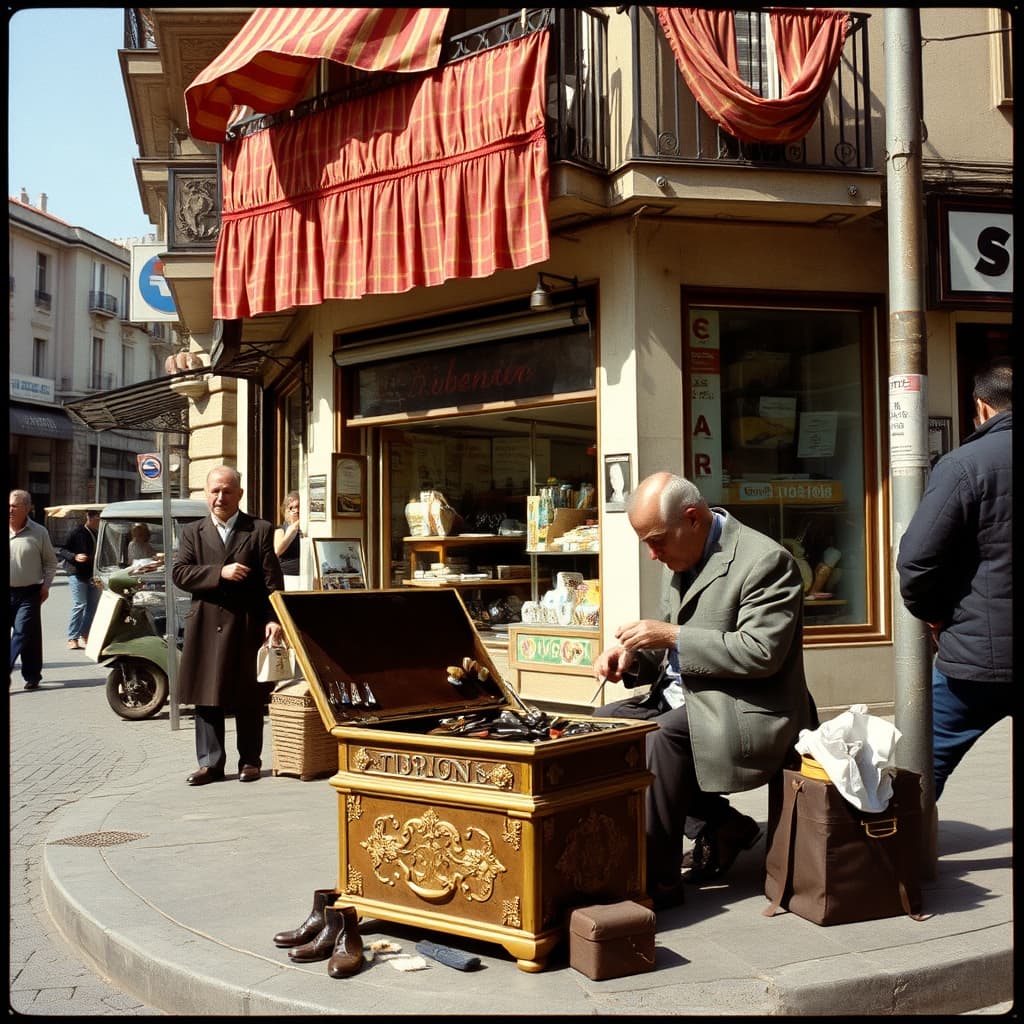
At a busy corner, the shoe shiner's box could function like a tiny workshop and a familiar landmark. Commuters knew where to pause before an appointment; shopkeepers exchanged news; children watched brushes move with theatrical speed. Brass ornaments caught the light, but the real attraction was skilled handwork performed in public. A dusty pair of shoes left darker, smoother, and ready for another day in the city.
The trade differed across districts and decades. Some workers carried compact wooden boxes and moved between stations, markets, and cafés. Others kept a regular pitch with a customer's chair and footrests. Municipal permits, policing, weather, redevelopment, and competition shaped where they could stand. The romantic image of a permanent corner should therefore be tested against the uncertainty of earning an income from shared pavement.
The Box Was a Working Toolkit
A well-organised box held stiff brushes for removing dust, softer brushes for buffing, cloths, polish in several colours, edge dressing, laces, and sometimes small repair supplies. The worker had to identify leather and finish before applying anything. Suede, patent leather, coated materials, and worn seams required different treatment. Speed came from repeated judgement, not careless motion, and a mistake could stain trousers or damage an expensive shoe.
Decorated boxes advertised care and presence without a shopfront. Hammered metal panels, bells, tassels, mirrors, and polished surfaces turned equipment into street display. Not every box was elaborate, and ornament did not necessarily reveal the worker's earnings. Photographs should record tools and modifications as well as visual splendour. A homemade handle or repaired footrest may say more about daily practice than bright brass.
A Short Service Required Trust
The customer temporarily surrendered personal space, placing a foot on the stand while the worker knelt or sat below. Conversation could remain brief or expand into neighbourhood news, football, business, and politics. Regulars trusted the shiner to remember colour, price, and preference. That familiarity made the corner socially important, but it should not obscure the unequal posture and class relations built into the encounter.
Income depended on foot traffic, season, and the ability to work. Rain might bring mud yet drive pedestrians away; dry summers produced dust but little shelter. Long hours exposed workers to heat, cold, fumes, repetitive movement, and back or knee strain. Some had no stable insurance or storage. Accounts of cheerful street sociability need to stand beside evidence about occupational health and economic insecurity.
The Street Was Also Contested
Street trades occupied space that authorities repeatedly reorganised. A transport project could remove a pitch; licensing might provide recognition or exclude newcomers. Cafés and formal shoe shops could cooperate with or compete against pavement workers. Child labour is also part of the history and must not be sentimentalised. A child carrying a box may have shown skill and resilience, but schooling, safety, and freedom from exploitation remain essential.
Changes in footwear reduced some demand. Trainers, synthetic materials, disposable fashion, indoor office routines, and home-care products altered the market. Yet shoe shining did not simply vanish. It moved, specialised, or survived near transport hubs and ceremonial districts. The persistence of the trade demonstrates that maintenance can remain valuable even when consumer culture encourages replacement.
A Digital Nostalgia Archive can document boxes, permits, price lists, street photographs, tools, repair marks, and interviews with workers and customers. Names and locations should be recorded with consent, while images of minors require particular care. The corner shoe shiner mattered because craft, service, and conversation met in a few square metres of public space. Preserving that history means seeing both the shine on the shoe and the labouring body that produced it.