 Eski Pano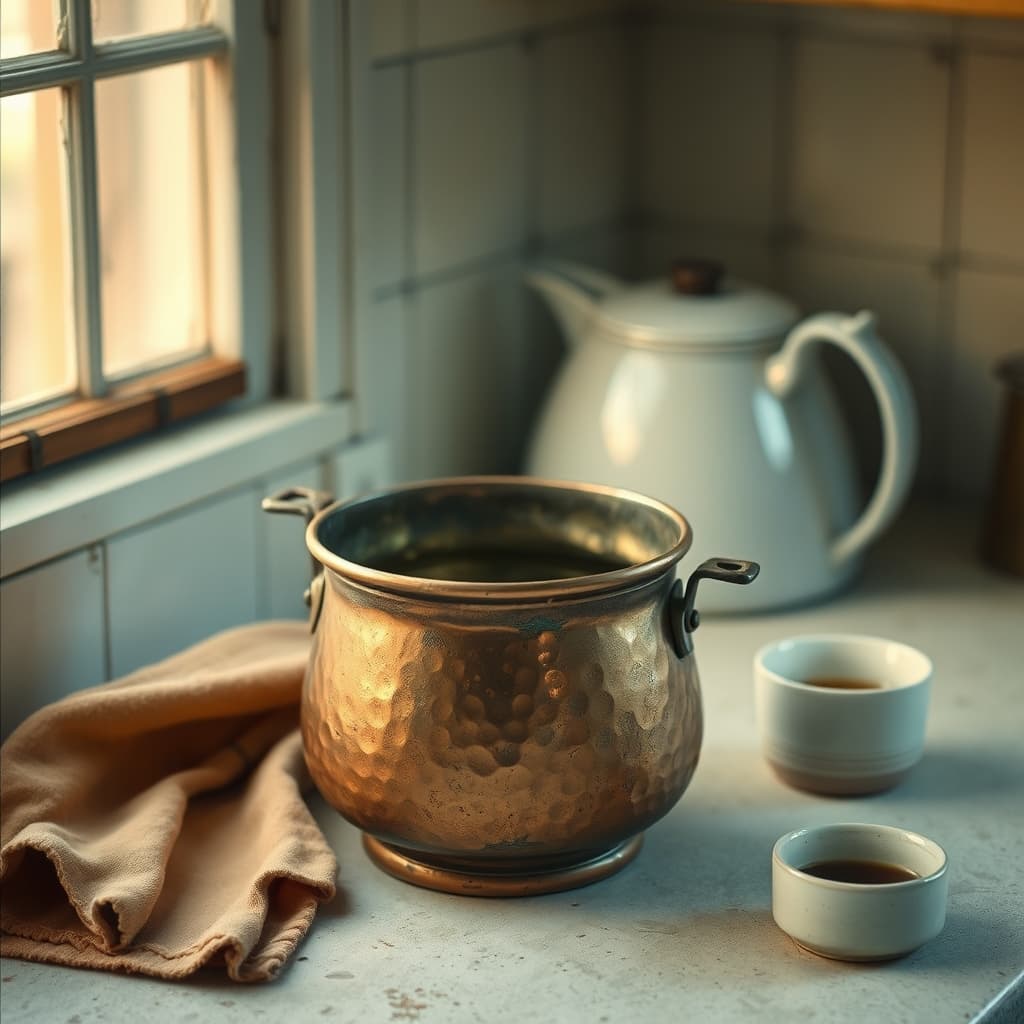
A copper cezve can look simple from across a kitchen: a small rounded vessel, a narrow neck, a pouring lip, and a handle long enough to keep the hand away from heat. Seen closely, however, it becomes a record of decisions. The curve of the body affects how liquid rises, the lip guides a controlled pour, the handle joint carries repeated strain, and the inner surface determines whether the vessel remains suitable for use. Its beauty is inseparable from construction.
Many cezves entered family life as ordinary equipment rather than display pieces. They stood near the stove, were rinsed after coffee, and returned to a hook, shelf, or cupboard. Frequent handling polished certain areas while heat darkened others. A thumb could gradually brighten the handle; the base could collect soot or burner marks; small dents might record a crowded sink or a move between homes. These traces do not prove a particular family story, but they document contact, work, and repair.
Hammer Marks Are Not Mere Decoration
Some copper vessels were formed or finished through hammering. Repeated blows shaped the metal and could leave a regular texture across the surface. On other examples, decorative marks were added after the main form had been made. Distinguishing hand work from machine-made patterning requires careful inspection and, ideally, knowledge from a coppersmith or conservator. Irregularity alone is not proof of age, and a perfectly even pattern does not automatically make an object modern.
The seams and joints deserve equal attention. A body may be raised from a sheet, joined, spun, or assembled through more than one method. Handles can be riveted, soldered, or replaced during the vessel's life. A newer handle on an older body is not necessarily a flaw; it may show that the cezve remained useful enough to repair. Recording such differences is more informative than forcing the object into an imagined untouched state.
Why the Tin Lining Matters
Traditional copper cookware is commonly lined with tin on surfaces that contact food or drink. The lining creates a barrier between the copper and acidic ingredients. Over time it can wear thin, reveal copper-coloured patches, or become damaged by abrasive cleaning and excessive heat. A decorative cezve and a cezve intended for active brewing therefore require different decisions.
If the interior lining is worn or its material is uncertain, the safest choice is not to use the vessel for preparing coffee until a qualified craftsperson has assessed it. Retinning is a specialist process, not a cosmetic coat to attempt with an unknown product. Old solder, previous repairs, and decorative finishes may also require professional advice. Nostalgia should never be used to dismiss food safety.
Cleaning Without Erasing the Evidence
A bright copper shine can be attractive, but aggressive polishing may remove patina, fine tool marks, surface coatings, and evidence of age. Before cleaning, photograph the vessel in good light and examine inscriptions, stamps, seams, loose joints, and the interior. Dust can often be removed with a soft dry cloth. Any stronger method should be tested cautiously and chosen according to whether the cezve will be displayed or professionally returned to use.
Storage also shapes survival. The vessel should be dry before it enters a cupboard, protected from damp, and supported so the handle is not carrying unnecessary weight. Hanging may suit a sound handle, but a weakened joint can be damaged by the object's own mass. Paper or fabric placed nearby should be clean and stable rather than acidic or moisture-holding.
The renewed interest in copper cezves comes partly from their warm colour and association with coffee rituals. Their deeper value lies in the way they join craft, maintenance, hospitality, and risk. A responsible collector does not need to invent the exact hand that held a vessel beside a street-lamp-lit window. The hammer marks, tin loss, repaired joint, and polished grip already offer a truthful story. Read patiently, the cezve becomes more than nostalgic décor: it is material evidence of how an everyday object was made useful, kept useful, and sometimes carried beyond its working life.