 Eski Pano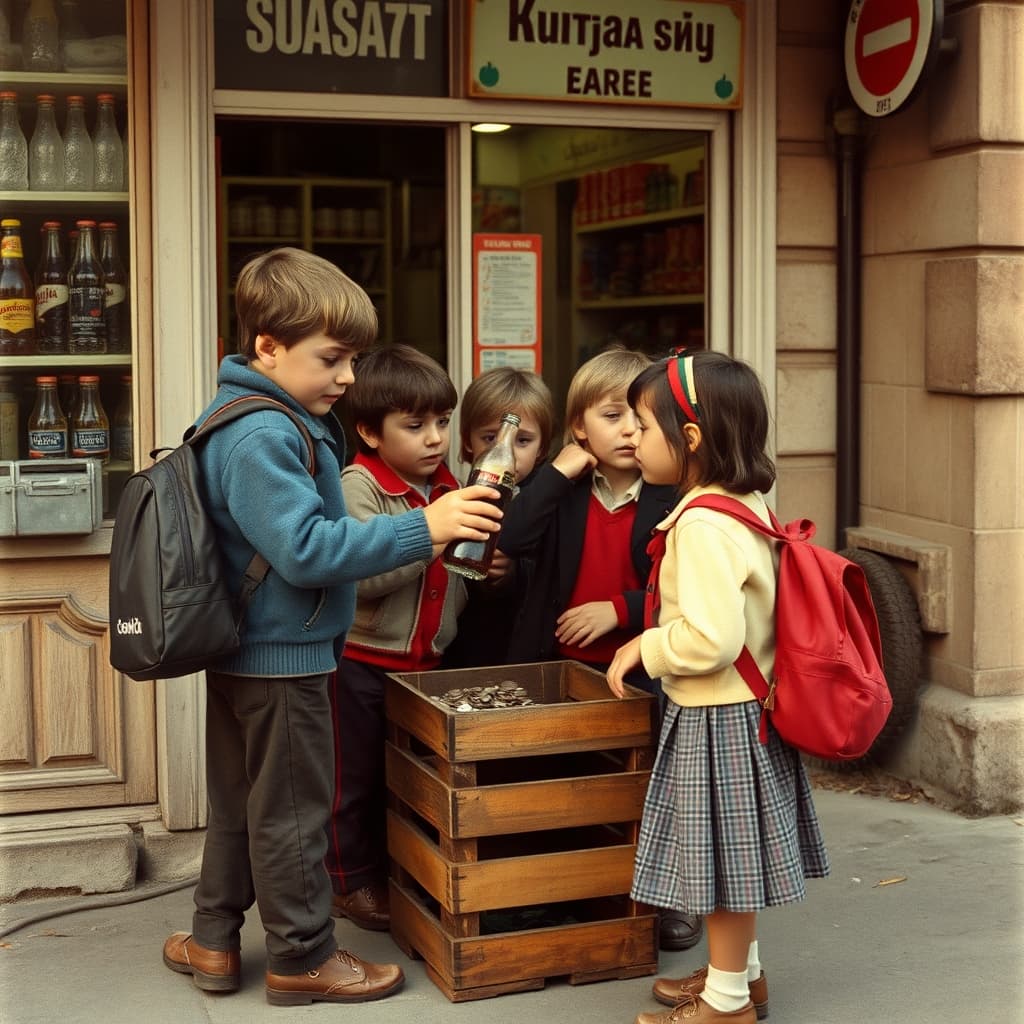
The after-school soda break was short enough to fit between the final bell and the instruction to come straight home. Children arrived at the corner shop with warm schoolbags, loose collars, and coins counted more than once along the pavement. The decision was rarely only about flavour. It involved price, who had money, whether a bottle could be shared, and what had to be returned before anyone continued down the street.
Glass soda bottles belonged to a circulation system. The drink was purchased, but the bottle retained value because it was intended to travel back through the shop to the distributor and bottler. A child drinking near the counter understood that the container was not ordinary rubbish and not automatically a souvenir. The shopkeeper might open it with a wall-mounted opener and keep the cap, while the customer remained close enough to return the empty glass.
A Small Economy of Coins and Bottles
Children developed practical arithmetic around the pause. Several pockets might contribute to one bottle. A friend who paid today could be remembered tomorrow. The deposit complicated the price in ways that encouraged questions: was the bottle being consumed there, carried away, or exchanged for another empty brought from home? Local arrangements varied, but the principle was clear. Packaging moved in a loop, and trust helped the loop function.
The bottle itself was designed for repetition. Thick glass tolerated washing, filling, transport, and collection, although chips and cracks eventually removed it from service. Scuffs around the shoulder and base recorded contact with crates and other bottles. Embossed marks could identify a producer even after a paper label disappeared. For a material historian, these details say more than a perfectly staged display: they show an object built to return.
The Corner Shop as a Supervised Pause
The shop offered a public setting that was neither school nor home. The owner often knew the children, their families, and the approximate route they should be taking. This familiarity could provide safety, but it also carried expectations. Bags should not block the doorway, bottles should not be abandoned, and loud play had to make room for adult customers. The children were guests, customers, and visible members of the neighbourhood at the same time.
Not every memory was equally carefree. Some children could buy a drink regularly; others watched or accepted a shared sip. Hygiene standards and sugar awareness have also changed, and romantic memory should not turn a sweet drink into a health recommendation. What deserves attention is the social arrangement around it: the counting, sharing, returning, and brief independence exercised under familiar eyes.
Why the Pause Remained Vivid
Soda engaged several senses at once. The cap released with a metallic snap, carbonation rose through coloured liquid, cold glass met a warm palm, and the first sip interrupted the dust and heat of the walk. A street lamp beginning to glow later in the day could signal that the pause had lasted too long. Such details fixed a few minutes in memory more firmly than many longer events.
Returnable packaging also placed responsibility inside pleasure. Enjoying the drink did not end the transaction. The empty bottle had to be taken back, placed safely in a crate, or carried home without breaking. That obligation gave the object an afterlife visible to the child. Today's discussions of reuse can sound newly invented, yet deposit systems made circular habits part of ordinary commerce generations ago.
Preserving the after-school soda break means keeping its contradictions intact. It was commercial but communal, refreshing but sugary, independent but informally supervised. The strongest memory is not a particular brand or slogan. It is the weight of the bottle after the drink was gone, the coins remaining in a palm, and the understanding that a small neighbourhood pleasure depended on returning what was meant to be used again.