 Eski Pano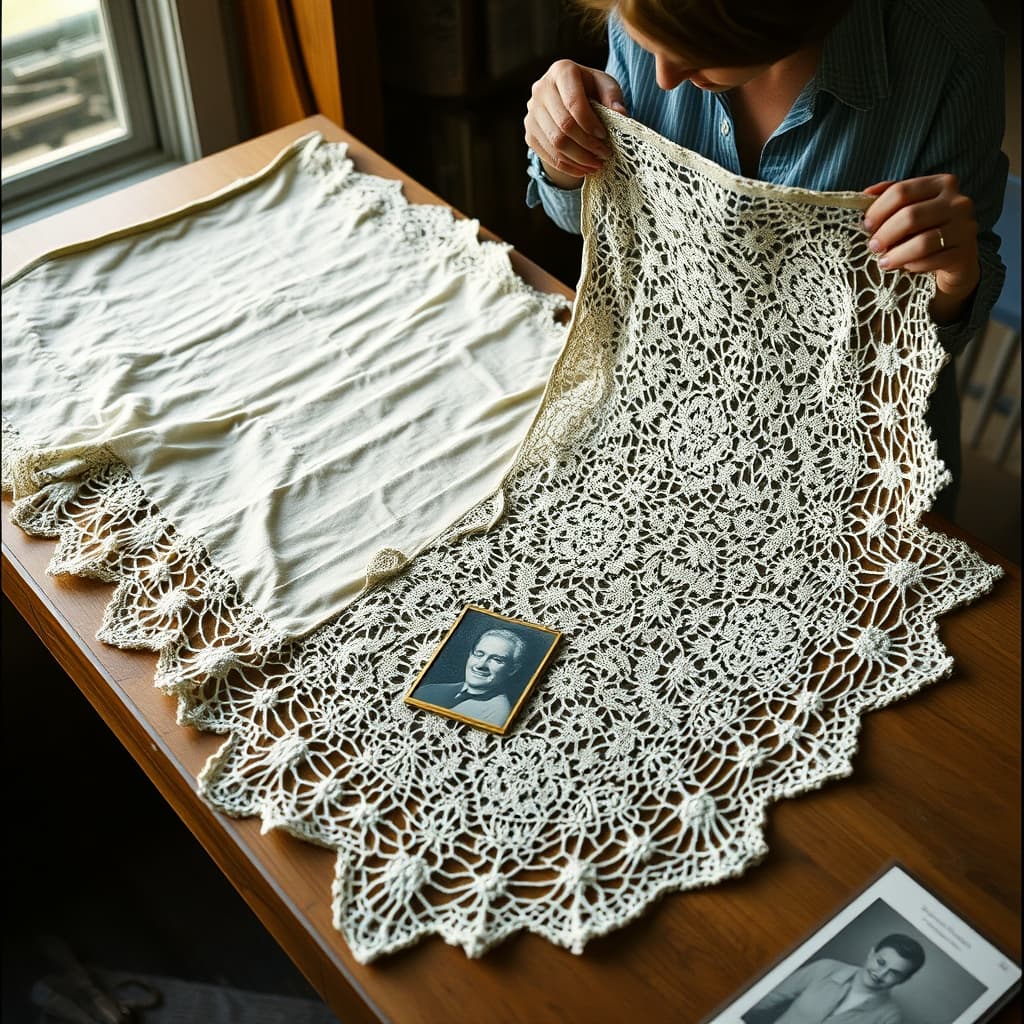
A lace cover can catch a collector's eye through pattern, fineness, colour, or an unusual edge, but appearance alone does not establish age or origin. The most valuable history may be a modest record of who made it, where it sat, how it was washed, and why it left the household. Provenance turns a decorative textile into evidence rather than simply a market object.
Lace covers include crochet, needle lace, bobbin lace, tatting, knitted lace, filet work, machine lace, embroidered net, and mixed techniques. Cotton, linen, silk, rayon, synthetic thread, metal, beads, and later repairs may coexist. Local names can describe use rather than construction. Fibre, structure, tools, maker, place, and date require careful examination.
Attribution Must Be Built from Several Clues
Motifs and workmanship can suggest a tradition but rarely prove one household, village, or maker. Thread type, twist, joins, starting points, tension, edges, pattern repeats, errors, repairs, stains, and unfinished sections reveal process. Pattern books, magazines, school notebooks, photographs, receipts, letters, and related family textiles can strengthen an attribution.
Dealer descriptions and inherited labels are useful leads, not automatic facts. Terms such as antique, handmade, regional, bridal, or museum quality can be vague or promotional. Machine-made lace may be sold as handwork, and a modern reproduction may use an older pattern. Uncertainty should remain on the catalogue rather than be replaced by a profitable story.
Ethical Collecting Keeps the Maker in View
A collector should ask how the textile entered the market, whether the seller had authority, and whether family members or communities consider it sensitive. Dowry, mourning, religious, ceremonial, or named personal textiles may carry obligations beyond ownership. Economic hardship can also explain a sale. Legal purchase does not erase the need for respectful context.
Named makers deserve credit, including women whose work was catalogued only as anonymous domestic craft. Acquisition records should include seller, prior owner, date, price where appropriate, source location, statements, photographs, and transfer documents. Gaps should be identified. Publishing a family's name, address, or private story may require consent.
Condition Is Evidence, Not Just a Price Grade
Yellowing, fold lines, starch, smoke, repairs, worn centres, broken picots, replaced sections, insect loss, dye transfer, and iron marks reveal household use. Aggressive whitening can erase these traces and weaken the textile. Bleach, optical brighteners, stain removers, starch, perfume, adhesive tape, and high heat may cause irreversible change.
A textile conservator should assess fibre, colour, soil, fragility, and previous treatment before cleaning. Storage may require clean hands, suitable archival support, controlled light, stable dry conditions, pest monitoring, and padded folds or flat placement. Heavy pieces need support; pins and adhesive labels should not pierce or permanently mark them.
Digitisation should show front, reverse, edges, joins, repairs, scale, colour reference, labels, and associated packaging. High resolution supports comparison but cannot prove age by itself. Image-sharing platforms can detach patterns from makers and encourage uncredited commercial copying; licences and attribution should be explicit.
A Digital Nostalgia Archive can connect the lace cover with hooks, shuttles, bobbins, thread cards, pattern sources, furniture photographs, washing equipment, acquisition documents, and maker testimony. A period's taste appears not only in the motif but in display, labour, trade, and later collecting. Preserving it means keeping beauty beside provenance gaps, market claims, family consent, material wear, conservation limits, and credit for the hands that formed every opening.