 Eski Pano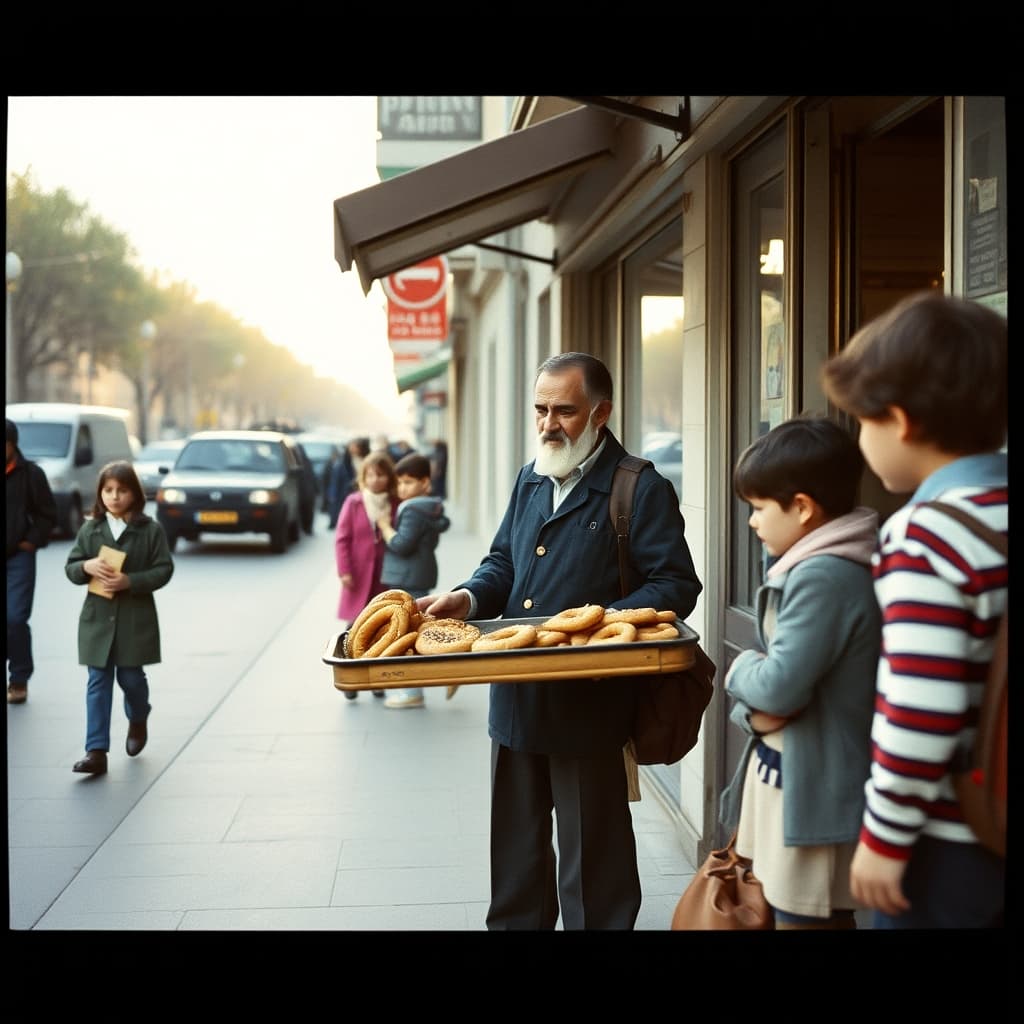
The simit seller's morning call could organise a school route as reliably as a clock. Children knew whether there was time to stop, parents listened from windows, and workers recognised where the vendor should be before the first bell. The sound felt warm because it joined fresh bread, movement, and a familiar person within a narrow daily schedule.
Simit and its sale vary by city, bakery, period, recipe, transport, and local regulation. Vendors may carry trays, baskets, carts, stands, bicycles, or sealed containers; some sell for one bakery and others independently. Shape, sesame, molasses coating, freshness, price, and route differ. Bakery and vendor should be documented separately even when customers experience them as one service.
The Route Began before Dawn
Bakers mixed, fermented, shaped, coated, and baked early enough for distribution. Sellers collected a counted quantity, planned stops around schools, factories, transport nodes, and residential streets, carried change, and accepted the risk of unsold goods. Weather, road closures, school holidays, and bakery delays changed the route.
The call announced both product and location. A distinctive rhythm helped customers recognise the seller across courtyards and traffic. Repeating it for hours strained the voice, while carrying weight strained shoulders, arms, and back. The cheerful sound belonged to demanding labour rather than appearing spontaneously with sunrise.
Children's Purchases Required Boundaries
Buying simit could teach counting, choice, and independence, but children might cross roads, rush before the bell, carry money openly, accept unsuitable food, or face pressure from peers. Schools, families, vendors, and authorities had different rules. Age-appropriate participation should not be romanticised when traffic or safeguarding conditions are unsafe.
Pricing mattered. A small change in cost affected pocket money and family budgets. Informal credit or an extra ring for a familiar child could express care while also creating unequal treatment or hidden debt. Historical prices need dates and wage context; a number remembered without purchasing power can mislead.
Street Food Needs Current Professional Controls
Food should be protected from dust, rain, exhaust, handling, pests, and contaminated surfaces. Clean containers, appropriate wrapping, hand hygiene, lawful sourcing, safe transport, separation from money handling where possible, and time limits preserve quality. A nostalgic open tray should not be recreated if it fails current food regulations.
Wheat and gluten are central allergens, and sesame is a major allergen. Milk, egg, soy, or other ingredients and cross-contact may occur by recipe and bakery. Vendors need accurate information from producers. Texture, colour, or familiarity cannot reveal the full ingredient list.
The selling point must not block pavements, ramps, crossings, school gates, tactile routes, or traffic visibility. Children should not gather in the road. Reasonable volume respects infants, shift workers, ill residents, and sensory needs. Licensing, waste collection, receipts, food registration, and permitted hours follow current local rules.
A Digital Nostalgia Archive can connect the call with bakery ledgers, production schedules, trays, routes, school timetables, prices, wrappers, licences, photographs, and interviews with bakers, sellers, children, and parents. The morning scene mattered because several schedules met before the bell. Preserving it means keeping warmth beside pre-dawn labour, child safety, fair pricing, food hygiene, allergens, accessible pavements, and the changing regulations of street trade.