 Eski Pano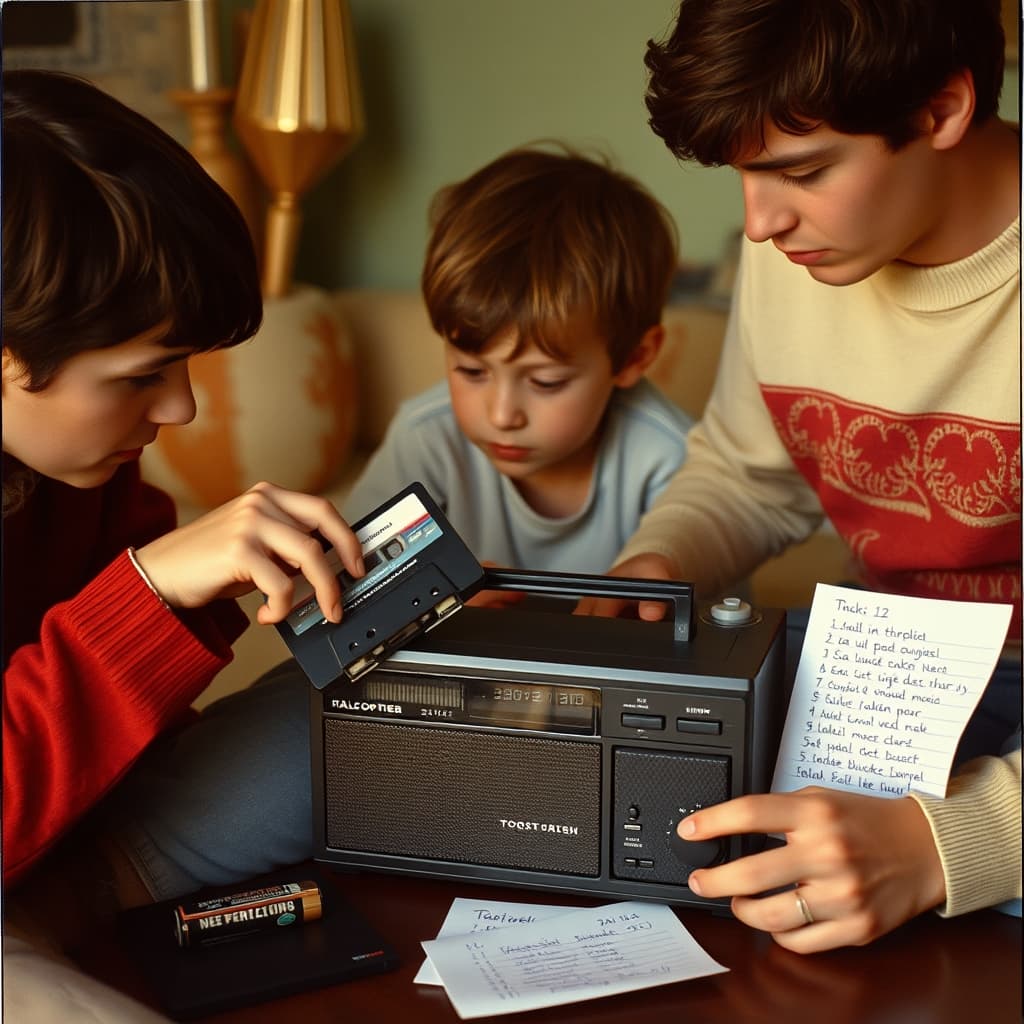
Using a cassette player could feel ceremonial because listening began before sound. Someone chose a tape, read a handwritten label, checked which side faced up, pressed eject, seated the cassette, adjusted volume, and waited for the mechanism to engage. If the machine included radio, tuning added another search. The ritual was a sequence of small decisions rather than a single press of play.
Cassette equipment included mono recorders, stereo decks, radio-cassette players, portable units, music centres, car stereos, and language machines. Not every cassette player had an antenna or radio. Controls, noise reduction, auto-stop, auto-reverse, recording inputs, power, and speakers varied. Model, manual, control labels, associated tapes, and photographs should identify the actual device.
The Cassette Organised Listening into Sides
Side A and Side B divided time. Listeners remembered where a song began, how much blank tape remained, and whether fast-forwarding would overshoot. A counter gave only an approximate position unless documented for that machine. Rewinding, flipping, and searching made sequence tangible, while a tangled tape could interrupt the evening.
Home recordings added further steps. On many machines record and play were pressed together; write-protect tabs reduced accidental erasure; microphones needed suitable inputs and distance. Recording radio required tuning and timing around announcements. Copying commercial music involved copyright, while private voices required consent and careful access.
The Machine Became Part of Household Rules
Families negotiated volume, programme choice, study time, guests, sleep, and who controlled the buttons. Children might be allowed to use expendable tapes but not a parent's collection. Someone bought batteries, found mains leads, labelled recordings, stored cassettes away from heat, and repaired broken cases. The shared ritual included authority as well as enjoyment.
Listening could bring people together around built-in speakers or create privacy through headphones. Neither was automatically equal. People serving tea, supervising children, working shifts, or needing quiet might miss or resist the session. Hearing, sensory, and language needs changed access. A familiar family melody does not prove that every person welcomed it.
Maintenance Protected Tape and Sound
Dirty heads, hardened pinch rollers, stretched belts, worn gears, poor azimuth, corroded battery contacts, and failing electronics cause dull sound, unstable speed, or tape damage. Household oil, abrasive cleaning, random solvents, and forced controls can make faults worse. A qualified technician should service valuable equipment and test it with expendable media first.
Cassettes can have missing pressure pads, cracked shells, loose leaders, uneven winding, stretched tape, mould, or degraded binder. Suspected mould should be isolated and assessed, not played in a living room. Tapes need cool, dry, stable storage away from magnets, heaters, leaks, sunlight, and rapid climate change.
Headphones and volume require modern hearing guidance. Noise outside can tempt a listener to turn sound higher, and long sessions add exposure. Demonstrations should use limited levels, clean covers, and accessible alternatives. Portable listening near traffic or platforms must preserve environmental awareness.
A Digital Nostalgia Archive can connect the cassette player with tapes, track lists, radio schedules, batteries, manuals, repair notes, family rules, and interviews with listeners. The ritual mattered because analogue listening exposed every step between choosing and hearing. Preserving it means keeping anticipation beside technical identity, household authority, maintenance, hearing safety, copyright, privacy, and the fragile magnetic strip carrying the melody.