 Eski Pano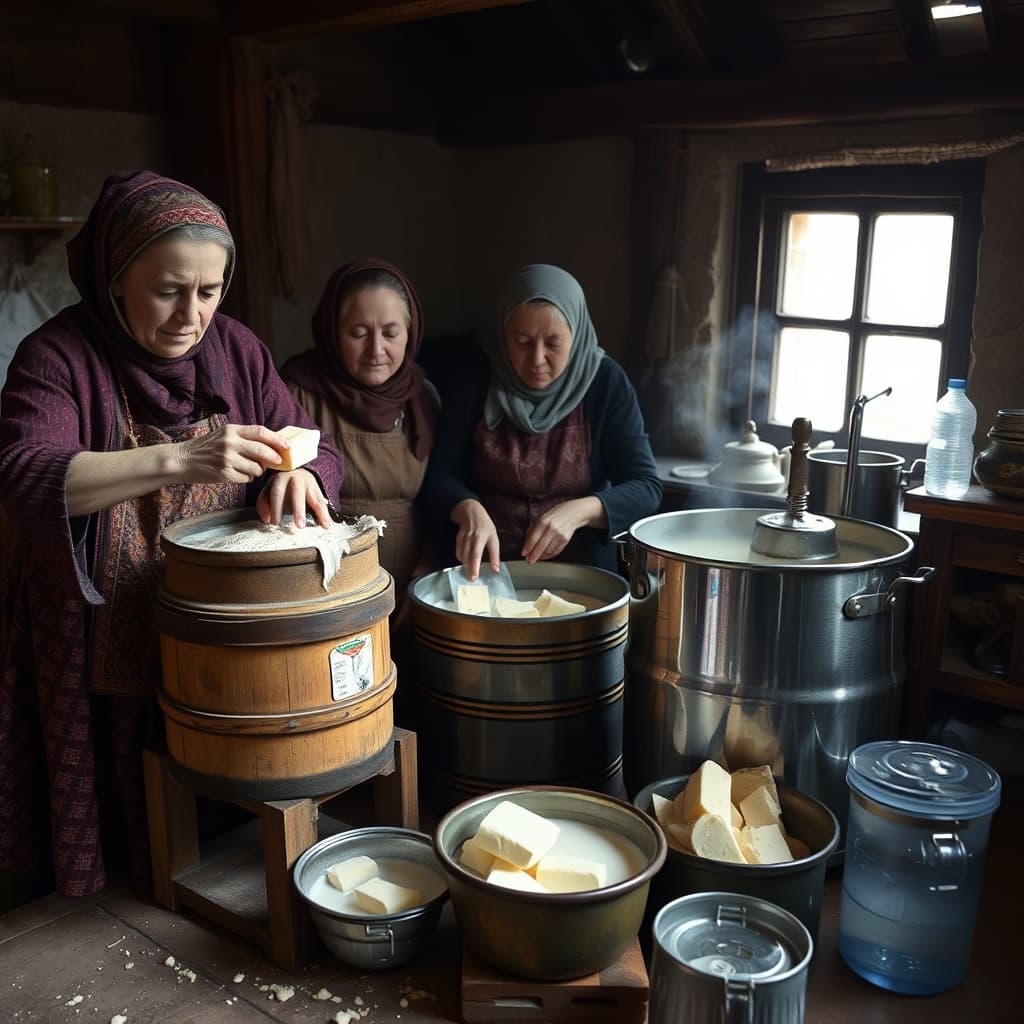
Days of churned ayran recall a kitchen habit in which a drink, butter, and household schedule could emerge from the same repeated motion. A churn moved steadily, yoghurt and water changed texture, fat gathered, and the remaining liquid was served cool or used in other foods. The memory survives because the process made dairy transformation audible, physical, and shared.
The expression yayık ayranı can refer to regional practices with important differences. In some methods yoghurt is diluted and churned so butter separates, leaving a tangy liquid; in others ayran is mixed or churned primarily as a drink. Milk source, starter culture, yoghurt acidity, water, temperature, salt, churn shape, duration, butter recovery, and later use vary. The local maker and process must be recorded.
Churning Managed Fat, Water, and Temperature
Agitation brings fat globules together under conditions affected by temperature, acidity, composition, and movement. Too warm or too cold a mixture can change separation and texture. The person churning watched sound, resistance, foam, grain formation, and the appearance of butter. These sensory judgements were practical knowledge, not an effortless inherited instinct.
Wooden, skin, ceramic, metal, or later mechanical churns differ in porosity, cleaning, insulation, capacity, and motion. A horizontal skin bag, tall wooden churn, jar, or machine should not be described as interchangeable. Tool marks, repairs, residue, photographs, terminology, and oral history help identify the regional system.
The Drink Was Produced through Long Domestic Labour
Before churning, someone cared for animals or obtained milk, heated or processed it as required, prepared a culture, fermented yoghurt, cooled it, cleaned the churn, fetched safe water, measured the mixture, churned, collected butter, strained or seasoned the liquid, served it, and cleaned again. Women frequently managed this chain alongside cooking, childcare, agriculture, and paid work.
Children and other relatives might take turns with the churn, turning labour into a social activity. Participation could be enjoyable while the repetitive motion still strained shoulders, arms, hands, and back. Stable equipment, suitable height, breaks, and tasks matched to age and ability matter. Romantic demonstrations should not ask visitors to use heavy or unstable historic vessels.
Traditional Dairy Still Requires Modern Safety
Raw milk can carry harmful pathogens. Current local dairy regulations and food-safety guidance should determine milk sourcing, pasteurisation or other lawful treatment, fermentation control, potable water, clean vessels, temperature, storage, and service. Sour taste alone does not prove safety, and a familiar family starter can become contaminated.
Porous wooden or skin churns are difficult to sanitise and may not be suitable for active public food production. Historic vessels can be documented and displayed while modern food-safe equipment demonstrates the motion. Cross-contamination from animals, hands, cloths, water, floors, and unclean storage must be prevented. Finished drink should be cooled and consumed or stored under validated conditions.
Milk is a major allergen, and fermentation does not remove milk proteins reliably. Lactose levels and tolerance vary; ayran should not be described as universally suitable. Salt content depends on recipe and serving. Public tastings require accurate ingredients, allergen controls, clean cups, cold holding, limited service time, and alternatives.
A Digital Nostalgia Archive can connect churned ayran with dairy animals, milk vessels, yoghurt cultures, churns, butter tools, water sources, salt measures, recipes, seasonal calendars, photographs, and interviews with makers. The habit returns forgotten kitchen knowledge when process remains visible. Preserving it means keeping flavour beside regional variation, women's labour, bodily effort, material-specific tools, dairy microbiology, temperature control, allergens, and safe modern interpretation.