Eski Pano
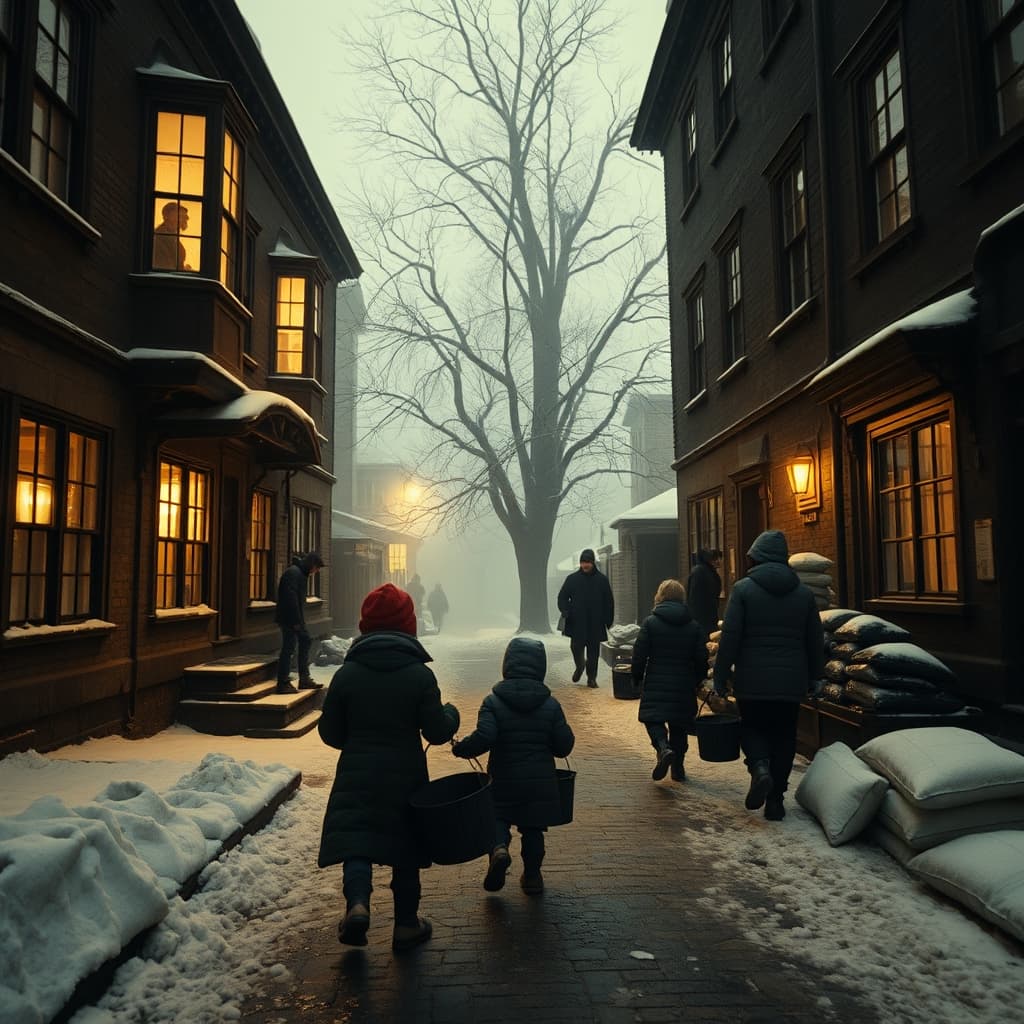
When people looked at the street through fogged glass on winter mornings, one of the most familiar images of old city life was children carrying coal. Their hands were a little cold, the sleeves of their coats darkened by soot, and they walked carefully from an apartment entrance to the basement or from a courtyard to the kitchen, holding a small bucket or cloth bag. If the stove had not yet fully caught fire, a thin coldness moved through the house, and an elder would call out, “Bring a little more coal.” For children, this task was not only a burden; it also gave them the feeling of contributing to the warmth of the home. In neighborhood culture, carrying coal was one of the clearest ways of learning responsibility for shared life at an early age.
From the perspective of neighborhood culture, stove coal was not merely fuel in winter, but an element that shaped the rhythm of the entire street. When the coal seller’s cart was heard, doors opened, basement covers were lifted, and the fronts of apartment buildings briefly turned into working spaces. Shopkeepers shoveled snow before their stores, neighbors helped an elderly person carry a sack, and children became small but essential parts of this movement. In old cities, keeping warm was not only a private comfort; it was often the result of collective preparation. Lowering coal into storage, filling buckets, lighting the stove, and removing ash were connected steps in the same winter discipline.
The presence of children in this work may seem harsh today, yet at the time it was one of the daily lessons of the neighborhood. Of course it was tiring, dirty, and sometimes heavy, but through it a child noticed the hidden order of the home. The warm room did not appear by itself. The stove had to burn for tea to boil, for the laundry hung by the mother to dry, for the father to read his newspaper, and for the younger sibling’s hands to warm. Carrying the coal bucket without spilling it, giving way to a neighbor on the stairs, standing back when the stove door opened, and knowing where to place the ash bucket were all among the quiet rules of neighborhood life.
What made these scenes lasting was the shared sound and smell surrounding coal. Wheel tracks on wet streets, dusty air rising from the basement, the slight crackle of the stove pipe, the solid sound of coal pieces falling into the bucket, and the first flame of kindling were inseparable parts of winter memory. Children sometimes rested under the shade of a plane tree, pushed their hands into their pockets, watched their breath turn to vapor, and then walked back home. In the neighborhood, everyone could sense whose stove was late to catch, whose coal was running low, and who needed help. Heating thus ceased to be merely a technical need and became a field where neighborly relations were tested and strengthened.
Remembering children who carried stove coal today does not mean presenting the past as effortless. On the contrary, it allows us to see how much labor stood behind the warmth of old city life. Those children carried not only coal at the center of winter, but also the continuity of the home and the shared solidarity of the neighborhood. The stove light behind fogged glass, the sound of the teapot, and the soot left on hands describe the daily reality of an era. This is why they took a place at the heart of old city life: with their small bodies, they became part of a larger common order and showed that warmth was not only consumed, but built together.
Why Children Carrying Stove Coal in Winter Took a Place at the Heart of Old City Life by Taking Shelter in a Plane Tree's Shade After Window Fog