Eski Pano
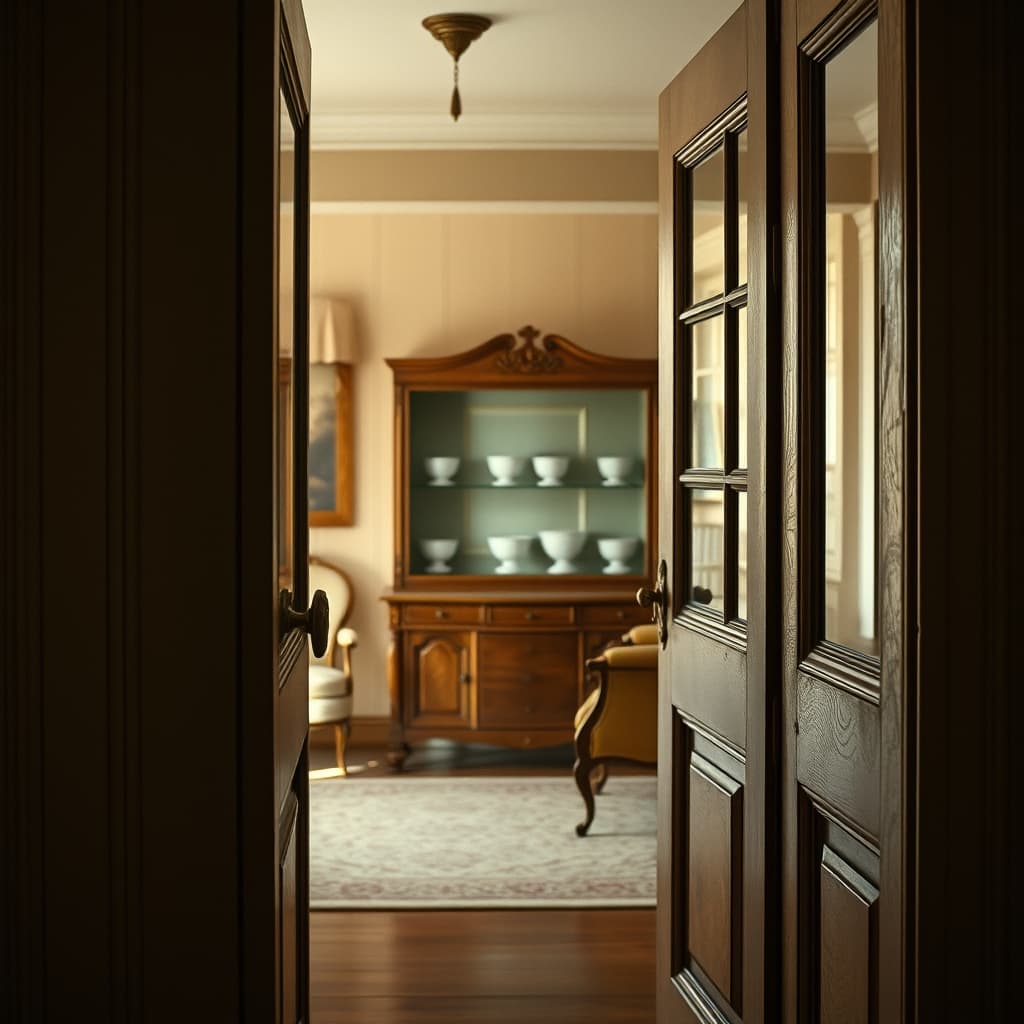
In old homes, taste was often hidden not in the loudest objects, but in the small glimmers placed where they could be seen. A brass knocker touched by hands for years on the front door was the first sign encountered by anyone entering the house. A coffee set, crystal bowl, or family keepsake standing in the most visible corner of the living room display cabinet quietly described the inner world of the home. The door faced outward, while the cabinet faced inward like two different faces of the same house. One welcomed the guest, the other showed the order and preference of the host. For this reason, the brass door knocker and the living room cabinet were not merely two objects, but two small stages carrying the aesthetic discipline of an era.
From the perspective of object stories, the brass knocker was a special item standing between everyday use and symbolic value. It left a warm color on a cold iron door and carried a metallic yet familiar sound into the house whenever it was struck. Over time its shine faded, and fingerprints and weather formed a thin layer of lived experience on its surface. In some homes, the knocker was rubbed and polished before special days, preparing the face of the door for visitors. This small act of care was part of the respectful relationship the household formed with the outside world. A door knocker might be plain or ornate in design, but in every case it established a language of courtesy at the threshold.
The living room display cabinet represented another world of taste. Porcelain pieces, coffee cups, silver-colored sugar bowls, cut-glass dishes, and sometimes little souvenirs brought from distant cities were kept behind glass doors, yet they were not merely decorations. They were arranged fragments of family history. The object placed in the most visible corner was often not the most expensive one, but the one carrying the greatest meaning. A set received at a wedding, a vase bought with a first salary, or a sugar bowl inherited from a grandmother joined taste with memory. The cabinet taught not only display, but also preservation, because beautiful things were kept behind glass, away from the haste of daily life.
Reading the taste of an era through these two objects helps us understand the fine line between display and restraint. The brass knocker was visible enough to be seen from the street, yet it did not shout. The living room cabinet was careful enough to be shown to guests, yet it did not take over the whole home. In old houses, beauty was often built through order, cleanliness, polished surfaces, and objects placed correctly. The edge of a lace cloth, the wiped trace of cabinet glass, the shine of the knocker, and the symmetry of cups formed a household language together. That language showed that refinement could be created even with limited means. Aesthetic value was not only the price of what was purchased, but the place given to it and the care shown toward it.
When we look today at brass door knockers or old living room cabinets, we see not only the objects of the past, but also a way of presenting the self. In those years, a home spoke to the outside through its door and to the inside through its cabinet. The knocker was the material form of saying “welcome” to the guest, while the cabinet was the arranged and polished face of family memory. The taste of an era moved precisely between these two objects, between the public threshold and the private living room. To remember them is not simply to admire old designs. It is to notice again the place once given to refinement, care, and memory within everyday life.
The Brass Door Knocker and the Most Visible Corner of the Living Room Display Cabinet: How It Reflected the Taste of an Era