 Eski Pano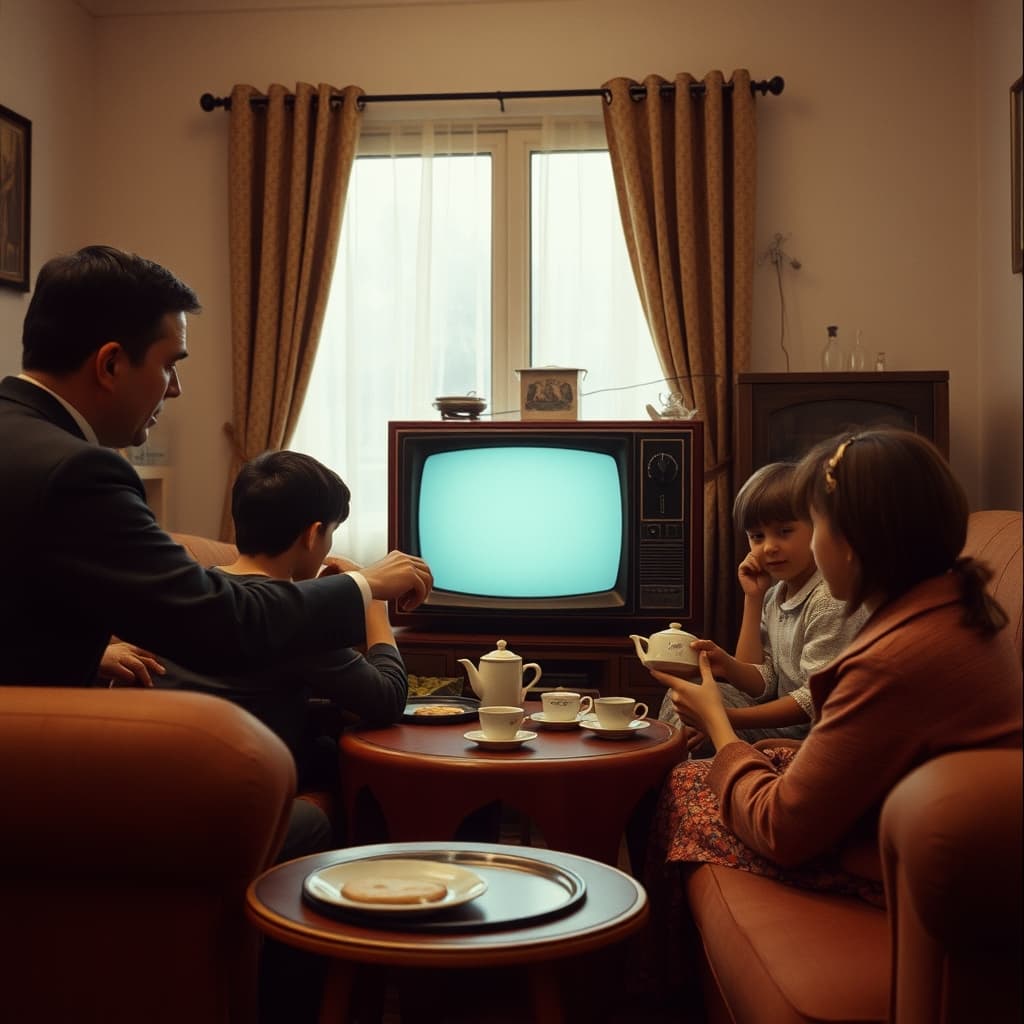
A cathode-ray television did more than occupy a corner; it reorganised the sitting room around a glowing screen. Chairs turned toward it, tea arrived before a scheduled programme, and conversation rose during announcements or transmission breaks. The set required patience at switch-on, adjustment when the picture rolled, and negotiation over volume. Because viewing followed a broadcast timetable, an evening could feel shared with neighbours beyond the walls.
Television experiences differed by country, coverage, decade, household income, and model. Black-and-white sets, colour receivers, valve-based circuits, transistorised electronics, indoor aerials, and rooftop antennas overlapped. Calling every old receiver simply “tube television” describes the cathode-ray display but not all internal technology. Model plates, manuals, service records, and broadcast schedules give a more precise history.
The Picture Needed Preparation
Older sets often took time to stabilise after power-up. Viewers adjusted channel selectors, fine tuning, brightness, contrast, vertical hold, or horizontal hold according to model. Weak reception produced snow, ghosting, lines, or fading sound. Someone might turn an indoor aerial while another called instructions from the sofa; rooftop work, however, involved serious fall and electrical hazards and belonged with competent adults or professionals.
The picture was also shaped by the broadcast network. Transmitter distance, terrain, weather, local interference, and antenna condition affected reception. Not every fault originated inside the set. Families learned informal diagnostic routines, but repeated hitting or unsafe improvisation could worsen damage. A technician distinguished signal trouble from tuner, power, audio, or display faults.
A Programme Became an Appointment
Without on-demand viewing, schedules carried authority. News, serials, sports, music, children's shows, and national events brought different generations together, though not always harmoniously. The person nearest the controls could shape the room. Guests arrived early, homework was timed around a favourite programme, and a missed episode became conversation the next day.
Shared viewing did not guarantee equal participation. Adults controlled content, children might be sent away, and domestic work continued while others watched. Women often served refreshments or completed tasks within earshot. Neighbours without a set could be welcomed, but ownership also signalled income and status. Oral histories should ask who sat, who stood, who chose, and who kept the evening running.
Repair Required Respect for High Voltage
Repairers replaced components, cleaned controls, soldered connections, adjusted circuits, and diagnosed tubes or power supplies. Cathode-ray sets can retain dangerous high voltage even when unplugged, and heavy glass creates implosion and lifting risks. Untrained owners should not open them. Preservation and restoration require qualified expertise, correct isolation, safe discharge procedures, and responsible handling of hazardous materials.
Cabinet scratches, replaced knobs, crocheted covers, service labels, and handwritten channel notes document domestic life. Cleaning should avoid liquid entering vents and harsh products damaging plastic, veneer, coatings, or screen surfaces. A set displayed in an archive does not need to operate to communicate its history; sometimes safe documentation is preferable to energising fragile equipment.
A Digital Nostalgia Archive can connect receivers, manuals, programme listings, repair invoices, antenna photographs, family snapshots, and technicians' testimony. Copyright and personal consent apply to recorded broadcasts and home images. The cathode-ray television remains vivid because light, furniture, labour, and schedule converged around it. The screen was small, but it gave the room a public horizon that arrived at the same hour for everyone.