Eski Pano
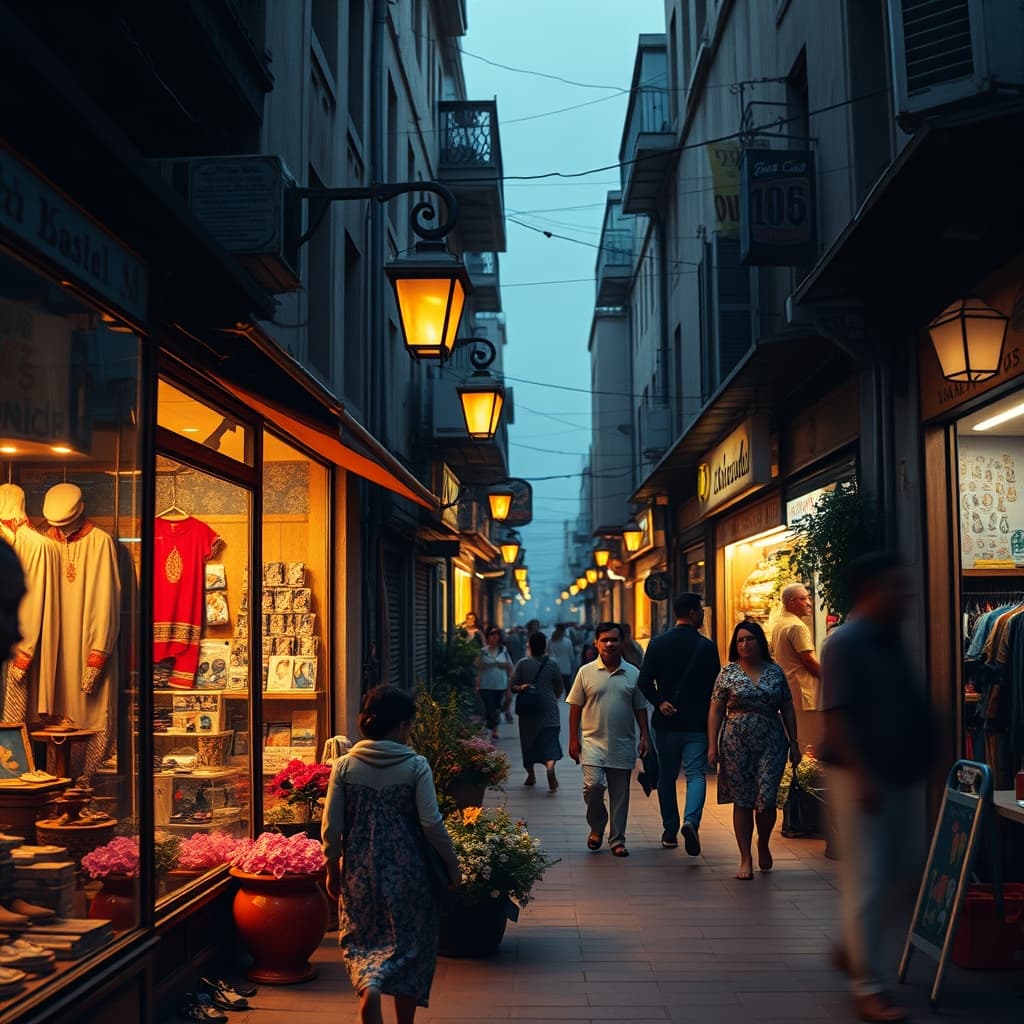
In the hours when evening slowly descended over the city, the bazaar was not merely a place for shopping. It became a place of watching, wandering, and absorbing. Before the street lamps had fully defeated the dark, the pavements would fill with a yellow glow, and shop windows would catch that light and return it through silk fabrics, enamel pots, polished shoes, and ribboned boxes. Children walking beside their parents slowed down in front of each display, while adults experienced the peculiar happiness of looking without necessarily buying. In the air, the coolness of evening mixed with the scent of honeysuckle, linden, or clean soap. For that reason, walking past the windows of the bazaar turned into a small urban ritual that spoke of much more than a list of necessities.
Seen through the lens of time, these window strolls recall an urban courtesy that came before aggressive consumer culture. People went to the bazaar not only to purchase things, but also to learn how to look at the world. The delicacy in the draper’s display, the order inside the watchmaker’s window, the colors at the candy shop, or the polished surfaces at the shoemaker all became quiet teachers of everyday taste. Shopkeepers were part of that rhythm as well. The cloth seller sweeping his doorway, the jeweler adjusting the display one last time before dusk, and the pastry seller leaving the door slightly open so the glass would not steam up all helped build both the appearance and the memory of the bazaar. To walk there under the street lamps was also to watch the city gather itself again for the evening.
Many of the details that made those days unforgettable seem small today, yet their effect was large. The lace cloth seen up close against the window, the distant bell of a tram or the horn of a minibus, teenagers cracking sunflower seeds by the pavement, a child running from a father’s hand to the toy display: all these scenes gave city life its layers. People saw one another, exchanged greetings, and truly lived the sentence, “We just went out for a little stroll.” A walk through the bazaar was less about buying than about finding a reason to spend time together. Perhaps nothing was purchased at all, yet once back home the conversation continued: “That dress in the window was beautiful,” or “You should have seen the new radios.” The outing entered the house with them and lived on there a little longer.
The flower-scented streets formed the softest part of this memory. In older city centers there were flowerpots between shops, geraniums at apartment entrances, jasmine overflowing from courtyards, and seasonal tree scents falling toward the road. Before concrete swallowed every surface, an evening walk was also a walk through layers of fragrance. That made the bazaar not merely a visual place, but a sensory one. Memory becomes stronger at exactly that point, because a person recalls a shop window not only through its light, but through the scent and sound encountered while passing it. That is why those streets now survive in the mind with a near-poetic quality. They represent the side of the city that was not only seen, but deeply felt.
Today the lights on those same avenues may be brighter, the windows larger, and consumption faster, yet the old warmth is harder to reach. In that period, strolling past bazaar windows was a small act of resistance against haste. People saw themselves not in reflective surfaces alone, but in one another’s glances and in a shared slowness. The memories that grew beneath the street lamps tell us something important now: a city is built not only by its buildings, but by the way one moves through it. The forgotten details are the scent of flowers, the face of the shopkeeper, the patience of looking into a window, and the small excitement retold at home. That is why nostalgia remains so powerful. Not because it makes the past perfect, but because it reminds us how much lived feeling once resided in what seemed entirely ordinary.
The Days When Strolling Past Bazaar Shop Windows Was Entertainment in Itself Within Memories Growing Under Street Lamps: What Do Flower-Scented Streets Tell Us with Their Forgotten Details