🇹🇷 Türkçe | cam fanus ve anneanne evinin değişmeyen köşesi: ustalık ve sabrın izini neden hâlâ taşıyor
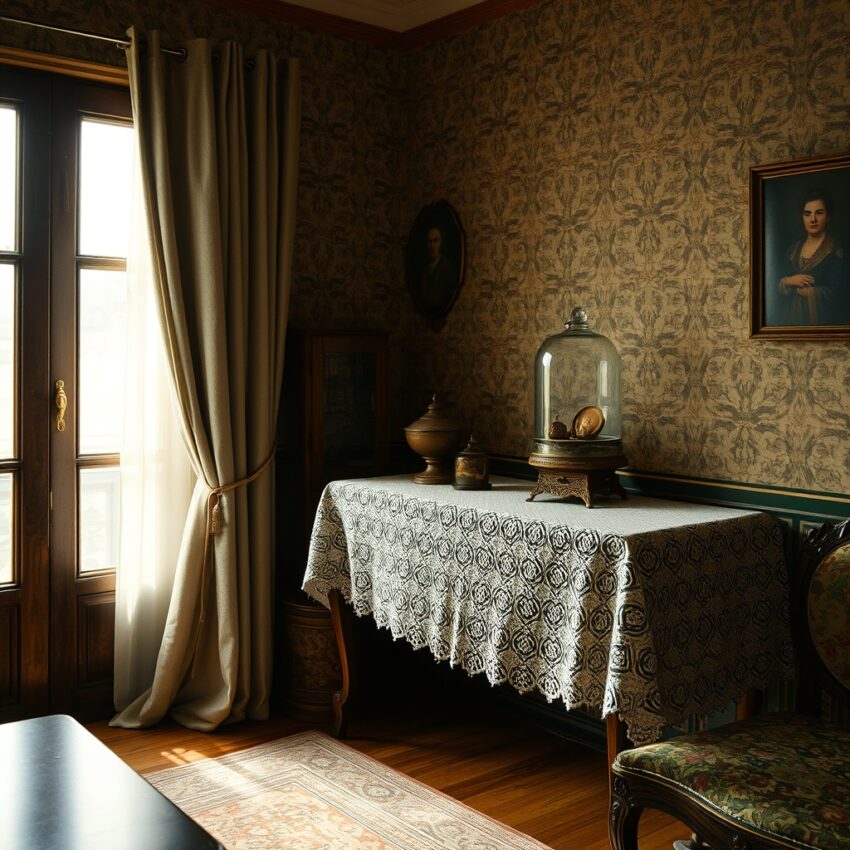
Bazı evlerde zamanın en yavaş aktığı yer, salondaki büyük eşyalardan çok küçük bir köşedir. Anneanne evine girildiğinde hemen fark edilen o köşe, çoğu zaman dantelli bir örtünün, cilalı ahşap bir konsolun ve üstünde duran cam fanusun etrafında şekillenir. Fanusun içinde bazen yapma çiçekler, bazen bir düğün hatırası, bazen de yıllardır aynı yerde duran küçük bir saat ya da porselen biblo bulunur. Çocuk gözünün en çok takıldığı şey, o camın altında duran düzenin hiç bozulmamasıydı. Tozdan korunan, özenle yerleştirilmiş, neredeyse sessiz bir saygıyla muhafaza edilen bu köşe, evin gündelik telaşından ayrı bir vakti saklar gibiydi. Bu yüzden cam fanus, yalnız bir süs eşyası değil; ev içi terbiyenin, sabrın ve elde yapılan işlere duyulan hürmetin görünür simgelerinden biri hâline gelirdi.
Obje Hikayeleri açısından bakıldığında cam fanus, geçmiş kuşakların eşyayla kurduğu ilişkinin incelikli bir örneğidir. Çünkü bu nesne, sadece sergilemek için değil, korumak için de vardır. İçine konan her şey biraz daha kıymetli, biraz daha uzun ömürlü ve biraz daha anlatıya açık hâle gelir. Bir çiçek düzenlemesi, el emeği bir süs, bir fotoğraf çevresi ya da küçük bir yadigâr, fanusun içinde gündelik kullanım alanından çıkarak hatıra alanına geçerdi. Eski evlerde eşyanın bir ömrü olduğu kadar bir itibarı da vardı; hemen tüketilip yer değiştirilecek objeler yerine, doğru yere yerleştirilip yıllarca aynı anlamı taşıyan parçalar tercih edilirdi. Cam fanus bu anlayışın sessiz ama güçlü örneklerinden biridir.
Ustalık ve sabır izinin bu nesnede hâlâ hissedilmesinin nedeni, onun etrafında kurulan bakım düzenidir. Fanusun camı düzenli silinir, altındaki dantel örtü özenle düzeltilir, içindeki objelerin açısı bile rastgele bırakılmazdı. Anneannelerin ya da evin büyüklerinin bu düzeni sürdürme biçimi, sadece temizlik değil, bir tür dikkat terbiyesi öğretirdi. Çocuklar o köşeye hoyratça yaklaşmamayı, camın üstüne parmak izi bırakmamayı, içindeki şeylerin neden önemli olduğunu anlamayı öğrenirdi. Bazen misafir gelmeden önce yalnız o köşe elden geçirilir, fanus hafifçe kaldırılır, altı silinir ve aynı hassasiyetle yerine konurdu. Böyle anlarda nesnenin değeri malzemesinden değil, etrafında biriken özen kültüründen doğardı.
Anneanne evinin değişmeyen köşesi, aynı zamanda ev hafızasının düzenli yüzüdür. Salonun başka yerleri zamanla yenilenebilir; perde değişir, koltuk kumaşı solar, radyonun yerini başka bir cihaz alır. Ama fanuslu köşe çoğu kez aynı kalır. Bu kalıcılık, eve giren herkese görünmez bir devamlılık duygusu verir. Bayram ziyaretlerinde, okul çıkışlarında, yaz tatili gelişlerinde çocukların ilk fark ettiği şeylerden biri yine o köşenin yerli yerinde oluşudur. Camın altında duran küçük dünya, ailenin kendi içinde kurduğu estetik düzenin ve sessiz sürekliliğin parçasıdır. Belki de bu yüzden yıllar sonra bir fanus görmek, insanı doğrudan anneanne evinin serin salonuna, ağır perdelerine ve saat tıkırtısına götürebilir.
Bugün hızlı dekorasyon değişimlerinin ve geçici eşya alışkanlıklarının içinde cam fanus biraz eski zamanlı görünebilir. Oysa onun taşıdığı anlam, modanın çok ötesindedir. Cam fanus bize bir nesnenin yalnız kullanılmak için değil, korunmak ve anlam yüklenmek için de evde tutulduğunu hatırlatır. Ustalık, onu yapan ellerde; sabır ise onu yıllarca aynı dikkatle koruyan ev düzeninde görünür olur. Bu nedenle cam fanus hâlâ geçmişin estetik terbiyesini, aile içi düzen duygusunu ve yavaş bakım kültürünü anlatmaya devam eder. Anneanne evinin değişmeyen köşesi, aslında değişmeden kalan bir eşyanın değil; değişse de özü bozulmayan bir hayat anlayışının izidir.
🇬🇧 English | The Glass Dome and the Unchanging Corner of Grandmother’s House: Why Does It Still Carry the Trace of Craftsmanship and Patience?
In some homes, the place where time moved most slowly was not among the large furnishings of the living room, but in a small corner. Upon entering a grandmother’s house, that corner was often defined by a lace cloth, a polished wooden console, and the glass dome resting on top. Inside the dome there might be artificial flowers, a wedding keepsake, a little clock, or a porcelain figurine that had stood in the same place for years. What most often caught a child’s eye was the way the order beneath that glass never seemed to break. Protected from dust, arranged with care, and preserved with something close to silent reverence, that corner appeared to hold a different kind of time from the bustle of the rest of the house. For that reason, the glass dome was more than a decorative object; it became one of the visible symbols of domestic discipline, patience, and respect for things made by hand.
Seen through the lens of object stories, the glass dome is a refined example of how earlier generations related to belongings. It existed not only to display, but also to protect. Whatever was placed inside became a little more precious, a little more long-lasting, and a little more open to storytelling. A flower arrangement, a handmade ornament, the frame of a photograph, or a small heirloom passed from ordinary use into the realm of memory under the dome. In older homes, objects had not only a lifespan, but also a dignity. Instead of things quickly consumed and frequently moved, families preferred pieces carefully placed in the right spot and allowed to carry the same meaning for years. The glass dome is one of the quiet but strong expressions of that understanding.
The reason it still carries the trace of craftsmanship and patience lies in the regime of care built around it. The glass was wiped regularly, the lace beneath it straightened with attention, and even the angle of the objects inside was never left to chance. The way grandmothers or the older women of the house maintained this order taught more than cleanliness; it taught a form of disciplined attention. Children learned not to approach that corner roughly, not to leave fingerprints on the glass, and to understand why the objects inside mattered. Sometimes, before guests arrived, that corner alone would be refreshed: the dome gently lifted, the surface beneath cleaned, and everything returned to its place with the same exactness. In such moments, the value of the object came less from its material than from the culture of care collecting around it.
The unchanging corner of grandmother’s house was also the ordered face of domestic memory. Other parts of the room might be renewed over time; curtains changed, upholstery faded, and radios were replaced by other devices. Yet the corner with the dome often remained the same. That permanence offered everyone entering the house an invisible feeling of continuity. During holiday visits, after school afternoons, and summer returns, one of the first things children noticed was that the corner still stood where it always had. The little world beneath the glass was part of the family’s own aesthetic order and silent continuity. Perhaps that is why seeing a glass dome years later can carry a person straight back to the cool living room of grandmother’s house, its heavy curtains, and the ticking of its clock.
Today, amid fast-changing decor and temporary habits of consumption, the glass dome may seem old-fashioned. Yet what it carries is far beyond fashion. It reminds us that an object could remain in a home not only to be used, but also to be protected and invested with meaning. Craftsmanship appears in the hands that made it; patience appears in the domestic order that preserved it with the same care for years. For this reason, the glass dome still speaks of the aesthetic discipline of the past, the family sense of order, and a slow culture of maintenance. The unchanging corner of grandmother’s house is in truth not the trace of an object that stayed still, but of a way of life whose essence endured even as time changed around it.
🇧🇷 Português (Brasil) | A Redoma de Vidro e o Canto Imutável da Casa da Avó: Por Que Ainda Carrega o Rastro da Habilidade e da Paciência?
Em algumas casas, o lugar onde o tempo andava mais devagar não estava nos grandes móveis da sala, mas num pequeno canto. Ao entrar na casa da avó, esse canto costumava ser definido por uma toalha de renda, um aparador de madeira encerada e uma redoma de vidro apoiada por cima. Dentro dela podia haver flores artificiais, uma lembrança de casamento, um pequeno relógio ou uma estatueta de porcelana parada no mesmo lugar havia anos. O que mais chamava a atenção dos olhos de uma criança era o fato de que a ordem ali dentro nunca parecia se desfazer. Protegido do pó, organizado com cuidado e preservado com algo próximo de uma reverência silenciosa, aquele canto parecia guardar um tempo diferente do restante da casa. Por isso, a redoma de vidro era mais do que um adorno; tornava-se um dos símbolos visíveis da disciplina doméstica, da paciência e do respeito por objetos feitos à mão.
Pela perspectiva das histórias dos objetos, a redoma de vidro é um exemplo delicado da relação que as gerações antigas mantinham com seus pertences. Ela existia não apenas para mostrar, mas também para proteger. Tudo o que era colocado ali dentro ficava um pouco mais precioso, um pouco mais duradouro e um pouco mais aberto à narrativa. Um arranjo floral, um enfeite artesanal, a moldura de uma fotografia ou uma pequena herança passavam do uso cotidiano para o campo da memória debaixo da redoma. Nas casas antigas, os objetos tinham não só uma vida útil, mas também uma dignidade. Em vez de peças consumidas depressa e deslocadas com frequência, preferiam-se itens colocados no lugar certo e autorizados a carregar o mesmo sentido por muitos anos. A redoma de vidro é uma expressão silenciosa, mas forte, dessa visão.
A razão pela qual ela ainda carrega o rastro da habilidade e da paciência está no regime de cuidado montado ao seu redor. O vidro era limpo regularmente, a renda por baixo era ajeitada com atenção, e até o ângulo dos objetos internos nunca ficava ao acaso. A maneira como as avós ou as mulheres mais velhas da casa preservavam essa ordem ensinava mais do que limpeza; ensinava uma forma de atenção disciplinada. As crianças aprendiam a não chegar de modo brusco àquele canto, a não deixar marcas de dedo no vidro e a compreender por que aquelas peças importavam. Às vezes, antes da chegada de visitas, apenas aquele canto era revisto: a redoma era erguida com cuidado, a base era limpa, e tudo voltava ao lugar com a mesma precisão. Nesses momentos, o valor do objeto vinha menos do material e mais da cultura de zelo acumulada em volta dele.
O canto imutável da casa da avó era também o rosto ordenado da memória doméstica. Outras partes da sala podiam mudar com o tempo; cortinas eram trocadas, tecidos desbotavam, rádios davam lugar a outros aparelhos. Mas o canto com a redoma quase sempre permanecia. Essa permanência oferecia a quem entrava na casa uma sensação invisível de continuidade. Nas visitas de festa, nas tardes depois da escola e nas chegadas das férias, uma das primeiras coisas que as crianças notavam era justamente o fato de aquele canto continuar no lugar de sempre. O pequeno mundo debaixo do vidro fazia parte da ordem estética própria da família e de sua continuidade silenciosa. Talvez por isso ver uma redoma anos depois seja capaz de levar alguém de volta, imediatamente, à sala fresca da casa da avó, às cortinas pesadas e ao tique-taque do relógio.
Hoje, em meio a decorações que mudam rápido e hábitos de consumo mais passageiros, a redoma de vidro pode parecer antiquada. No entanto, o que ela carrega vai muito além da moda. Ela nos lembra que um objeto podia permanecer na casa não apenas para ser usado, mas para ser protegido e preenchido de significado. A habilidade aparece nas mãos que o fizeram; a paciência aparece na ordem doméstica que o preservou durante anos com o mesmo cuidado. Por isso, a redoma de vidro ainda fala da disciplina estética do passado, do senso familiar de organização e de uma cultura lenta de manutenção. O canto imutável da casa da avó não é, no fundo, a lembrança de um objeto parado, mas de um modo de viver cuja essência permaneceu mesmo enquanto o tempo mudava ao redor.