🇹🇷 Türkçe | bayat ekmeği kuşa ayıran komşular neden eski şehir hayatının kalbinde yer etti rüzgâr alan balkonlarda solmayan bir aile hatırası gibi
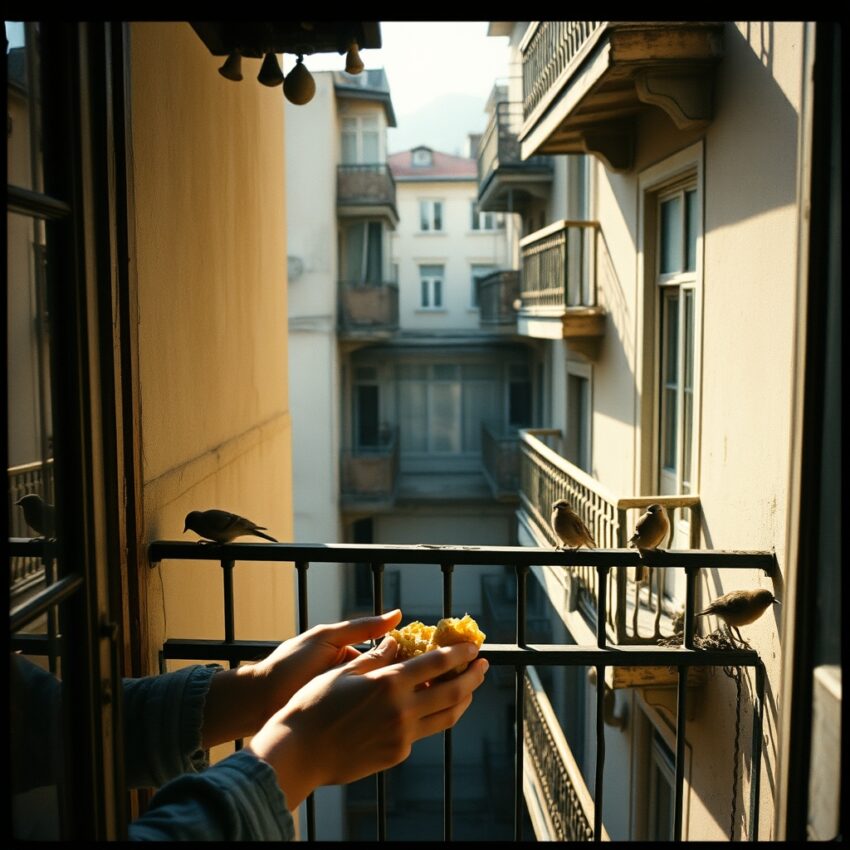
Bir zamanlar sabahların en sessiz iyiliklerinden biri, mutfakta bir köşeye ayrılan birkaç parça ekmekti. Sofradan artan ya da bir gün önceden kalan ekmek, hemen çöpe gitmez; önce kuşlar düşünülürdü. Mahallede bazı komşuların pencere önünde, balkon demirinde ya da avlu duvarının üstünde küçük kırıntılar bıraktığını görmek sıradan ama çok şey anlatan bir manzaraydı. Serçeler, güvercinler ve bazen kargalar bu sessiz daveti kısa sürede fark ederdi. Evin içinden bakıldığında bu hareket yalnız hayvanları doyurmak değil, sokağa karşı bir sorumluluk duymak anlamına gelirdi. O yüzden bayat ekmeği kuşa ayıran komşular, eski şehir hayatında görünüşte küçük ama kalpte büyük yer tutan insanlardı.
Mahalle Kültürü açısından bakıldığında bu alışkanlık, komşuluğun sınırını yalnız kapı komşusuna değil, sokağın bütün canlılarına kadar genişleten bir anlayışı gösterir. Eski şehir hayatında israf ayıp sayılır, nimet duygusu ev terbiyesinin temel parçalarından biri kabul edilirdi. Ekmek özellikle kutsal bir emanet gibi düşünülür; yere düşerse öpülüp başa konur, artarsa başka biçimde değerlendirilirdi. Kuşlara ayrılan pay, hem tasarrufun hem merhametin gündelik karşılığıydı. Eski gazetelerde sert kış günlerinde hayvanlar için bırakılan yiyeceklerden, belediyelerin kuş evlerinden ya da mahalle çocuklarının kar yağınca serçelere yem dağıttığından söz eden küçük haberler görülür. Bütün bunlar, şehrin yalnız insanlardan ibaret görülmediği bir ahlâk dünyasını işaret eder.
Bu alışkanlığın ev içindeki ritmi de önemlidir. Anne ya da büyükanne, kahvaltıdan sonra artan ekmekleri hemen kaldırmaz; “bunu kuşlara ayıralım” diyerek bir tabakta biriktirirdi. Çocuklar bazen bu görevi sevinçle üstlenir, kırıntıları ufalayarak balkona çıkardı. Böylece merhamet soyut bir öğüt olmaktan çıkar, elle yapılan küçük bir davranışa dönüşürdü. Komşu balkonlarında aynı hareketin tekrarlandığını görmek, mahalle içinde görünmez bir ortaklık duygusu kurardı. Kimse bunu gösteriş için yapmazdı; zaten çoğu zaman sessizce yapılırdı. Ama sabah güneşinde duvar üstünde bekleyen ekmek kırıntıları, sokak hayatının görünmeyen terbiyesini taşırdı. Rüzgâr alan balkonlarda kalan bu küçük sahne, birçok çocukluk hafızasında ailenin iyi olma hâliyle birleşmiştir.
Eski şehir hayatının kalbinde yer etmesinin bir nedeni de, bu davranışın gündelik sertliği yumuşatmasıydı. Şehir kalabalıklaşsa da apartmanlar yükselse de, insanlar sokağa tamamen sırtını dönmezdi. Pencere açılır, sokaktaki ses dinlenir, kuşların geliş gidişi fark edilir, hava tahmin edilir, yağmur öncesi telaş anlaşılırdı. Kuşlara ekmek bırakmak, insanın yaşadığı çevreyle bağını canlı tutan küçük bir gündelik törendi. Bu tören, yalnız kuşları değil, komşuları da birbirine yaklaştırırdı. Birinin balkonda ekmek ufaladığını gören diğeri aynı şeyi hatırlar, çocuklar birbirine “geldiler mi?” diye seslenir, yaşlılar kışın kuşların daha erken indiğini söylerdi. Böylece en küçük hareket bile mahalle yaşamının ortak diline eklenirdi.
Bugün israf ve hızın daha görünmez hâle geldiği hayatlarda bu eski alışkanlık daha da anlamlı görünüyor. Bayat ekmeği kuşa ayıran komşular, bize eski şehir hayatının sadece insan ilişkileriyle değil, çevresindeki canlılara gösterdiği dikkatle de güçlü olduğunu hatırlatıyor. O rüzgâr alan balkonlarda solmayan aile hatırası belki de tam burada saklı: iyiliğin büyük sözlerle değil, kırıntı kadar sade hareketlerle öğrenildiği yerde. Bu yüzden o komşular geçmişte kalmış bir alışkanlığın temsilcisi olmaktan öte, şehrin kalbini yumuşatan gündelik vicdanın hatırlanan yüzleri olarak yaşamaya devam ediyor.
🇬🇧 English | Why Did Neighbors Who Set Aside Stale Bread for Birds Take Their Place at the Heart of Old City Life Like a Family Memory That Does Not Fade on Windy Balconies?
There was a time when one of the quietest acts of goodness in the morning was a few pieces of bread set aside in the kitchen. Bread left from the table or from the day before did not go straight into the bin; the birds were thought of first. It was an ordinary yet eloquent sight to see some neighbors leaving small crumbs on a windowsill, a balcony rail, or the top of a courtyard wall. Sparrows, pigeons, and sometimes crows quickly noticed that silent invitation. Seen from inside the home, this act meant more than feeding animals; it meant feeling a responsibility toward the street itself. That is why the neighbors who reserved stale bread for birds held a place in old urban life that seemed small on the surface, yet large in the heart.
Viewed through neighborhood culture, this custom shows an understanding of neighborliness that extended beyond the next door and out toward all living beings in the street. In old city life, waste was considered shameful and gratitude for food was treated as a basic part of domestic upbringing. Bread in particular was thought of almost as a trust; if it fell, it was kissed and touched to the forehead, and if it remained, it was used in another way. The share reserved for birds was the daily expression of thrift and mercy together. In old newspapers, one still finds small notes about food left for animals during harsh winters, municipal birdhouses, or neighborhood children scattering feed when snow fell. All of this points to a moral world in which the city was not seen as belonging to human beings alone.
The domestic rhythm behind this custom also mattered. A mother or grandmother would not immediately clear away leftover bread after breakfast; she would say, “let us save this for the birds,” and gather it on a plate. Children sometimes took this task gladly and carried the crumbs to the balcony after breaking them into smaller pieces. In that way, mercy ceased to be an abstract lesson and became a small action done by hand. Seeing the same gesture repeated on neighboring balconies built an invisible sense of partnership across the neighborhood. No one did it for display; indeed, it was usually done quietly. Yet those crumbs waiting on a wall in the morning light carried the unseen discipline of street life. This small scene surviving on windy balconies blended, in many childhood memories, with the family’s own sense of decency.
One reason it took its place at the heart of old city life was that it softened the hardness of the city’s routine. Even as the city grew crowded and apartment blocks rose higher, people did not completely turn their backs on the street. Windows were opened, sounds from outside were heard, the coming and going of birds was noticed, the weather was read, and the nervousness before rain was understood. Leaving bread for birds was a small daily ritual that kept a person tied to the environment in which they lived. That ritual not only fed birds, but brought neighbors a little closer to one another. Seeing someone crumble bread on a balcony reminded another to do the same, children called out asking whether the birds had come, and older people observed that they landed earlier in winter. In this way, even the smallest action joined the common language of neighborhood life.
Today, when waste and speed have become more invisible, that old habit seems even more meaningful. The neighbors who set stale bread aside for birds remind us that old city life was strong not only because of human ties, but because of the care it extended to the living world around it. The family memory that does not fade on windy balconies may be hidden exactly there: in a place where goodness was learned not through grand speeches, but through gestures as simple as crumbs. For that reason, those neighbors live on as more than representatives of an old custom; they remain the remembered faces of an everyday conscience that softened the heart of the city.
🇧🇷 Português (Brasil) | Por Que os Vizinhos que Separavam Pão Amanhecido para os Pássaros Ocuparam o Coração da Antiga Vida Urbana Como uma Lembrança de Família que Não Desbota em Varandas Ventiladas?
Houve um tempo em que um dos gestos mais silenciosos de bondade pela manhã era separar alguns pedaços de pão na cozinha. O pão que sobrava da mesa ou do dia anterior não ia direto para o lixo; primeiro pensava-se nos pássaros. Ver alguns vizinhos deixando pequenas migalhas no peitoril da janela, na grade da varanda ou sobre o muro do quintal era uma cena comum, mas cheia de significado. Pardais, pombos e às vezes corvos logo percebiam esse convite silencioso. Visto de dentro de casa, esse movimento significava mais do que alimentar animais; significava sentir responsabilidade pela própria rua. Por isso, os vizinhos que separavam pão amanhecido para os pássaros ocupavam, na antiga vida urbana, um lugar aparentemente pequeno, mas muito grande no coração.
Do ponto de vista da cultura de bairro, esse costume revela uma ideia de vizinhança que ia além da porta ao lado e se estendia a todos os seres vivos da rua. Na antiga vida da cidade, o desperdício era considerado vergonhoso, e o respeito pelo alimento fazia parte central da educação doméstica. O pão, em especial, era visto quase como algo sagrado; se caísse no chão, era beijado e levado à testa, e se sobrasse, ganhava outro destino. A parte separada para os pássaros era a tradução diária da economia e da compaixão ao mesmo tempo. Nos jornais antigos, ainda aparecem pequenas notas sobre comida deixada para os animais em invernos rigorosos, casinhas de pássaros construídas por prefeituras ou crianças do bairro espalhando alimento quando nevava. Tudo isso aponta para um universo moral em que a cidade não era entendida como pertencente apenas aos humanos.
O ritmo doméstico por trás desse costume também era importante. A mãe ou a avó não retirava imediatamente o pão restante depois do café da manhã; dizia “vamos separar isso para os pássaros” e o juntava num prato. As crianças às vezes assumiam essa tarefa com alegria e levavam as migalhas à varanda depois de esfarelá-las. Assim, a compaixão deixava de ser um conselho abstrato e virava um pequeno gesto feito com as mãos. Ver o mesmo movimento se repetir nas varandas vizinhas criava uma sensação invisível de parceria pelo bairro. Ninguém fazia isso para aparecer; quase sempre era feito em silêncio. Mas aquelas migalhas esperando sobre o muro à luz da manhã carregavam a disciplina invisível da vida na rua. Essa pequena cena preservada nas varandas ventiladas se mistura, em muitas lembranças de infância, à ideia de uma família decente e cuidadosa.
Uma das razões para esse hábito ocupar o coração da antiga vida urbana é que ele suavizava a dureza do cotidiano. Mesmo com a cidade ficando mais cheia e os prédios cada vez mais altos, as pessoas não viravam completamente as costas para a rua. Janelas eram abertas, os sons de fora eram escutados, a ida e volta dos pássaros era notada, o tempo era pressentido, a chuva próxima era entendida. Deixar pão para os pássaros era um pequeno ritual diário que mantinha viva a ligação com o ambiente em que se vivia. Esse ritual não aproximava apenas os pássaros, mas também os vizinhos. Ver alguém esfarelando pão na varanda fazia o outro lembrar de fazer o mesmo, as crianças perguntavam “eles já vieram?”, e os mais velhos comentavam que no inverno os pássaros desciam mais cedo. Assim, até o menor gesto passava a integrar a linguagem comum da vida de bairro.
Hoje, quando o desperdício e a pressa se tornaram mais invisíveis, esse antigo costume parece ainda mais significativo. Os vizinhos que separavam pão amanhecido para os pássaros nos lembram que a antiga vida urbana era forte não apenas pelas relações entre pessoas, mas pela atenção dedicada aos seres vivos ao redor. A lembrança de família que não desbota na varanda talvez esteja justamente aí: no lugar onde a bondade era aprendida não com grandes discursos, mas com gestos simples como migalhas. Por isso, esses vizinhos continuam vivos como algo maior do que representantes de um costume antigo; eles permanecem como os rostos lembrados de uma consciência cotidiana que amolecia o coração da cidade.