Eski Pano
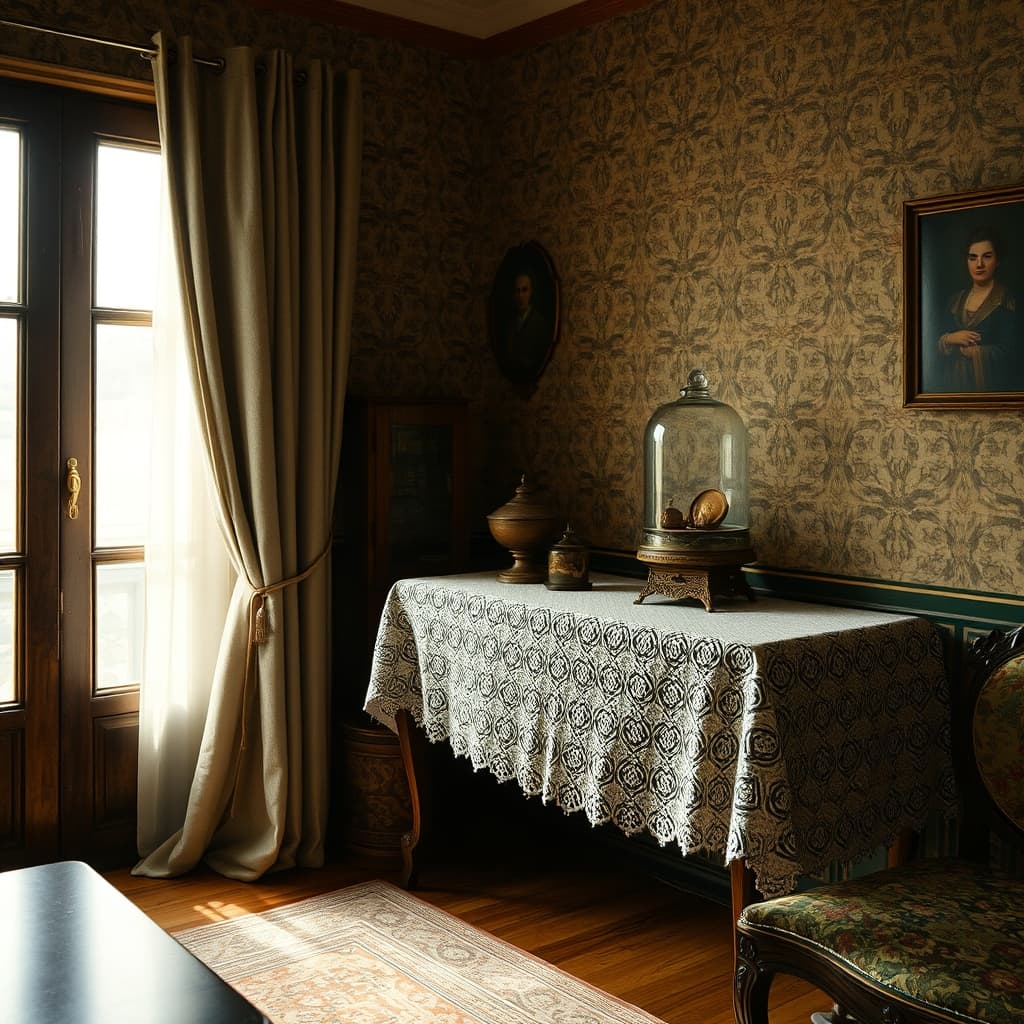
In some homes, the place where time moved most slowly was not among the large furnishings of the living room, but in a small corner. Upon entering a grandmother’s house, that corner was often defined by a lace cloth, a polished wooden console, and the glass dome resting on top. Inside the dome there might be artificial flowers, a wedding keepsake, a little clock, or a porcelain figurine that had stood in the same place for years. What most often caught a child’s eye was the way the order beneath that glass never seemed to break. Protected from dust, arranged with care, and preserved with something close to silent reverence, that corner appeared to hold a different kind of time from the bustle of the rest of the house. For that reason, the glass dome was more than a decorative object; it became one of the visible symbols of domestic discipline, patience, and respect for things made by hand.
Seen through the lens of object stories, the glass dome is a refined example of how earlier generations related to belongings. It existed not only to display, but also to protect. Whatever was placed inside became a little more precious, a little more long-lasting, and a little more open to storytelling. A flower arrangement, a handmade ornament, the frame of a photograph, or a small heirloom passed from ordinary use into the realm of memory under the dome. In older homes, objects had not only a lifespan, but also a dignity. Instead of things quickly consumed and frequently moved, families preferred pieces carefully placed in the right spot and allowed to carry the same meaning for years. The glass dome is one of the quiet but strong expressions of that understanding.
The reason it still carries the trace of craftsmanship and patience lies in the regime of care built around it. The glass was wiped regularly, the lace beneath it straightened with attention, and even the angle of the objects inside was never left to chance. The way grandmothers or the older women of the house maintained this order taught more than cleanliness; it taught a form of disciplined attention. Children learned not to approach that corner roughly, not to leave fingerprints on the glass, and to understand why the objects inside mattered. Sometimes, before guests arrived, that corner alone would be refreshed: the dome gently lifted, the surface beneath cleaned, and everything returned to its place with the same exactness. In such moments, the value of the object came less from its material than from the culture of care collecting around it.
The unchanging corner of grandmother’s house was also the ordered face of domestic memory. Other parts of the room might be renewed over time; curtains changed, upholstery faded, and radios were replaced by other devices. Yet the corner with the dome often remained the same. That permanence offered everyone entering the house an invisible feeling of continuity. During holiday visits, after school afternoons, and summer returns, one of the first things children noticed was that the corner still stood where it always had. The little world beneath the glass was part of the family’s own aesthetic order and silent continuity. Perhaps that is why seeing a glass dome years later can carry a person straight back to the cool living room of grandmother’s house, its heavy curtains, and the ticking of its clock.
Today, amid fast-changing decor and temporary habits of consumption, the glass dome may seem old-fashioned. Yet what it carries is far beyond fashion. It reminds us that an object could remain in a home not only to be used, but also to be protected and invested with meaning. Craftsmanship appears in the hands that made it; patience appears in the domestic order that preserved it with the same care for years. For this reason, the glass dome still speaks of the aesthetic discipline of the past, the family sense of order, and a slow culture of maintenance. The unchanging corner of grandmother’s house is in truth not the trace of an object that stayed still, but of a way of life whose essence endured even as time changed around it.
The Glass Dome and the Unchanging Corner of Grandmother’s House: Why Does It Still Carry the Trace of Craftsmanship and Patience?