Eski Pano
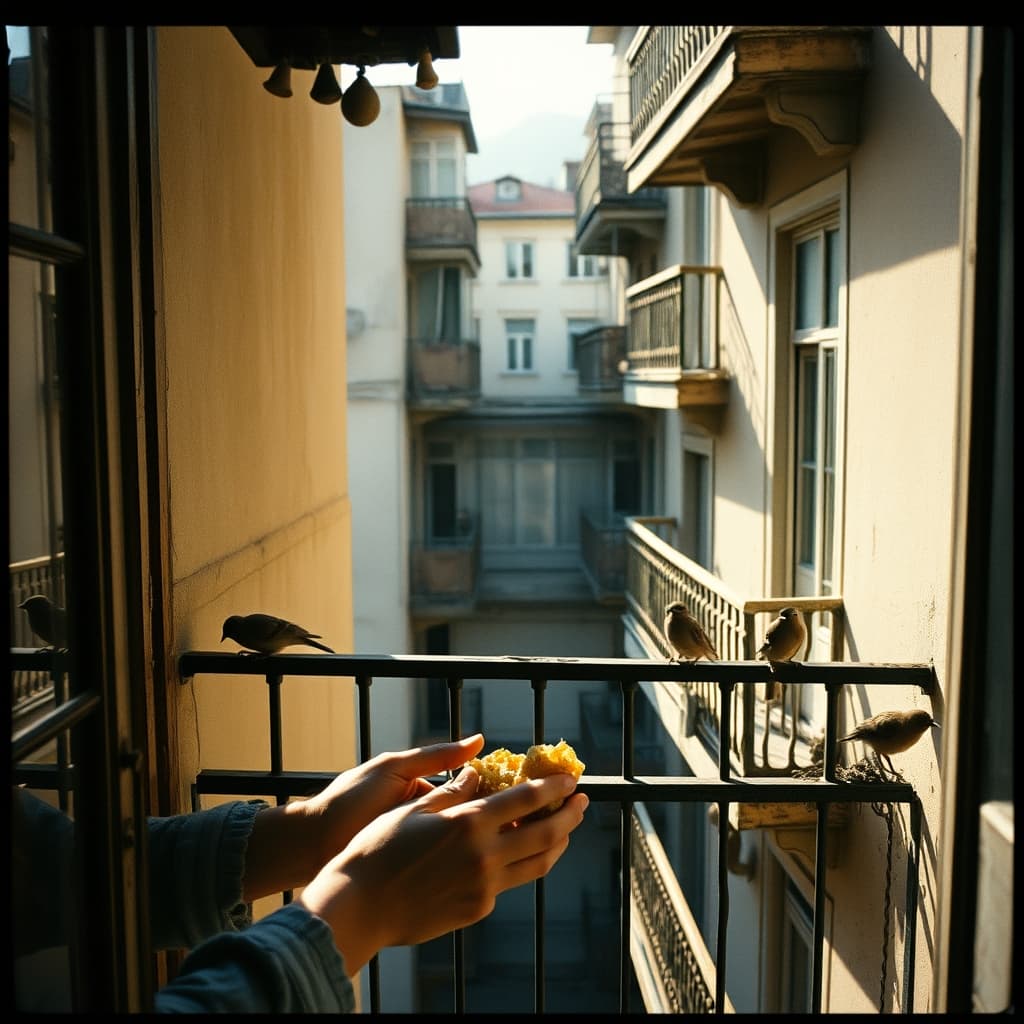
There was a time when one of the quietest acts of goodness in the morning was a few pieces of bread set aside in the kitchen. Bread left from the table or from the day before did not go straight into the bin; the birds were thought of first. It was an ordinary yet eloquent sight to see some neighbors leaving small crumbs on a windowsill, a balcony rail, or the top of a courtyard wall. Sparrows, pigeons, and sometimes crows quickly noticed that silent invitation. Seen from inside the home, this act meant more than feeding animals; it meant feeling a responsibility toward the street itself. That is why the neighbors who reserved stale bread for birds held a place in old urban life that seemed small on the surface, yet large in the heart.
Viewed through neighborhood culture, this custom shows an understanding of neighborliness that extended beyond the next door and out toward all living beings in the street. In old city life, waste was considered shameful and gratitude for food was treated as a basic part of domestic upbringing. Bread in particular was thought of almost as a trust; if it fell, it was kissed and touched to the forehead, and if it remained, it was used in another way. The share reserved for birds was the daily expression of thrift and mercy together. In old newspapers, one still finds small notes about food left for animals during harsh winters, municipal birdhouses, or neighborhood children scattering feed when snow fell. All of this points to a moral world in which the city was not seen as belonging to human beings alone.
The domestic rhythm behind this custom also mattered. A mother or grandmother would not immediately clear away leftover bread after breakfast; she would say, “let us save this for the birds,” and gather it on a plate. Children sometimes took this task gladly and carried the crumbs to the balcony after breaking them into smaller pieces. In that way, mercy ceased to be an abstract lesson and became a small action done by hand. Seeing the same gesture repeated on neighboring balconies built an invisible sense of partnership across the neighborhood. No one did it for display; indeed, it was usually done quietly. Yet those crumbs waiting on a wall in the morning light carried the unseen discipline of street life. This small scene surviving on windy balconies blended, in many childhood memories, with the family’s own sense of decency.
One reason it took its place at the heart of old city life was that it softened the hardness of the city’s routine. Even as the city grew crowded and apartment blocks rose higher, people did not completely turn their backs on the street. Windows were opened, sounds from outside were heard, the coming and going of birds was noticed, the weather was read, and the nervousness before rain was understood. Leaving bread for birds was a small daily ritual that kept a person tied to the environment in which they lived. That ritual not only fed birds, but brought neighbors a little closer to one another. Seeing someone crumble bread on a balcony reminded another to do the same, children called out asking whether the birds had come, and older people observed that they landed earlier in winter. In this way, even the smallest action joined the common language of neighborhood life.
Today, when waste and speed have become more invisible, that old habit seems even more meaningful. The neighbors who set stale bread aside for birds remind us that old city life was strong not only because of human ties, but because of the care it extended to the living world around it. The family memory that does not fade on windy balconies may be hidden exactly there: in a place where goodness was learned not through grand speeches, but through gestures as simple as crumbs. For that reason, those neighbors live on as more than representatives of an old custom; they remain the remembered faces of an everyday conscience that softened the heart of the city.
Why Did Neighbors Who Set Aside Stale Bread for Birds Take Their Place at the Heart of Old City Life Like a Family Memory That Does Not Fade on Windy Balconies?