Eski Pano
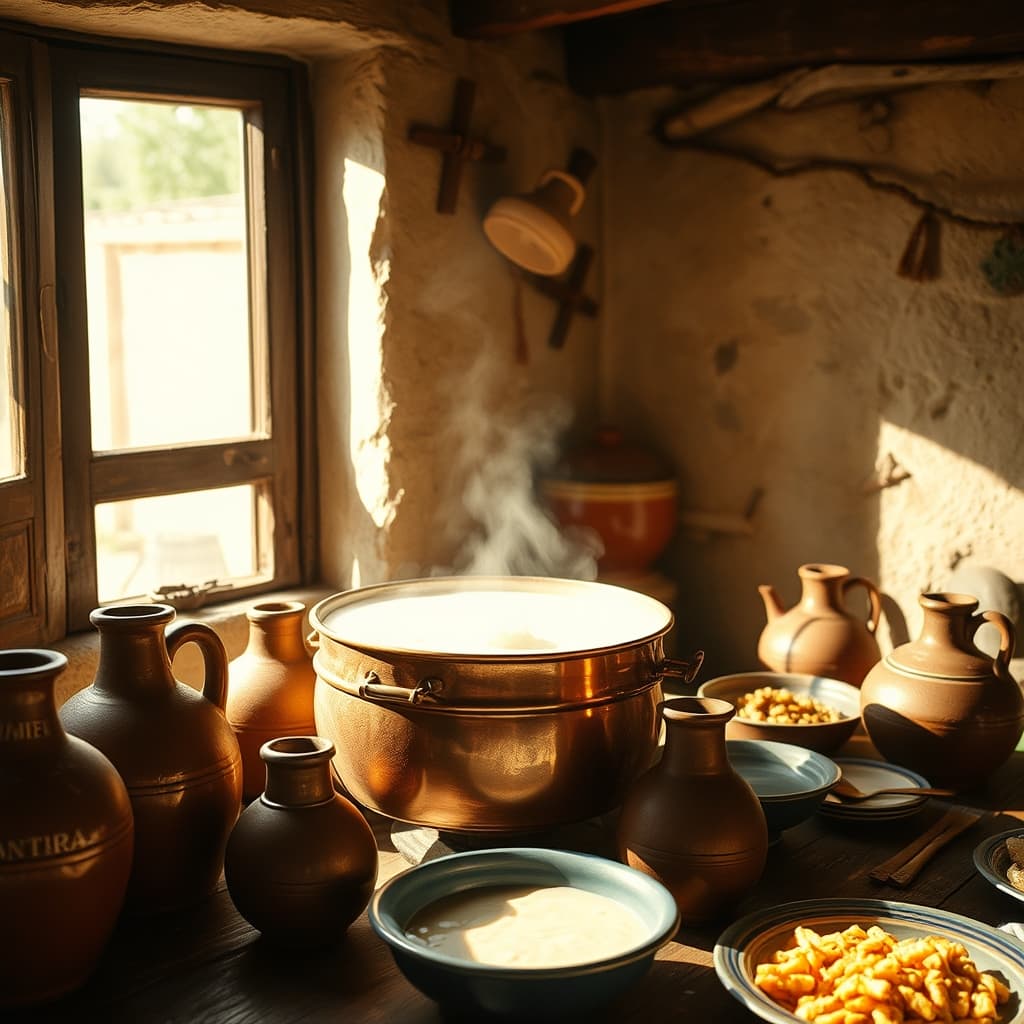
There was a time when the coolness of summer noon came not from ready-made drinks taken from a refrigerator, but from work that had begun in the kitchen hours earlier. Churn ayran was not only a drink that relieved thirst; it belonged to the rhythm of the home, the preparations of summer, and the discipline of the kitchen. Wide copper vessels, the order of yogurt-making, the patient minutes spent beside the churn, and the joy created by the foam at the end made this drink far more than an ordinary companion at the table. Especially on hot days, when people returned from the garden or the market, the cool ayran poured into earthenware jugs carried a freshness that completed the order of the house. Remembering the days of churn ayran therefore means recalling not only a flavor, but the way old kitchens once worked.
From the perspective of taste memory, churn ayran is a powerful key to forgotten kitchen habits. This is because it was lived as a process rather than bought as a product. First the thickness of the yogurt mattered, then the chill of the water was adjusted, the balance of salt was discussed, and finally the movement of the churn found its rhythm. There was always someone in the house who knew how to do it, and younger people or children learned not only by watching, but by helping. In old kitchens, recipes survived more through practiced hands than measuring spoons. Phrases such as “it needs a little more water,” “the foam has settled well,” or “add the salt now” carried the oral transmission of kitchen knowledge. That is exactly why churn ayran is a drink that recalls method as much as taste.
The scenes of daily life built around this custom make the memory even stronger. While lunch was being prepared, a pot of stuffed vegetables simmered on one side, dough was rolled on another, and yogurt for ayran was being loosened elsewhere. Whatever stood on the table, dry meatballs, bulgur pilaf, roasted peppers, or herb-filled pastries, churn ayran created a cooling balance beside it. If guests arrived, larger glasses were brought out and care was taken to keep the foam high at the top. Children chose their glass depending on whether they liked the bubbles, while elders compared the taste with the past by saying, “it came out just like the old days.” In that sense, the ayran brought to the table not only coolness, but also the standard of taste carried by a whole generation.
One reason the days of churn ayran call back forgotten kitchen habits is that they remind us of the kitchen not as a space operated alone, but as a place of shared labor. In older homes, kitchen knowledge was usually passed on while working together. One person stirred the yogurt, another added water, another prepared dried mint. Together with the dishes served beside it, the ayran helped turn the whole kitchen into a composition of summer. The contrast between the dusty heat arriving from the doorway and the cool preparation inside made the drink more unforgettable. In today’s fast kitchen order, many things can be prepared in a single movement, yet churn ayran makes visible again a world in which labor itself shaped flavor. Taste came not only from ingredients, but from the way they were prepared.
If a glass of ayran still brings to mind for some people the childhood table, the summer house, the highland kitchen, or crowded family lunches, it is because churn ayran carries cultural depth. It does not merely remind us of forgotten kitchen habits; it restores their dignity and meaning. Made with patience, served through sharing, and capable of completing every dish at the table in a different way, this old drink remains one of the coolest pages in culinary memory. That is why the days of churn ayran are not simply a flavor left in the past, but a living call from the old kitchen order, from hand labor, and from the coolness created together at the family table.
The Days of Churn Ayran: How Does It Call Back Forgotten Kitchen Habits?