Eski Pano
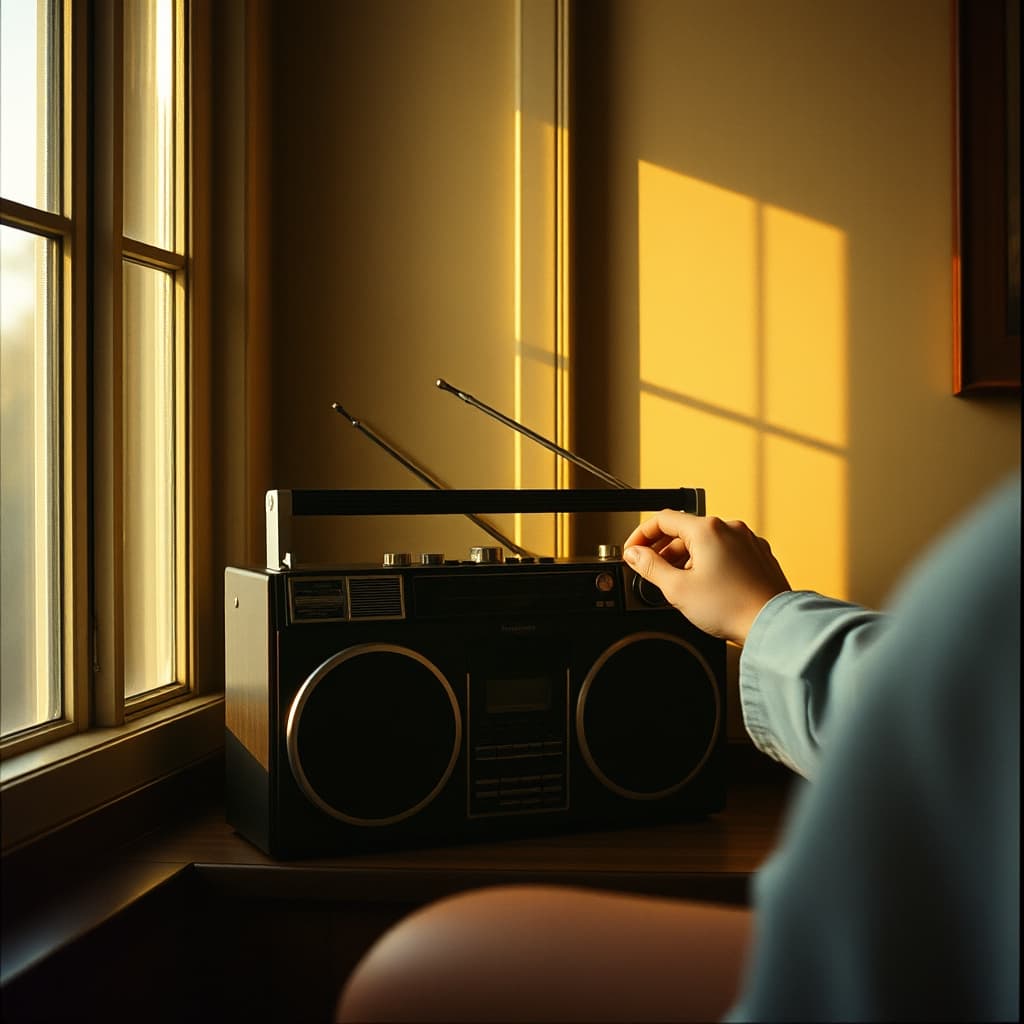
There was a time when turning on a boombox did not mean starting background sound with a single effortless touch. It was a ceremony of preparation, attention, and a little luck. The device was pulled close to a window, the telescopic antenna slowly extended, and then the fine adjustments began until the station emerged cleanly from the static. Sometimes one child stood by the machine, another held the antenna, and someone else called out, “Now it’s right, go back a little.” Music clarified by such tiny gestures never felt like a merely technical achievement. It felt as though a distant voice had been accepted into the home with difficulty, and with pride. Hope became clearer at the same moment the signal did.
From the perspective of technological heritage, the boombox was one of the rare analog devices that gathered people around itself even while promising portability. Its cassette mechanism, radio frequency tuning, the roomy sound of its twin speakers, and the choice between batteries and wall power made it more than a listening tool. It represented a period’s sense of freedom through sound. It could be carried from one room to another, set on a balcony, placed on a summer veranda, or taken to a picnic and made the center of everyone’s attention. Yet all of that freedom still required labor: finding the frequency, tolerating the hiss, pressing the record button at the right instant, and catching a beloved song on tape. A mutual relationship of attention existed between technology and user that is now far less common.
That is why using a boombox felt like a ceremony in itself. The answer lies not only in the device’s appearance, but in the shared behavior that developed around it. When a new song was finally caught, everyone in the room fell silent, wondering whether the radio host would interrupt, and if a cassette was in place someone asked whether the recording had begun. The antenna might be turned right, then left, brought closer to the window grille, or the machine itself lifted a few centimeters because even that could change the signal. For children this was the magical side of technology. For adults it was the familiar bridge between patience and reward. To hear a song arrive perfectly clear could feel like the smallest yet most genuine success of the day. The effort required to reach that moment became part of the memory along with the pleasure.
The details of daily life make that ceremonial feeling even more visible. The low background hum of the radio on a summer evening with the balcony door open, the tired sound that suggested the batteries were weakening, and the mechanical reassurance that came when the cassette began to turn all belonged to the same experience. New songs were learned this way, football commentary was chased this way, and weekend programs were waited for this way. In some homes the boombox stood beside the display cabinet in the living room, while in others it accompanied food preparation in the kitchen. After a point the device was not only playing music. It was organizing the time of the house. Families knew at what hour a favorite host would speak, when a particular program would begin, and which station could be received most clearly.
The phrase “hope growing clearer as the antenna turned” also explains the emotional side of the device. In the age of the boombox, sound was never entirely ready-made. One had to approach it, search for it, and earn it a little. That search kept people from being passive listeners. Sometimes the frequency slipped away, sometimes the neighboring building interfered, and sometimes one had to trust memory to find the same station again. Yet that was precisely why the signal, once found, felt more valuable. Today endless choices appear with a few taps, but then the clean arrival of a song was both a technical and emotional gain. That was the heart of the boombox ceremony: not only the sound itself, but the act of turning toward it together.
In the end, the reason a boombox felt like a ceremony lies in the scale of analog life itself. With its antenna, cassette, hiss, and suddenly clearing signal, it gave people not only music, but the habit of waiting, adjusting, and rejoicing together. Hope sharpened with every turn of the antenna, and when the song finally settled in the middle of the room it felt like a small victory had been won. That is why the boombox was more than a sound machine. It was one of the liveliest instruments of a generation’s ritual relationship with listening.
Why Was Using a Boombox, Accompanied by Hope Growing Clearer as the Antenna Turned, a Ceremony in Itself?