🇹🇷 Türkçe | Dikiş Makinesi Ayağında Biriken Sessiz Zarafet Anlayışı
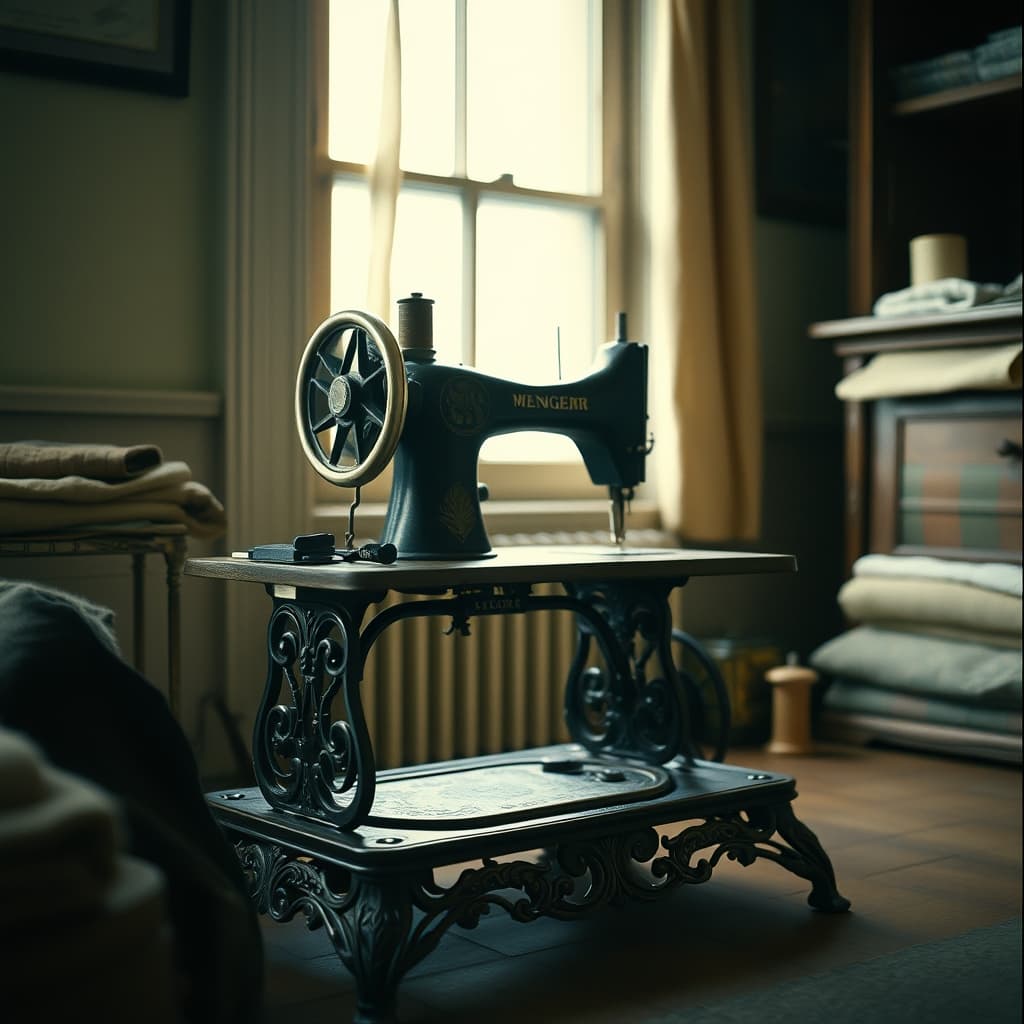
Eski evlerde bazen bir eşyanın en dikkat çekici yanı, ilk bakışta fark edilmeyen bölümünde saklı olurdu. Dikiş makinesinin ayağı da böyledir. Üstündeki tabla, çekmecesi ya da iğnesi kadar konuşulmasa da, döküm demirden işlenmiş kıvrımlarıyla o ayak, bir dönemin estetik terbiyesini sessizce taşırdı. Oturma odasının kenarında ya da pencereye yakın bir duvar dibinde duran bu makine, sadece dikiş dikilen bir düzenek değil; eve yerleşmiş işlevli bir süs eşyası gibiydi. Pedala basıldıkça çalışan sistemin altında görülen desenler, gündelik emeğin bile göze hitap etmesi gerektiğine inanan eski zevkin izini bugüne kadar getirdi.
Obje Hikayeleri içinde dikiş makinesi ayağı, kullanım ile gösteriş arasındaki eski dengeyi en iyi anlatan nesnelerden biridir. Çünkü burada süs, işlevin sonradan eklenmiş fazlalığı değildir; tam tersine, yapının kendisine işlenmiş bir inceliktir. Çiçeksi döküm boşluklar, kıvrımlı harfler, zarif taşıyıcı kolonlar ve pedalı çevreleyen demir ağ, bir dönemin gündelik eşyada bile asaleti aradığını gösterir. Koleksiyonerlerin bugün bu ayakların peşine düşmesi boşuna değildir. Onlar yalnız eski bir makinenin parçasını değil, sanayi ile el emeğinin aynı nesnede kurduğu uyumu ararlar. Bu ayaklar, seri üretime rağmen kimlik taşıyan tasarımın mümkün olduğu yılları hatırlatır.
Bir dönemin zevk anlayışını nasıl yansıttığı sorusunun cevabı, biraz da bu nesnenin ev içindeki konumunda saklıdır. Dikiş makinesi çoğu zaman mutfakta unutulan kaba bir çalışma aracı gibi değil, görünür bir köşede duran saygın bir eşya gibi korunurdu. Çünkü onun etrafında yalnız tamir, dikim ya da paça kısaltma yapılmaz; evin düzen duygusu da kurulurdu. Kumaş ölçülür, sabunla işaret konur, iplik makaraları çekmecede sıralanır, sonra ayağın ritmik hareketiyle tüm sistem canlanırdı. Bu görüntü, çalışmanın bile bir görgü meselesi olduğunu hissettirirdi. Demir ayağın zarafeti, ev içi emeği sıradanlaştırmıyor; ona görünür bir değer veriyordu.
Koleksiyonerlerin iz sürdüğü geçmiş tam da bu yüzden canlıdır. Bugün eski dikiş makinesi ayakları masa ayağına dönüştürülüyor, atölye köşelerinde sergileniyor ya da antikacılarda ayrı bir değerle anlatılıyor. Fakat onları çekici kılan sadece nostaljik görünüş değildir. Her bir çizgi, bir dönemin “güzel” dediği şeyin ne kadar dayanıklı, ölçülü ve ağırbaşlı olduğunu da anlatır. İnce işlenmiş döküm süs, gösterişli ama kaba değildir; dikkat çekici ama bağıran bir tarafı yoktur. Bu nedenle koleksiyoner, nesnenin yüzeyine değil, onun taşıdığı sessiz kültüre ilgi duyar. Ayağa bakarken eski terzihaneleri, ev içi üretimi, çeyiz hazırlıklarını ve kumaşın evde geçirdiği dönüşümü de görür.
Gündelik hayat örnekleri bu estetik anlayışı daha somut yapar. Çocukların pedala merakla ayağını uzatması, büyüklerin “dikkat et parmağını sıkıştırma” diye uyarması, makinenin kullanımdan sonra üstüne bir örtü serilmesi ve altındaki ayağın yine de odanın karakterini belirlemeyi sürdürmesi, onun sıradan bir araçtan fazlası olduğunu gösterir. Bazen makine bozulsa bile ayağı evden çıkmaz; üstüne tabla konur, sehpa yapılır ya da yalnızca yerinde bırakılır. Çünkü o ayak, artık yalnız işlev değil, hafıza taşır. Demek ki eski zevk anlayışı, eşyayı yalnız kullanıp tüketmekten ibaret değildi; onu yaşatmak, dönüştürmek ve evin hikâyesine dâhil etmek de bu anlayışın parçasıydı.
Sonuçta dikiş makinesi ayağı ve koleksiyonerlerin iz sürdüğü geçmiş, bir dönemin zevk anlayışının neden hâlâ ilgi çektiğini açıkça gösterir. O anlayışta güzellik, faydadan kopuk değildi; tam tersine, gündelik emeğe zarafet ekleyen bir ölçüydü. Döküm demirin ağır ama kıvrımlı varlığında, ev içi üretimin ciddiyeti kadar estetik bir terbiye de saklıydı. Bu yüzden dikiş makinesi ayağı bugün hâlâ sadece eski bir parça olarak değil, zarafetin gündelik hayata nasıl yerleştiğini anlatan güçlü bir tanık olarak görülür.
🇬🇧 English | The Quiet Sense of Elegance Gathered in the Sewing Machine Treadle
In older homes, the most striking part of an object was sometimes hidden in the part least noticed at first glance. The treadle of the sewing machine is one such case. Even if it was spoken of less than the tabletop, the drawer, or the needle itself, the cast-iron base with its worked curves carried the aesthetic discipline of an era in silence. Standing by a wall near the window or at the edge of a sitting room, the machine was not merely a device for sewing. It was almost a functional ornament already settled into the house. The visible patterns beneath the pedal system suggested that even everyday labor was expected to please the eye. In that sense, the treadle brought an older understanding of taste into the present.
Among object stories, the sewing machine treadle is one of the clearest examples of the balance older periods maintained between usefulness and display. Ornament here was not an excessive detail added after function. It was woven into the structure itself. Floral openings in the cast iron, curved lettering, elegant side supports, and the iron web surrounding the pedal all show a time that sought nobility even in ordinary household things. That is why collectors pursue these bases today. They are not chasing only a part of an old machine, but the harmony once established between industry and hand labor within a single object. These treadles recall years when even mass-produced design could still possess identity.
The answer to how they reflected the taste of an era lies partly in the place they occupied in the house. The sewing machine was often kept not as a rough working instrument forgotten in the kitchen, but as a respectable visible object in a proper corner. Around it one did more than hem cloth or make repairs. One also enacted the household’s sense of order. Fabric was measured, soap marks were drawn, spools of thread were lined up in the drawer, and then the whole mechanism came alive through the rhythmic motion of the feet below. The image suggested that labor itself was part of good form. The elegance of the iron base did not reduce domestic work to something ordinary. It gave that work a visible dignity.
That is why the past followed by collectors still feels alive. Today old sewing-machine treadles are turned into table legs, displayed in studios, or described in antique shops with special appreciation. Yet what makes them appealing is not only their nostalgic appearance. Every line also tells us what an era understood by beauty: something durable, measured, and composed. The finely worked cast-iron ornament is decorative without being coarse, attention-grabbing without shouting. For that reason, collectors are drawn not only to the surface of the object, but to the quiet culture it carries. Looking at the treadle, one also sees old tailor shops, domestic production, dowry preparations, and the transformation of cloth inside the home.
The details of daily life make this aesthetic understanding more concrete. Children stretching a foot toward the pedal in curiosity, elders warning them not to catch their fingers, the machine being covered with cloth after use while the iron base still continued to define the character of the room, all show that it was more than a simple tool. Sometimes even after the machine stopped working, the treadle remained. A wooden top was added, it became a side table, or it simply stayed where it was. By then it carried not only function, but memory. That suggests that older taste was not simply about using and consuming objects. It also involved preserving them, transforming them, and making them part of the house’s story.
In the end, the sewing machine treadle and the past pursued by collectors show clearly why the taste of that era still attracts attention. In that understanding, beauty was never separate from usefulness. It was a measure that added grace to everyday labor. In the heavy yet curved presence of cast iron, one finds not only the seriousness of domestic production, but also an aesthetic discipline. That is why the sewing-machine treadle still appears not merely as an old fragment, but as a powerful witness to the way elegance once settled into daily life.
🇧🇷 Português (Brasil) | O Sentido Silencioso de Elegância Reunido no Pedal da Máquina de Costura
Nas casas antigas, às vezes a parte mais marcante de um objeto ficava justamente naquilo que passava despercebido à primeira vista. O pedal de ferro da máquina de costura é um desses casos. Mesmo sendo menos comentado do que a mesa, a gaveta ou a agulha, sua base de ferro fundido com curvas trabalhadas carregava em silêncio a disciplina estética de uma época. Encostada na parede perto da janela ou num canto visível da sala, a máquina não era apenas um mecanismo para costurar. Era quase um ornamento útil já instalado na casa. Os desenhos visíveis sob o sistema do pedal sugeriam que até o trabalho cotidiano deveria agradar aos olhos. Nesse sentido, o pedal trouxe até hoje um antigo entendimento de gosto.
Dentro das histórias dos objetos, o pedal da máquina de costura é um dos exemplos mais claros do equilíbrio entre utilidade e exibição que existia no passado. O enfeite ali não era um excesso aplicado depois da função. Ele fazia parte da própria estrutura. As aberturas florais no ferro fundido, as letras curvas, os suportes laterais elegantes e a malha metálica ao redor do pedal mostram uma época que procurava nobreza até nos objetos comuns da casa. É por isso que colecionadores ainda seguem essas peças. Eles não procuram apenas uma parte de uma máquina antiga, mas a harmonia que outrora existiu entre indústria e trabalho manual dentro de um único objeto. Esses pedais lembram um tempo em que até o design seriado podia ter identidade.
A resposta para como esse objeto refletiu o gosto de uma época está também no lugar que ocupava dentro da casa. A máquina de costura era conservada muitas vezes não como uma ferramenta bruta esquecida na cozinha, mas como um objeto respeitável, colocado num canto visível. Em torno dela não se fazia apenas bainha ou conserto. Também se praticava a ordem da casa. O tecido era medido, as marcas eram feitas com sabão, os carretéis ficavam alinhados na gaveta, e então todo o mecanismo ganhava vida com o movimento ritmado dos pés. Essa imagem sugeria que o trabalho também fazia parte da boa forma. A elegância da base de ferro não diminuía o labor doméstico. Dava a ele dignidade visível.
É justamente por isso que o passado seguido pelos colecionadores continua tão vivo. Hoje muitos desses pedais viram base de mesa, ficam expostos em ateliês ou são descritos em antiquários com admiração especial. Mas o que os torna atraentes não é apenas a aparência nostálgica. Cada linha também conta o que uma época chamava de belo: algo durável, equilibrado e sóbrio. O ornamento minucioso do ferro fundido é decorativo sem ser grosseiro, chamativo sem gritar. Por isso o colecionador não se interessa apenas pela superfície da peça, mas pela cultura silenciosa que ela carrega. Ao olhar para o pedal, vê-se também velhos ateliês de costura, produção doméstica, preparativos de enxoval e a transformação do tecido dentro da casa.
Os detalhes do cotidiano tornam essa ideia estética mais concreta. Crianças esticando o pé curiosamente para o pedal, os mais velhos advertindo para não prender os dedos, a máquina sendo coberta com um pano depois do uso e a base continuando a definir o caráter do ambiente mostram que ela era mais do que uma simples ferramenta. Às vezes, mesmo quando a máquina deixava de funcionar, o pedal permanecia. Ganhava um tampo de madeira, virava mesa lateral ou simplesmente ficava no lugar. A essa altura já carregava não só função, mas memória. Isso mostra que o antigo gosto não era apenas usar e descartar objetos. Também incluía preservá-los, transformá-los e integrá-los à história da casa.
No fim, o pedal da máquina de costura e o passado seguido pelos colecionadores mostram com clareza por que o gosto daquela época ainda desperta interesse. Nessa visão, a beleza não estava separada da utilidade. Era uma medida que acrescentava graça ao trabalho cotidiano. Na presença pesada e ao mesmo tempo curva do ferro fundido, esconde-se não só a seriedade da produção doméstica, mas também uma disciplina estética. Por isso o pedal da máquina de costura ainda aparece não apenas como um fragmento antigo, mas como uma testemunha poderosa de como a elegância pôde entrar na vida comum.