Eski Pano
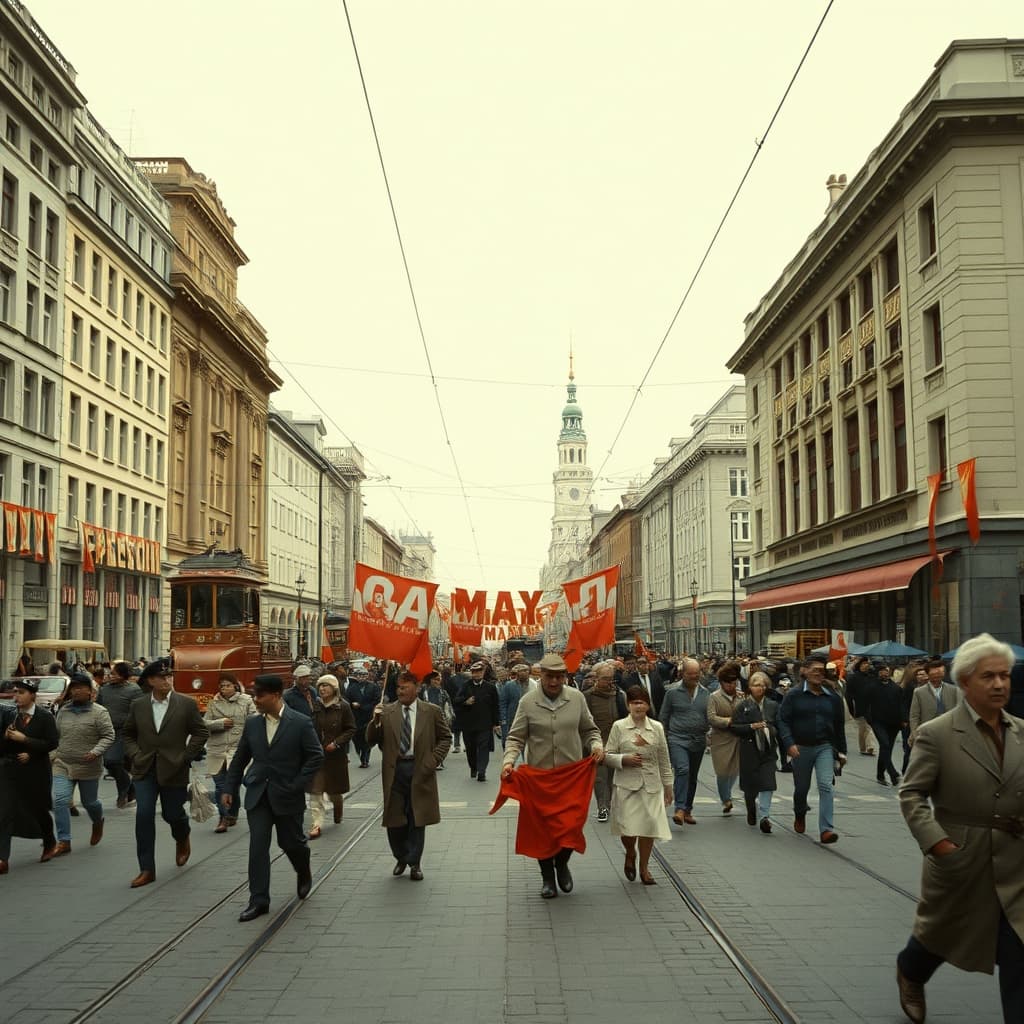
There was a time when the rhythm of cities visibly changed as the calendar approached May 1. Early in the morning, before shop shutters were fully raised, the sound of people walking from side streets toward the square could be heard; ironed shirts, wool jackets, banner sticks carried by hand, and newspaper clippings folded carefully into pockets all belonged to the same morning. The smell of fresh bread from the neighborhood bakery, the diesel trace left by worker buses, and the curious glances leaning out of apartment windows blended into one atmosphere. May 1 was not only a day of gathering, but a threshold at which labor became visible inside the city. The crowd reaching the square added another layer of memory to paving stones, tram lines, bridge pillars, and walls marked by old slogans.
Seen through the lens of time, the mark May 1 left on urban memory survives less in the grand sentences of official history than in everyday details. On the yellowed pages of old newspapers, it is not only the headlines that matter, but also the square clocks in the background of photographs, the simit carts, municipal buses, and the faces of children standing within the crowd. When workers, clerks, students, and families gathered in the same place, the city redrew its own social map. The name of a square, the corner of an avenue, or the base of a monument could be remembered for years not merely as architecture, but as a place where a shared voice once echoed. For that reason, the memory of May 1 lives in the disciplined movement of a march, in the folding of banner cloth in the wind, and in the quiet that returned home at the end of the day.
Part of the cultural weight of the day came from the bridge it formed between home and square. Cheese sandwiches prepared before leaving, tea poured into thermoses, mothers warning, “Be careful in the crowd,” and the stories told around the dinner table after returning all shaped the domestic side of that memory. Children often learned the meaning of the day not first from the slogans in the square, but from the expressions on the faces of the adults who came back. A small badge pinned to a jacket, a red handkerchief in a pocket, or a photograph cut from a newspaper and saved in a drawer could reappear years later in a family album and remind everyone that May 1 was both a collective and a personal memory. The steps taken in the square were transformed in the evening into stories retold softly in the living room.
Looking back now, it becomes easier to understand why May 1 left such a deep trace in cities. On that day, labor stopped being an invisible force confined to factories, workshops, or offices and became visible in the middle of the square as voice, color, and community. Urban memory was built precisely there: in the courage people gave one another while walking together, in the witness of old municipal squares, and in the way everyday life found a shared language for a single day. The true memory of cities built with labor is preserved in these moments of gathering. Some days do not remain only on the calendar; they are engraved into a city’s stone, its photographs, and the narratives passed from one generation to the next. May 1 remains one of the most vivid of those pages in urban memory.
The Memory of Cities Built with Labor: The Trace Left by May 1 in the Squares