Eski Pano
There was a time when the smell of hot oil rising through a neighborhood gave children one of the sweetest pieces of news in the day. At the corner stall, rings of halka tatli were frying, turning golden before being lifted with a wide skimmer into syrup, then arranged on a tray as part of a bright morning or afternoon scene. Though known as a street flavor, halka tatli did not remain in many homes as something bought only from outside. Over time it entered family recipes as well. The dough mixed by a mother or grandmother with measurements that seemed imprecise yet landed perfectly through habit, the patience shown over hot oil, and the care given to the syrup’s thickness all formed part of the quiet knowledge passed down through old kitchen culture. That is why halka tatli is more than a sweet leaving sugar on the tongue. It is the delicious passage between street and home.
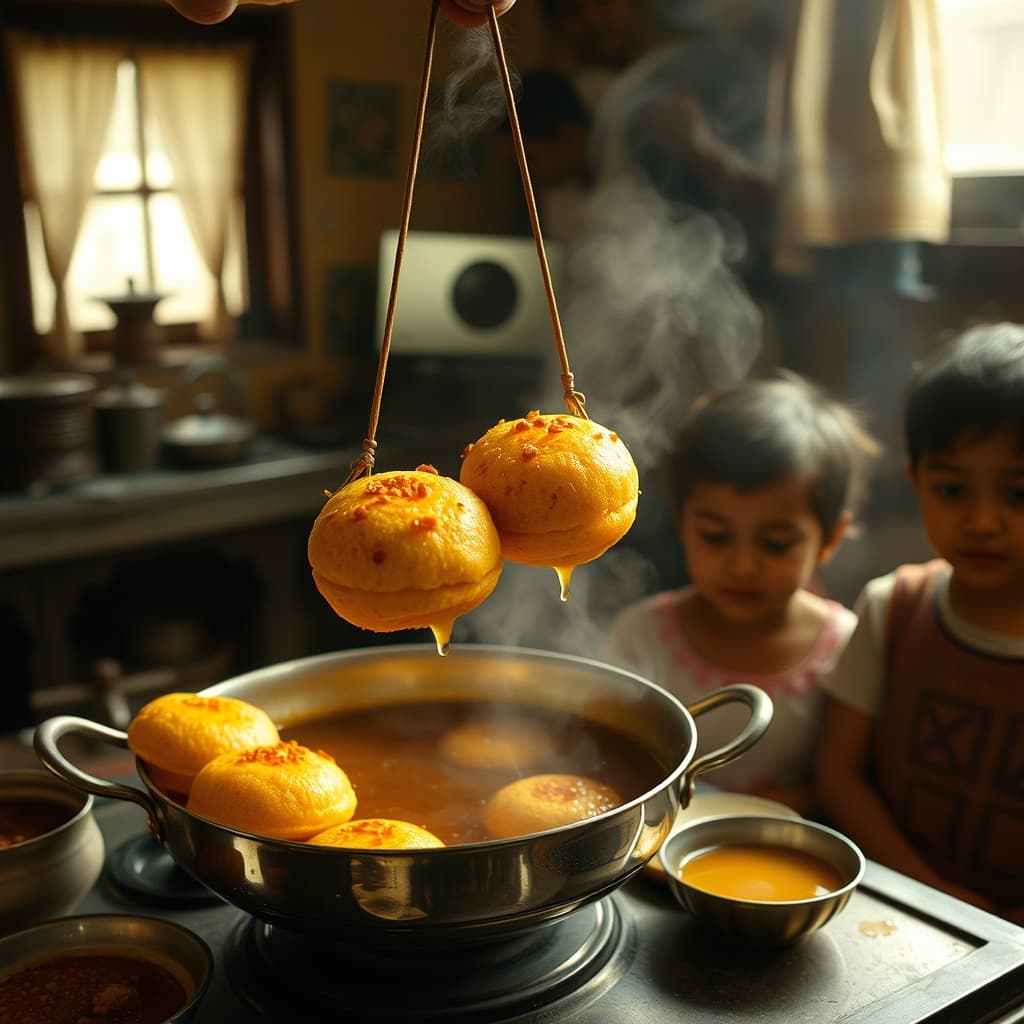
Its special place within taste memory comes from precisely this double character. On one side it belongs to street vendors, neighborhood fairs, school dismissals, and the rush before holidays; on the other side, once inside the home kitchen, it becomes part of family making, sharing, and inherited knowledge of measure. In old kitchens, recipes were often taught not in grams, but through phrases like “as soft as an earlobe,” “let it boil once,” or “you will understand when your hand gets used to it.” Halka tatli was one of those flavors learned in that way. The dough being carefully piped from a cloth or pastry bag, forming rings in the oil, then meeting cool syrup afterward, turned the kitchen into a small ceremony requiring both skill and patience. When this sweet was made at home, it created memories of children waiting at the kitchen door and of the first piece being shared while still warm. In that way, the taste of the street joined the warmth of the household.
What keeps old kitchen culture alive is not only the recipe itself, but the behaviors gathered around it. On the day halka tatli was made, the large pot, the cloth spread across the counter, the syrup cooling to one side, and even the opened window during frying all became part of a recognizable memory. Family recipes therefore carry not only flavor, but also kitchen order. Who prepares the syrup, who stirs the dough, who sends the first tray to a neighbor, all of this builds the social side of food. Halka tatli, especially in large families and in years when neighborhood ties were strong, became a sweet symbol of sharing. It was offered to guests, placed on a plate for the neighbor, and turned into an after-school surprise for children. What makes it special is not only its crisp surface or shining syrup, but that it is a flavor made and eaten together.
Today, halka tatli is often seen as a quick snack, yet its place inside family recipes reminds us of something much deeper. Old kitchen culture knew not only how to cook, but how to share time, value labor, and turn taste into memory. Halka tatli keeps that culture alive because, by rebuilding a street flavor at home, it unites two worlds in the same sweetness. In one bite there is the liveliness of the street; in the next, the safety of the home kitchen. That is why it holds a special place for many families. What is remembered is not only the dessert itself, but the smell rising from the pan, the child waiting in the kitchen, the ring shining under syrup, and the small but lasting piece of time spent together.
Street Flavor Halka Tatli: Why Does It Hold a Special Place in Family Recipes and How Does It Keep Old Kitchen Culture Alive?