 Eski Pano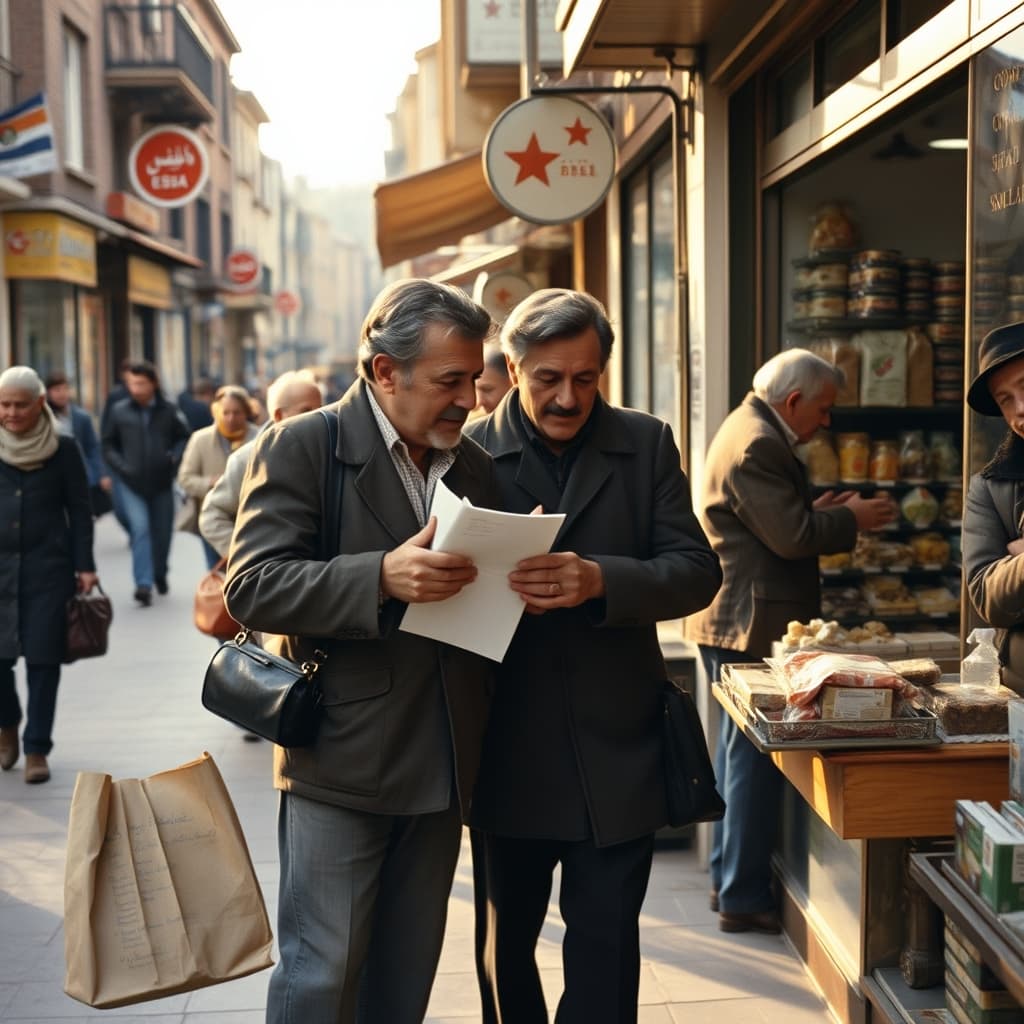
The last errand before Bayram was often the item that escaped the first list. A missing ingredient, a small gift, change for children or a repair collected late could send someone back into streets already thick with other people’s unfinished preparations. The familiar rush was not only a crowded-city spectacle. It was a chain of household decisions made visible at counters, crossings and doorways.
Eve-of-holiday routines varied by family, means, place and year. Some people completed purchases early; others depended on wages, opening hours, deliveries or help from relatives. A careful account should not present last-minute shopping as a universal tradition or a charming failure to plan. It can instead ask how households coordinated limited time and how local businesses managed the same deadline from the other side of the counter.
The List Changed after Someone Left Home
A written list could stabilise preparation, yet a verbal addition might arrive at the doorway. The person running the errand had to decide whether to turn back, memorise the request or add it to the paper. Several family members could hold different versions of what remained. Repeated items wasted money; missing ones created another journey. The list was therefore both a record and a live negotiation.
Order mattered because shops lay along different routes and goods had different urgency. Something fragile could not be carried through every crowded stop; chilled food should not spend an afternoon outside safe storage. A collected garment needed protection from rain and packages required hands. Practical route planning formed part of the rush, even when remembered later as spontaneous street energy.
The Queue Had Its Own Information
A queue revealed more than waiting time. People learned whether stock remained, whether another counter was quicker and when a delivery might arrive. Brief exchanges could prevent a wasted journey. They could also spread uncertain information. A shopkeeper’s clear answer and an orderly line reduced tension; pushing, reserving places for a large group or arguing over scarce goods shifted the burden onto workers and other customers.
Children sent on errands might learn trust and geography, but responsibility needed limits. The task had to suit their age, route, traffic and the money carried. A child should not be blamed for an unavailable item or asked to negotiate unsafe crowds. Adult memory can romanticise independence while forgetting anxiety, heavy bags or the fear of losing change.
Behind the Shutter Was Another Rush
For shopkeepers, the final hour involved restocking, wrapping, calculating, answering repeated questions and deciding when service had to end. Their own holiday preparations waited elsewhere. Respect for neighbourhood commerce includes that labour. Closing time was not merely an obstacle to customers; it marked the point at which workers also needed to return to their households.
At home, arrivals changed the plan again. Purchases were checked, food stored, gifts hidden or wrapped and a forgotten item judged essential or dispensable. One neighbour might lend a tray or small quantity rather than send someone back out. Such help was specific and reciprocal, but not available to every household. It should be recorded as an action between named roles, not as proof that old neighbourhoods were always harmonious.
To document a Bayram eve, preserve the list, receipt, shop bag or route alongside the family recollection. Ask who wrote the additions, who waited, who stayed home to continue other work and which final item turned out not to matter. The city’s rhythm emerged from these linked tasks. What placed the rush in urban memory was not crowding alone, but the shared deadline that made each private preparation briefly visible in public space.