 Eski Pano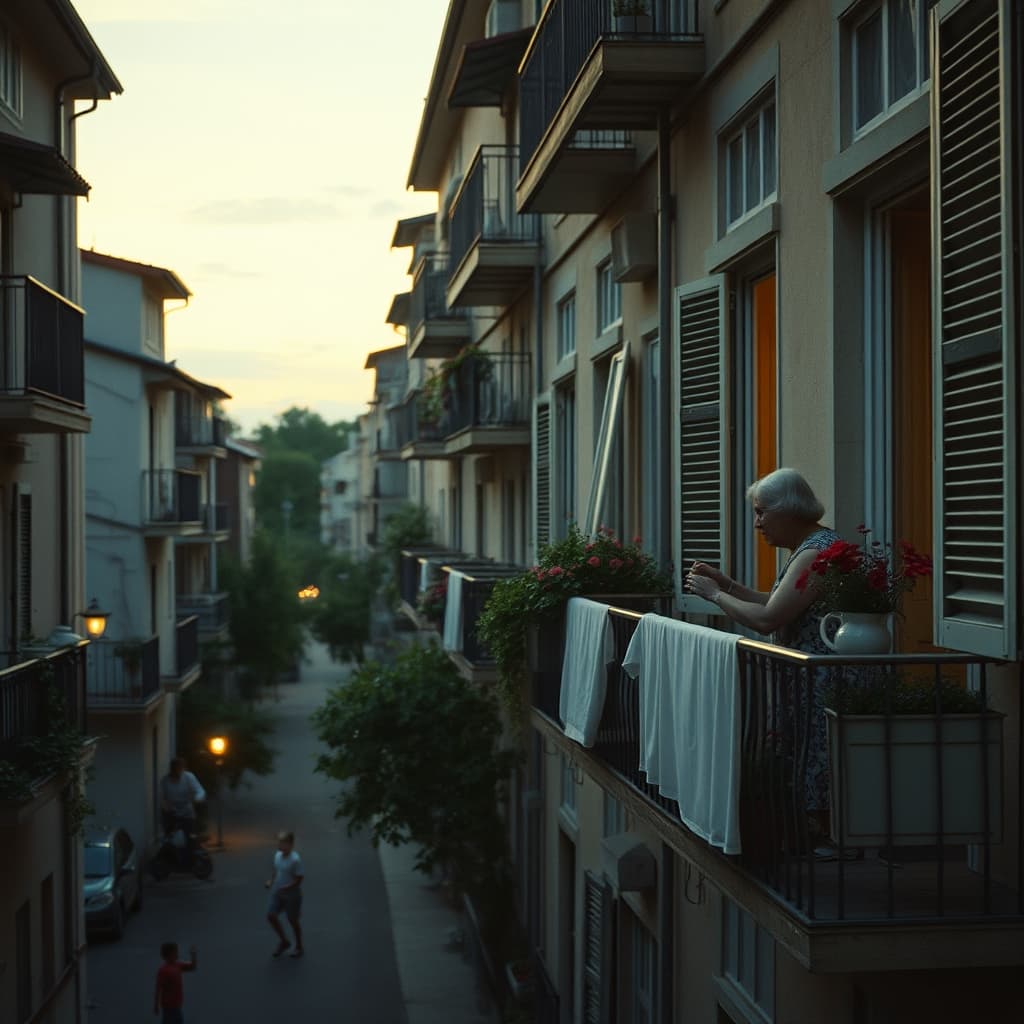
Neighboring balconies allowed conversation without a formal visit. A greeting while hanging laundry could become a question about health, school, a delivery, or the weather. Someone remained inside their own home while sharing the air and view of another household. This balance between proximity and distance made the balcony a distinctive social threshold rather than simply an outdoor room.
Architecture shaped the relationship. Side-by-side balconies supported quieter exchange than facades facing across a courtyard or street. Height, rail design, awnings, trees, traffic, acoustics, and building orientation determined what could be seen and heard. Not every apartment had a balcony, and not every resident could use one safely or comfortably. The remembered culture belongs to specific buildings and bodies.
Small Exchanges Built Reliability
A neighbor warned of rain while laundry dried, accepted a lowered basket, returned a borrowed bowl, watched for a delivery, or called a child upstairs. These acts accumulated trust because they solved modest problems quickly. Repeated accurate help mattered more than declarations of closeness.
Objects moving between balconies require care. Throwing keys or packages creates injury risk; improvised ropes and baskets can fail. Food needs clean covering, and heavy items should use stairs or safe delivery methods. A charming memory should not be recreated through unsafe practice.
Visibility Required Boundaries
Balconies exposed domestic routines: meals, bedding, arguments, smoking, visitors, and periods of absence. Seeing did not grant permission to comment or record. Trust depended on discretion and on recognising when the other person wanted only a greeting. Gossip could turn the same architecture into surveillance.
Conversation also produced noise for residents working, sleeping, studying, or seeking privacy. Voices carried farther at night. Plants, screens, enclosed balconies, and changing windows altered contact. Building rules and individual needs constantly renegotiated the balance between community and quiet.
Domestic Labor Framed the Friendship
Many exchanges happened while someone watered plants, cleaned, aired bedding, prepared food, or supervised children. The friendship was woven through work rather than separate from it. Because women often performed these tasks, balcony sociability can be romanticised while their recurring labor disappears. Oral history should ask what each person was doing during the remembered conversations.
An archive can map balcony position, distance, sightlines, sounds, plants, tools, seasonal use, participants, and changes after renovation. Photographs should respect residents’ privacy and avoid identifying living people without consent. The bonds felt strong because architecture offered frequent, low-demand contact: close enough to notice and help, far enough to remain at home. Their durability depended not on constant openness, but on the practiced ability to cross and respect the small distance between two railings. Seasonal changes altered who appeared and when. Summer heat moved conversation toward evening; winter sun created shorter encounters; fasting, school terms, work shifts, and illness changed availability. New glazing could turn an open balcony into an interior room and break an established sightline. Mapping these changes shows that friendship adapted to architecture rather than floating outside it. Silence between balconies could also express respect, grief, absence, or conflict, and deserves interpretation as carefully as conversation.