 Eski Pano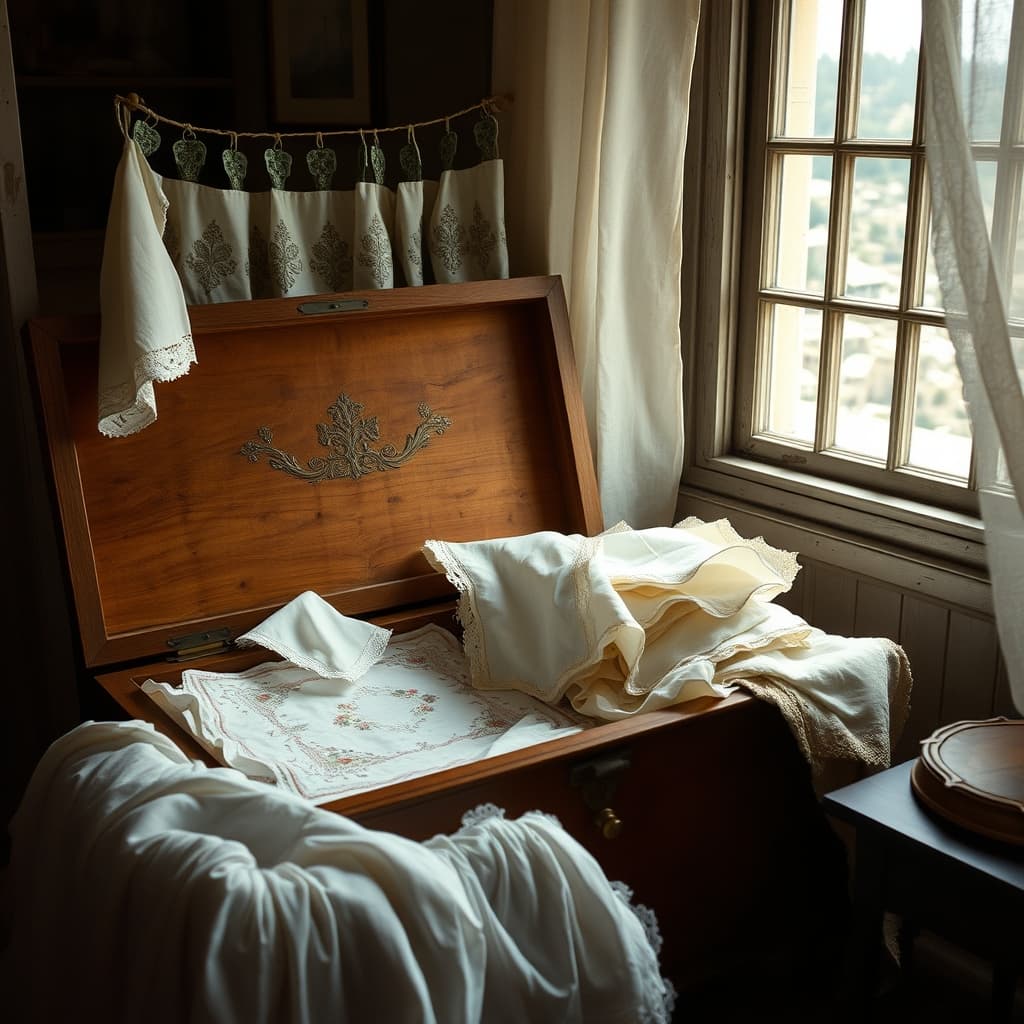
An embroidered handkerchief in a dowry room could spend years between making and use. Folded beside linens, garments, or other prepared objects, it represented skill, future hospitality, gift exchange, and expectations about a household not yet formed. Its small size did not reduce its importance. Fine cloth and concentrated stitching allowed care to be carried, shown, or given in the hand.
Dowry customs vary by region, family, class, period, and individual choice. Handkerchiefs might be made for personal use, gifts, ceremonies, guests, or decorative display. Some were purchased and embellished; others were entirely handmade. An object found in a dowry chest should not be assigned to a wedding event without documentation. It may have entered the group later.
The Stitch Held a Name That Was Often Lost
Initials, flowers, borders, drawn-thread work, needle lace, or coloured motifs can reveal technique and intended recipient. The reverse shows starts, repairs, and changes in thread. A named maker should be recorded wherever possible. The broad phrase family handiwork hides differences among the person who stitched, the person who supplied materials, and the person whose future the object was meant to support.
Patterns travelled through relatives, neighbours, school lessons, magazines, and commercial transfers. Similar motifs do not prove direct kinship or one village origin. Thread brands, fabric, pattern paper, dated photographs, and interviews can build a stronger history.
Waiting Changed the Meaning
A handkerchief prepared for one future might remain unused when marriage, migration, work, taste, or family plans changed. Later generations could inherit an object connected to expectation rather than an event. That unfinished social story deserves honest documentation. Using it today, displaying it, or keeping it folded are all new decisions in the biography.
The dowry room also represented labor and pressure. Producing enough objects could require money, time, and conformity, often from women and girls. Pride and creativity coexisted with anxiety and unequal expectations. A responsible archive allows both affection and critique rather than treating every prepared textile as evidence of uncomplicated tradition.
Folds Preserve and Damage
Sharp folds, humidity, light, insects, perfume, soap, and acidic paper can weaken fine cloth. Household bleach and hot ironing damage fibres and coloured embroidery. Clean, dry, supported storage with minimal folding is safer. Valuable, mouldy, brittle, or stained pieces should be assessed by a textile conservator before washing.
Photograph the handkerchief flat, front and back, with scale, edges, stitches, repairs, initials, packaging, and its relation to the larger dowry group. Record maker, intended recipient, dates, movements, and uncertainty. It became a family inheritance because years of waiting accumulated around a portable piece of cloth. Preserving that waiting, including plans that changed, gives the handkerchief a truthful life beyond decorative nostalgia. Scent is often recalled but difficult to preserve or identify. Soap, lavender, tobacco, wood, paper, and later perfume may all have entered the cloth. Conservators should not add fragrance to recreate memory. Instead, oral histories can record the association while the textile remains chemically undisturbed and safe for future study. Its silence is evidence too.