 Eski Pano
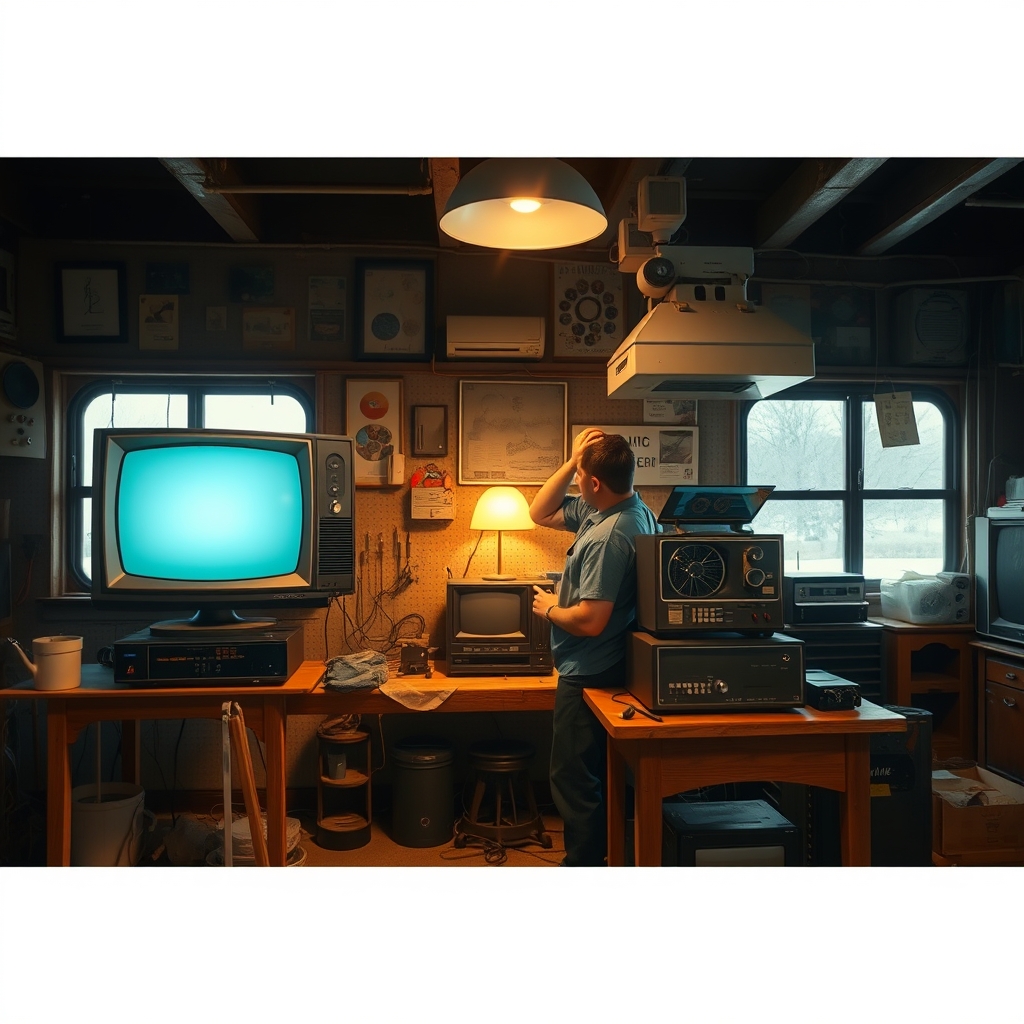
Some technologies manage to outlive their original era not only because they are durable, but because of the patience of the people who keep touching them. Old televisions with antennas and overhead projectors were exactly such devices. When the antenna was turned a little to the right, a little upward, or moved closer to the window, the image that suddenly cleared on the screen meant more than technical correction. It meant hope settling back into place inside the home. The overhead projector was a similarly dignified machine, carrying lessons and explanations through transparent sheets in school halls, association meetings, and classroom corners. Both gradually withdrew before newer technology, yet in the hands of repairmen they ceased to be obsolete objects and entered a second life. If this memory turns into a sweet ache when blended with the sound of a ferry drifting into the night, it is because these devices were not merely operated. They were brought back to life.
Seen as technological heritage, that second life is one of the most meaningful aspects of the social bond once formed with old devices. To fix a television channel that would not come in clearly, to understand what had failed inside a tube screen, or to replace the lamp or fan of an overhead projector was not merely technical skill. It was a way of restoring the rhythm of daily life. In small neighborhood repair shops, among solder smells, plastic casings, screwdrivers, and attentive hands, a culture of analog maintenance took shape. People did not throw away a broken device at once. They first said, "Let's have someone look at it." The life of an object was measured not by the date it had been bought, but by the possibility of being repaired. That outlook treated technology not as novelty to be consumed and discarded, but as a companion sustained through care.
That is why the phrase hope growing clearer as the antenna was turned feels so strong. Not missing the evening news, catching the last minutes of a match, or seeing the faces in a favorite series without static were shared excitements in the homes of that period. A father on the roof, a child calling from the balcony, and a mother shouting from inside, "It's good now, just a little back," created scenes in which technology was managed by the whole family. The overhead projector carried a similar sense of collectivity. When the classroom darkened, the fan began to hum, the light struck the transparent sheet, and enlarged letters fell across the wall, everyone gave their attention to the clarity offered by the same machine. That clarity was sometimes knowledge, sometimes entertainment, and sometimes simply the order of looking together.
The second life these machines found in repairmen's hands came partly from economic necessity and partly from the cultural value attached to craftsmanship. Every neighborhood had a name people trusted with the phrase, "Only that master can fix it." He opened the casing without haste, changed the part if needed, but also explained why it had failed. In that way repair became a small lesson translating the hidden interior of the machine for ordinary people. Children looked through the shop window, watching colorful resistors and wires inside opened casings, slowly understanding that a machine was not magic, but labor. When night came and the sound of a ferry drifted from the shore, the television newly returned from repair glowing again, or the overhead projector taken out from a school storeroom working once more, made people feel that not only the device, but a whole ethic of work had been restored.
Today, in a culture of rapid replacement, turning an antenna or searching for an overhead projector lamp may seem to belong entirely to the past. Yet it is still easy to understand why these devices are remembered with such tender ache. They represent the humanly extended life of technology. Repairability, patience, knowledge of parts, and the desire to call back what has failed were among the most humane features of the old technological world. A device leaving the repair shop was not only an object made functional again. It was a household companion or classroom partner made trustworthy once more. That is why the antenna television and the overhead projector continue to live in memory with the same age and inward pull as a ferry sound dissolving into the night.
Hope Growing Clearer as the Antenna Was Turned and the Overhead Projector: Explaining Why It Found a Second Life in Repairmen's Hands, Turning into a Sweet Ache with the Ferry Sound Blending into the Night
🇹🇷 Anteni Çevirdikçe Netleşen Umut Ve Tepegöz: Tamircilerin Elinde Neden İkinci Bir Ömür Bulduğunu Açıklıyor Geceye Karışan Vapur Sesiyle Tatlı Bir Sızıya Dönüşerek
🇵🇹 A Esperança que Ficava Mais Nítida À Medida que a Antena Era Girada e o Retroprojetor: Explicando por que Encontrou uma Segunda Vida nas Mãos dos Consertadores, Transformando-Se Numa Doce Pontada Com o Som do Vapur Misturado À Noite
🇬🇧 Hope Growing Clearer as the Antenna Was Turned and the Overhead Projector: Explaining Why It Found a Second Life in Repairmen's Hands, Turning into a Sweet Ache with the Ferry Sound Blending into the Night
🇹🇷 Anteni Çevirdikçe Netleşen Umut Ve Tepegöz: Tamircilerin Elinde Neden İkinci Bir Ömür Bulduğunu Açıklıyor Geceye Karışan Vapur Sesiyle Tatlı Bir Sızıya Dönüşerek
Bazı teknolojiler, ilk üretildikleri dönemin ötesinde yaşamayı yalnız dayanıklılıklarıyla değil, onlara dokunan insanların sabrıyla başarır. Eski antenli televizyonlar ve tepegözler tam da böyle cihazlardı. Anteni biraz sağa, biraz yukarı, bazen de pencereye daha yakın bir yere çevirince ekranda ansızın beliren berraklık, yalnız görüntünün düzelmesi değil, ev içindeki umudun da yerine oturması demekti. Tepegöz ise okul salonlarında, dernek toplantılarında, dershane sınıflarında saydam yaprakların üstünden bilgi taşıyan ağırbaşlı bir makineydi. İkisi de zamanla yeni teknolojiler karşısında geri çekildi; ama tamircilerin elinde birdenbire eskimiş eşya olmaktan çıkıp ikinci bir ömre kavuştu. Geceye karışan vapur sesiyle birlikte bu hatıra neden tatlı bir sızıya dönüşüyor denirse, çünkü o cihazlar yalnız çalıştırılmaz, yeniden hayata döndürülürdü.
Teknoloji Mirası açısından bakıldığında bu ikinci ömür, eski cihazlarla kurulan toplumsal ilişkinin en anlamlı taraflarından biridir. Bir televizyonun çekmediği kanalı düzeltmek, tüplü ekranın içindeki arızayı anlamak, tepegözün lambasını ya da fanını yenilemek yalnız teknik beceri değildi; aynı zamanda gündelik hayatın ritmini kurtarma işiydi. Mahalle aralarındaki tamirciler, küçük dükkânlarında lehim kokusu, plastik kapaklar, tornavidalar ve dikkatli eller arasında bir tür analog bakım kültürü oluştururdu. İnsanlar bozulmuş cihazı hemen çöpe atmak yerine önce "bir gösterelim" derdi. Çünkü eşyanın ömrü, satın alınma tarihiyle değil, tamir edilebilme ihtimaliyle ölçülürdü. Bu anlayış, teknolojiyi tüketilip bırakılan bir yenilik değil, emek verilerek sürdürülen bir yoldaş gibi görüyordu.
Anteni çevirdikçe netleşen umut sözü biraz da bu yüzden güçlüdür. Akşam haberlerini kaçırmamak, maçın son dakikalarını görebilmek, sevilen dizideki yüzlerin karıncalanmadan seçilmesini sağlamak, o dönemin evlerinde küçük ama ortak heyecanlardı. Çatıya çıkan bir baba, balkondan seslenen bir çocuk, içeriden "şimdi oldu, azıcık geri" diye bağıran bir anne, teknolojinin ailece yönetildiği sahneler yaratırdı. Tepegözde de benzer bir müştereklik vardı. Sınıf karardığında cihazın fanı çalışır, ışık saydam kâğıda vurur ve duvara büyüyen harfler düşerken, herkes aynı makinenin sunduğu berraklığa dikkat kesilirdi. O netlik bazen bilgi, bazen eğlence, bazen de sadece birlikte bakmanın düzeniydi.
Tamircilerin elinde bu cihazların ikinci bir ömür bulması, biraz ekonomik zorunluluklardan, biraz da ustalığın kültürel kıymetinden kaynaklanıyordu. Her mahallenin "onu ancak falanca usta yapar" denilen bir ismi olurdu. Cihazın kapağını açarken acele etmez, parçayı yalnız değiştirmekle kalmaz, neden bozulduğunu da anlatırdı. Böylece tamir, görünmez iç yapıyı halka tercüme eden küçük bir eğitim anına dönüşürdü. Çocuklar dükkân camından içeri bakar, açılmış kasaların içindeki renkli dirençleri ve kabloları seyreder, makinenin bir büyü değil emek işi olduğunu sezerdi. Gece olup sahilde bir vapur sesi duyulduğunda, eve yeni gelmiş tamirli televizyonun tekrar ışık vermesi ya da okul deposundan çıkarılan tepegözün yeniden çalışması, insana yalnız cihazın değil, bir dönemin çalışma ahlakının da geri döndüğünü hissettirirdi.
Bugün hızlı yenileme kültürü içinde anten çevirmek de tepegöz lambası aramak da neredeyse bütünüyle geçmişe ait görünebilir. Yine de bu cihazların neden bu kadar sevecen bir sızıyla hatırlandığı açık. Onlar, teknolojinin insan eliyle uzatılan ömrünü temsil ediyor. Tamir edilebilirlik, sabır, parçayı tanıma bilgisi ve bozulanı geri çağırma arzusu, eski teknoloji dünyasının en insani taraflarıydı. Tamircinin dükkânından çıkan cihaz sadece onarılmış bir eşya olmazdı; yeniden güvenilir hale gelmiş bir ev arkadaşı ya da sınıf yoldaşı olurdu. Bu yüzden antenli televizyon ve tepegöz, geceye karışan vapur sesi kadar eski, o ses kadar içli bir hatıra halinde yaşamayı sürdürüyor.
🇵🇹 A Esperança que Ficava Mais Nítida À Medida que a Antena Era Girada e o Retroprojetor: Explicando por que Encontrou uma Segunda Vida nas Mãos dos Consertadores, Transformando-Se Numa Doce Pontada Com o Som do Vapur Misturado À Noite
Algumas tecnologias conseguem viver para além da época em que surgiram não apenas por serem resistentes, mas pela paciência das pessoas que continuam a tocá-las. As antigas televisões com antena e os retroprojetores eram exatamente assim. Quando a antena era girada um pouco para a direita, um pouco para cima ou colocada mais perto da janela, a imagem que de repente ficava nítida na tela significava mais do que um ajuste técnico. Significava a esperança voltando ao lugar dentro da casa. O retroprojetor era uma máquina igualmente solene, levando conteúdos em folhas transparentes para salões escolares, reuniões e salas de aula. Ambos foram recuando diante de tecnologias mais novas, mas nas mãos dos consertadores deixaram de ser objetos ultrapassados e ganharam uma segunda vida. Se essa lembrança se transforma numa doce pontada quando se mistura ao som de um vapur entrando na noite, é porque esses aparelhos não eram apenas usados. Eram trazidos de volta à vida.
Como herança tecnológica, essa segunda vida é um dos aspectos mais significativos da relação social que se criava com os aparelhos antigos. Corrigir o canal de uma televisão que não pegava direito, entender o defeito dentro de uma tela de tubo ou trocar a lâmpada e o ventilador de um retroprojetor não era apenas habilidade técnica. Era uma forma de restaurar o ritmo do cotidiano. Nas pequenas oficinas de bairro, entre cheiro de solda, carcaças plásticas, chaves de fenda e mãos atentas, formava-se uma cultura analógica de manutenção. As pessoas não jogavam fora um aparelho quebrado de imediato. Primeiro diziam: "Vamos mostrar para alguém." A vida de um objeto era medida não pela data da compra, mas pela possibilidade de ser consertado. Esse olhar tratava a tecnologia não como novidade para ser consumida e abandonada, mas como uma companhia sustentada pelo cuidado.
É por isso que a frase a esperança ficava mais nítida à medida que a antena era girada soa tão forte. Não perder o jornal da noite, acompanhar os minutos finais de um jogo ou ver sem chiado os rostos da novela preferida eram pequenas emoções compartilhadas nas casas daquele tempo. Um pai no telhado, uma criança chamando da varanda e uma mãe gritando lá de dentro "agora ficou bom, volta só um pouco" criavam cenas em que a tecnologia era administrada em família. O retroprojetor carregava uma coletividade parecida. Quando a sala escurecia, o ventilador começava a soar, a luz batia na transparência e letras ampliadas surgiam na parede, todos concentravam a atenção na nitidez oferecida pela mesma máquina. Essa nitidez às vezes era conhecimento, às vezes entretenimento, e às vezes apenas a ordem de olhar juntos.
A segunda vida que esses aparelhos encontravam nas mãos dos consertadores vinha em parte das necessidades econômicas e em parte do valor cultural da habilidade artesanal. Todo bairro tinha um nome que surgia com a frase "só aquele mestre consegue consertar". Ele abria a carcaça sem pressa, trocava a peça se fosse preciso, mas também explicava por que o defeito tinha acontecido. Assim, o conserto virava uma pequena aula que traduzia para as pessoas comuns a estrutura escondida da máquina. As crianças olhavam pela vitrine da oficina, observando resistores coloridos e fios dentro das carcaças abertas, e percebiam aos poucos que a máquina não era magia, mas trabalho. Quando a noite chegava e o som de um vapur vinha da costa, a televisão recém-consertada brilhando de novo ou o retroprojetor tirado do depósito da escola voltando a funcionar faziam sentir que não só o aparelho, mas toda uma ética do ofício tinha regressado.
Hoje, numa cultura de substituição rápida, girar antena ou procurar lâmpada de retroprojetor pode parecer algo inteiramente do passado. Ainda assim, é fácil entender por que esses aparelhos continuam sendo lembrados com tanta ternura. Eles representam a vida prolongada da tecnologia pela mão humana. Capacidade de reparo, paciência, conhecimento das peças e o desejo de trazer de volta aquilo que falhou estavam entre os aspectos mais humanos do velho mundo tecnológico. Um aparelho que saía da oficina não era apenas um objeto funcionando de novo. Tornava-se outra vez um companheiro confiável da casa ou da sala de aula. É por isso que a televisão com antena e o retroprojetor continuam vivos na memória com a mesma antiguidade e a mesma doçura melancólica do som de um vapur dissolvendo-se na noite.