Eski Pano
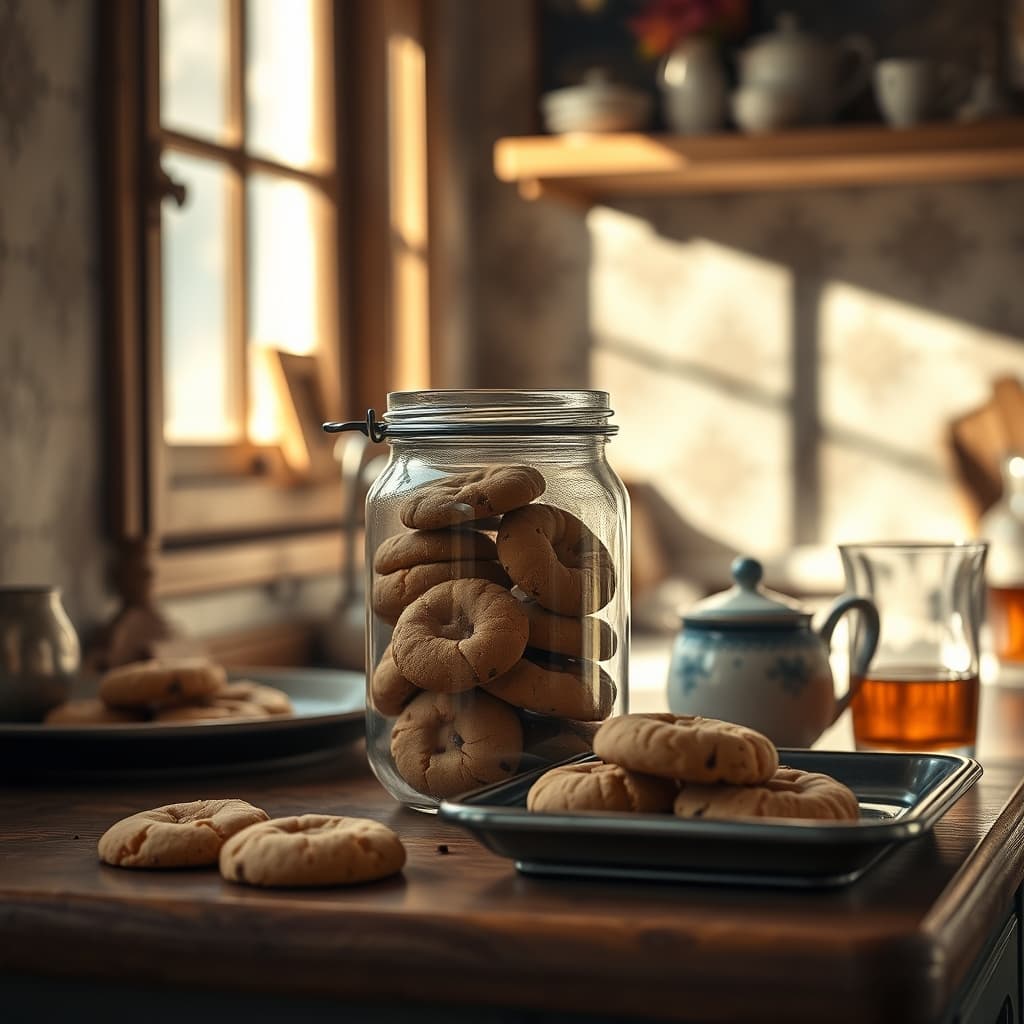
Some flavors touch not only the palate at the first bite, but all the sounds of the home at once. Grandmother's cookie belongs to that kind. The smell of butter spreading through the kitchen from a tray just out of the oven, the soft sound made when the glass jar is opened, and the few simple but familiar pieces placed beside tea can carry a person at once into the secure order of older homes. This cookie is usually far removed from pastry-shop display. Its shape may not be perfect, the cracks on its surface may not match, and sometimes powdered sugar is scattered over it while at other times it is left plain. Yet precisely this lack of perfection gives it the authentic warmth of the family kitchen. Grandmother's cookie is remembered less as a formula than as a habit of the hand, less as a measured recipe than as an act of affection.
Its special place within taste memory comes from the fact that it carries not only ingredients, but an entire kitchen attitude from one generation to the next. In many homes the recipe is never fully written down. It is transmitted through phrases such as "about one glass," "as much flour as the hand can bear," or "until the color turns." This vagueness is not a deficiency, but the experience itself. The firmness of the kneading hand, the state of the butter at room temperature, the knowledge of how quickly the oven browns the dough all make the recipe a living thing. That is what comes to mind when one says grandmother: not a standardized formula, but a feeling accumulated over years. The reason the cookie holds such a special place among family recipes is not simply that not everyone can reproduce it, but that not everyone can reproduce the same tone of care. Here flavor is preserved not only in the mouth, but in a way of behaving.
Its ability to keep old kitchen culture alive also comes from its rhythm of preparation. Grandmother's cookie was not usually baked on a sudden whim, but at a moment considered fitting within the order of the home. Flour was sifted, the tray was greased, kitchen towels were set aside, and if children were present they might be allowed to pinch off little pieces of dough, though the real work remained with the experienced hand. The oven door was not opened too often, and when the first tray came out, the smell spreading through the house announced it to everyone. The cookies would not be put into the jar before cooling, a few would be separated for a neighbor, and they might be made not only on holidays, but also on ordinary afternoons. That made the tradition even more precious. Old kitchen culture lived not only in grand meals, but also in small companions quietly placed beside tea. Grandmother's cookie is the sweet face of that quiet continuity.
Another reason it remains so strong in memory is the bond it forms with domestic time. For a child returning from school, the jar on the counter appears almost like a reward. When guests arrive, the phrase "they are homemade" is spoken with a gentle pride. Toward the end of long visits, the last two pieces left on the plate are usually the ones valued most. The cookie is never simply eaten. Around it survive habits of waiting, storing, sharing, and offering. What passes from mother to daughter or grandmother to grandchild is not merely a list of ingredients. It is the condition of staying in the kitchen without haste, the way the dough is touched, the respect shown to the heat of the fresh tray, and the habit of filling the jar with tomorrow in mind. For that reason, the cookie becomes a small but resilient carrier of kitchen culture.
When we ask today why grandmother's cookie remains so special among family recipes, the answer lies partly in the density carried by simplicity. It is one of the rare tastes capable of creating the feeling of home without requiring a grand celebration. Within it live the economy of old kitchens, their restraint, their refusal to waste, and an ethic that treated sharing as natural. That is also why it keeps old kitchen culture alive. The cookie reminds us not only how something was baked, but how time was once held inside the home. A few pieces inside a glass jar can continue, even years later, to tell the story of a family's patience, hospitality, and warmth.
Grandmother's Cookie: Why Does It Hold a Special Place Among Family Recipes and How Does It Keep Old Kitchen Culture Alive?