Eski Pano
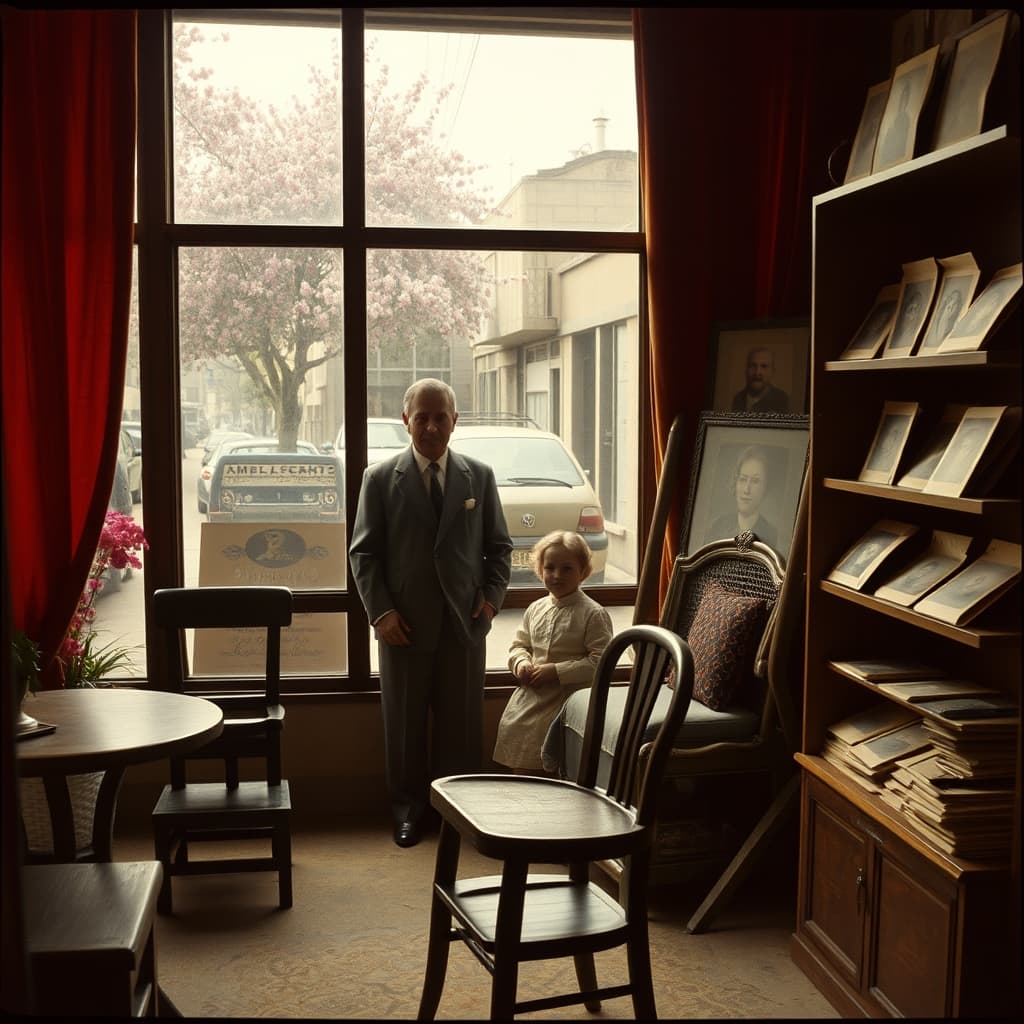
There was once a time when having a family photograph taken was not a quick errand, but something close to a small ceremony. On the day a household was to visit the photo studio at the corner of the street, preparations began at home: children had their hair carefully combed, the best clothes were brought out, the father's jacket was brushed, and the mother's collar was adjusted one last time. Reached by walking through flower-scented streets, those studios were not merely shops, but quiet stages where family history became visible. Sepia portraits behind the window, velvet curtains, round tables, and carefully placed chairs made ordinary people feel that their lives were worth preserving. The envelopes and cardboard mounts gathering dust on the shelves were like little trusts in which time itself had been stored by hand.
Seen along the trail of time, the value of photo studios came not only from producing images. They also revealed how families wished to see themselves, what posture they considered dignified, and how they arranged memory. Old newspaper advertisements for identity photos, wedding portraits, military keepsakes, or school mementos make clear how central these studios once were to daily life. When a family stood together in the same frame, not only faces but also hierarchy, intimacy, and care became visible. Children were placed in front, the eldest was seated, and everyone was directed toward the same point with intention. Photography was a call to gather a scattered life into seriousness for a few seconds. Perhaps that is why family albums were often kept on the highest shelf or in the safest drawer of the house.
Many of the quiet habits from that era continue today almost without notice. The instinct to straighten oneself when facing a camera, to square the shoulders, to line children up side by side, to say "let's take a family picture" on important days, all of these are traces of the old studio discipline. Because photographs were rare then, everyone knew the weight of the frame. No one sat carelessly, and no one treated a turned face as unimportant. Families who walked through flower-scented streets to reach the studio behaved as if they understood that the image would belong not only to that day, but also to the gaze of future generations. For that reason, the small cardboard envelopes handed over after a session were carried home almost like objects of memory, shown to neighbors, then placed carefully among linens and keepsakes.
Today, in an age flooded with digital images, the strongest legacy left by those old studios may be a sense of respect toward remembrance itself. To take the moment seriously, to value gathering loved ones into one frame, and to treat an expression as part of family history were all part of that era's quiet ethic. The flower-scented streets may no longer remain in the same form, yet the slight instinct to compose ourselves when entering a family photograph is an invisible habit carried from those dusty studio shelves into the present. When we look at an old identity portrait or a yellowed family print, what we feel is not only the past, but the past's own way of preserving itself. That is why those studios left behind not only images, but also the frame of what it meant to feel like a family.
The Era When Photo Studios Framed Family History on the Dusty Shelves of Memory: What Quiet Habits Did Flower-Scented Streets Leave to Today?