 Eski Pano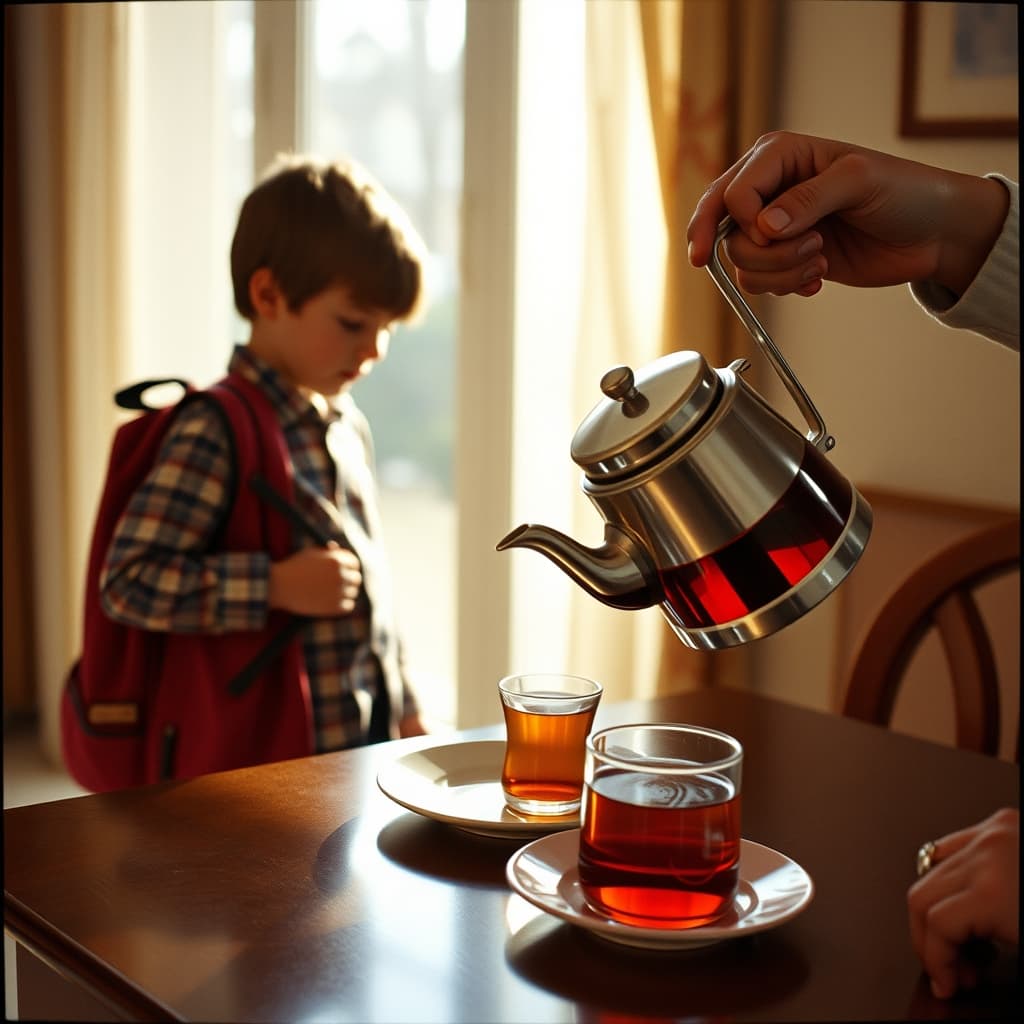
After school, the first spoon might reach for food while steam rose from the double teapot nearby. Adults judged the tea by colour, strength, aroma, and clarity before diluting the concentrate with hot water. The expression tavşan kanı describes a prized deep amber-red appearance rather than a literal ingredient. For many households, that colour marked a pause between the outside day and the evening at home.
Tea methods differ by region, water, leaf, equipment, family preference, and period. Some rinse or warm the pot, some measure by spoon, and steeping times vary. Strong, bitter, clear, light, or fragrant can each be preferred. A cultural archive should record the exact household method rather than present one colour or ratio as the only correct Turkish tea.
The Double Pot Managed Strength
Water heated in the lower kettle while leaves steeped with hot water in the upper pot. At service, concentrated tea entered the glass first or according to household habit, followed by hot water. This allowed different strengths from one brew. Water quality, boil, leaf amount, pot material, and time shaped the result. Tea left too long could become harsh.
The system involved scalding water, hot metal, steam, and narrow-waisted glasses. Handles, lids, stable surfaces, and controlled pouring mattered. Children should not carry a full boiling kettle or sit where a cord, cloth, or reaching hand can pull it down. A small glass cools at the rim but can remain dangerously hot inside.
After-School Tea Was Not the Same for Every Child
Some children drank lightly coloured tea, some milk or another beverage, and some were not offered caffeinated tea. Caffeine affects sleep and individuals differently; children and adolescents require age-appropriate guidance from health authorities or clinicians. Cultural familiarity does not make unrestricted strong tea suitable for everyone. Timing near bedtime matters, especially during school terms.
Food often softened the pause: bread and cheese, biscuits, fruit, leftovers, or a warm plate. The first spoon signalled hunger after the route home. Tea extended conversation while bags were opened and the day was reported. Seasonal transitions made the ritual more visible: cooler air increased the appeal of steam, while changing school schedules restored a household timetable.
Serving Was a Form of Attention
Someone bought tea, filled water, watched the boil, refreshed the pot, carried glasses, remembered sugar preferences, and washed everything afterward. This work frequently fell to women, though roles varied. Calling the tray a symbol of effortless hospitality can hide planning and repeated lifting. The person serving deserves a place in the record alongside the people talking.
Tea leaves, sugar, fuel, water, glassware, and time also had economic value. Rebrewing or stretching a pot could reflect thrift, taste, or a crowded room. Brands and advertising influenced aspiration, but household adjustments made the drink local. A stained pot or mismatched glass may reveal use more honestly than a perfect promotional setting.
A Digital Nostalgia Archive can connect teapots, glasses, tea packets, school schedules, kitchen photographs, fuel receipts, and testimony from those who brewed and drank. Old residue should not be tasted as evidence. Deep amber tea gained meaning at seasonal transitions because it joined temperature, timetable, and care. The school day ended not at the gate, but when the bag came down and the first safe, cooling glass reached the table.