Eski Pano
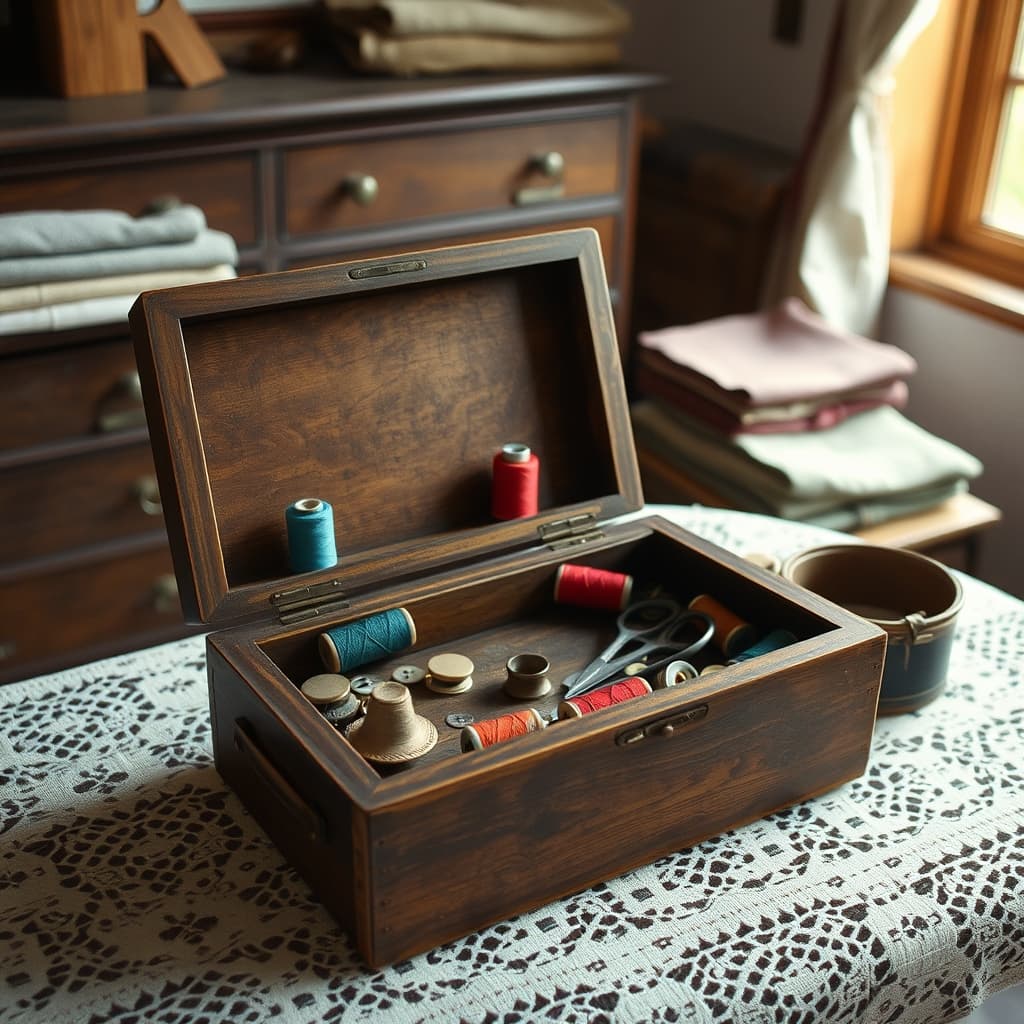
There was a time when small wooden sewing boxes rested in the quietest corners of the home, carrying within them the scent of walnut or pine. Sometimes they were kept in the drawer of a sideboard, sometimes at the bottom of a chest beside folded linens. When their lids were opened, out came colorful spools of thread, metal thimbles, safety pins, little envelopes of buttons, and scissors faintly darkened by the passing years. These boxes were not merely practical helpers for household tasks; they carried a delicate story about the order, patience, and handwork of family life. The scratches on their wooden surfaces, the tiny notes tucked into the lid, and sometimes even a trace of lavender inside made them more than ordinary objects. That is where the renewed interest in them begins: they make a simple yet attentive way of life tangible again.
From the perspective of object stories, the wooden sewing box is one of those rare household items in which design and use meet naturally. It is aesthetic without being showy, and while serving daily life it also carries the spirit of a home. In older houses, mending a tear, replacing a button, or repairing a child's clothes by hand was not regarded as a ceremony. Yet through those small repairs, garments and fabrics lived longer. The sewing box stood at the center of that invisible labor. Each compartment had its own order: white buttons in one corner, dark threads in another, needles and thimbles in the smallest space. The arrangement inside the box reflected the inner rhythm of the house itself. To look at a sewing box, then, is often to look at the order of a vanished domestic world.
One reason it attracts attention when found at the bottom of an old chest is the intergenerational bond it carries. A sewing box left by a mother, an aunt, or a grandmother is inherited not only as an object, but as a way of behaving. Thinking first of mending instead of discarding, recognizing the feel of fabric, saving buttons, and putting aside useful small pieces for "someday" are habits learned around such boxes. In today's fast culture of consumption, those habits appear almost like a separate form of grace. People are drawn to wooden sewing boxes now not only as vintage objects, but as symbols of a slower and more attentive life. These boxes remind us that making and preserving were once inseparable parts of the same domestic ethic.
Visual memory also plays a part in their return. The varnish dulled by time, the slight darkening of the metal clasp, and the mingled tones of the colorful spools inside create a far more human image than the sterile containers of the present. Yet the object is not confined to the past; it gains new meanings today as well. Some use it again for sewing, some turn it into a jewelry box, and some keep it on a desk as a memory object. But whatever its new purpose, its true strength remains where it has always been: in making the dignity of small labors visible. The wooden sewing box gathers within itself the careful attention of household life, much of which used to continue without ever being named.
The fact that this delicate story is drawing interest again today is not merely the result of a fashion for nostalgia. It is also a sign that people are turning back toward objects that are durable, touchable, and full of meaning. A sewing box rising from the bottom of a chest brings the voice of an era into the present not through grand declarations, but through small details. A button kept for years, a skirt sewn again, the cuff of a child's sweater patiently repaired: all these scenes accumulate silently inside that box. Perhaps that is why a person looking at a wooden sewing box today does not see only an old object. What appears there is also the discipline of a home, the dignity of handwork, and a slowness that deserves not to disappear.
The Delicate Story of the Wooden Sewing Box Emerging from the Bottom of Old Chests: Why Is It Drawing Interest Again Today?