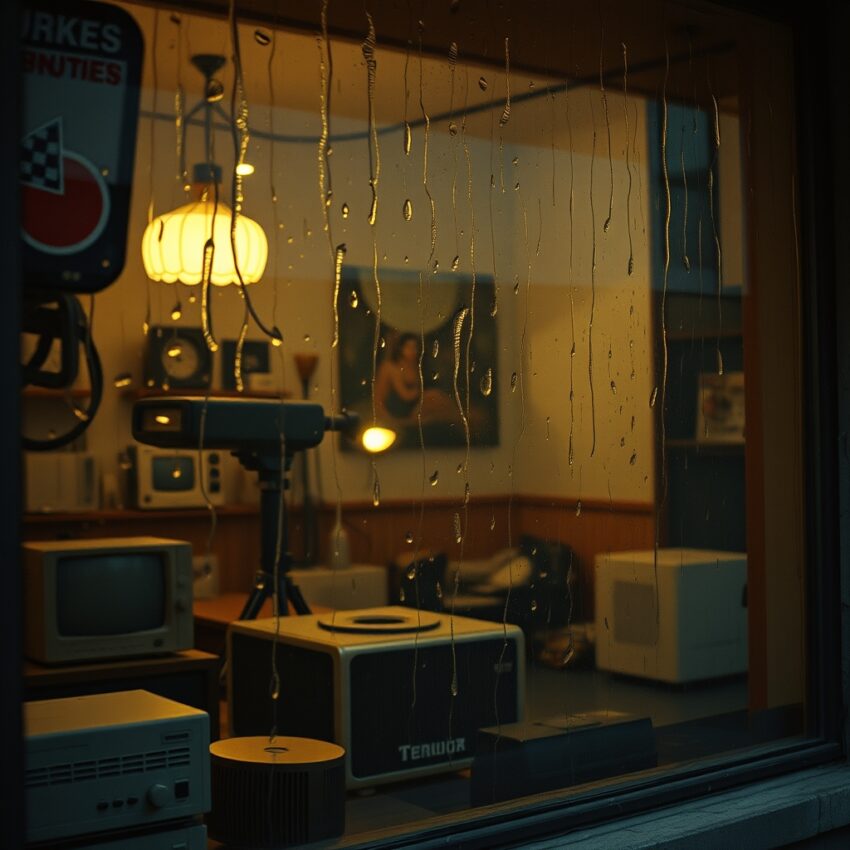
🇹🇷 Türkçe | dia projektörü başında geçen saatler: analog çağın unutulmayan heyecanını anlatıyor ilkbahar yağmurunun ardından bir vitrinin içinden bize bakarken
Bir zamanlar ilkbahar yağmuru dindikten sonra şehir başka türlü parlar, vitrin camlarının üstünde kalan su izleri gündelik hayatı hafifçe sinemalaştırırdı. Elektronikçiler çarşısının önünden geçenler, içeride dizili duran teyp kapaklarına, objektifli makinelerin metal gövdelerine ve çoğu zaman biraz arkada bekleyen dia projektörlerine bakmadan yürüyemezdi. Vitrinin içinden bize bakan o cihaz, yalnız bir teknik alet değil; akşam olunca duvara düşecek ışıklı hatıraların sessiz habercisiydi. O yıllarda dia projektörü başında geçen saatler, ailece toplanmanın, seyahat anılarını yeniden canlandırmanın ve görüntüyü bekleme sabrını öğrenmenin özel zamanlarıydı. Bugün hâlâ analog çağın unutulmayan heyecanı denince akla gelmesinin nedeni, o bekleyişin mekanik değil duygusal bir ritim taşımasıdır.
Teknoloji Mirası açısından dia projektörü, görüntünün tüketilmeden önce hazırlanmayı gerektirdiği bir dönemin sembollerinden biriydi. Filmler banyodan gelir, çerçevelere yerleştirilir, sıraya dizilir, perde ya da boş duvar ayarlanır, oda karartılırdı. Sonra cihazın içinden geçen ısınmış ışık, her karenin arkasındaki zamanı görünür kılardı. Bugün birkaç saniyede kaydırılan yüzlerce fotoğrafın tersine, o dönemde tek bir görüntüye bakmak bile törensel bir dikkat isterdi. Cihazın fan sesi, slayt değiştirirken duyulan küçük mekanik klik ve bazen görüntünün netleşmesi için yapılan ince ayar, izleme deneyiminin ayrılmaz parçalarıydı. Analog çağın heyecanı biraz da bu maddi süreçten doğuyordu: görüntü, hazır olduğu için değil; emekle görünür hale getirildiği için kıymetliydi.
Dia projektörü başında geçen saatlerin unutulmamasında aile içi paylaşımın büyük payı vardı. Salon lambası söner, çocuklar halının üstüne yaklaşır, büyükler bir sonraki karede kimin çıkacağını tahmin ederdi. Yaz tatilinde çekilmiş bir sahil görüntüsü, nişan gününden bir poz ya da kar yağmış bir kış sabahında çekilen aile fotoğrafı duvara yansıdığında, herkes aynı anda hem geçmişe hem birbirine bakardı. Fotoğraflar yalnız olayları göstermiyor; o günün sesini, kokusunu ve mevsimini de çağırıyordu. Bir slaytın ters takılmasıyla gelen kahkaha, görüntünün hafif bulanık çıkmasıyla başlayan telaş ve netlik yeniden bulunduğunda yükselen memnuniyet, teknolojiyle kurulan duygusal bağın parçasıydı. Cihazın teknik tarafı ile aile hafızası birbirinden ayrılmıyordu.
İlkbahar yağmurunun ardından vitrinden bize bakan projektör imgesi, bu yüzden çok şey anlatır. O vitrinin karşısında duran kişi, henüz satın almadığı bir cihazı değil; içine girmek istediği bir zaman duygusunu seyrederdi. Mahallede fotoğrafçıdan slayt almak, projektör kiralamak ya da bir tanıdıktan ödünç istemek bile küçük bir sosyal ağ kurardı. Cihazın yanında satılan ampuller, taşıma çantaları, yedek magazinler ve temizleme fırçaları; teknolojinin tek başına değil, etrafında oluşan bakım kültürüyle yaşadığını gösterirdi. Bugün vintage cihazların yeniden ilgi görmesi boşuna değildir. Çünkü insanlar yalnız eski bir makineyi değil, görüntüye saygı duyan o yavaş zamanı da geri çağırmak ister.
Şimdi ekranlar sonsuz, geçişler pürüzsüz ve hatıralar cebimizde taşınacak kadar hafif. Yine de dia projektörü başında geçen saatler hafızadan silinmiyor. Çünkü o saatler bize teknolojinin bir zamanlar insanları aynı karanlık odada, aynı ışık huzmesi etrafında topladığını hatırlatıyor. Analog çağın heyecanı, belirsizlikle karışık bir beklenti, ufak teknik aksaklıklarla örülü bir neşe ve görüntünün gelip duvara yerleşmesini sessizce izleme sabrıydı. İlkbahar yağmurundan sonra vitrinin içinden bakan o projektör, bugün hâlâ şunu fısıldıyor: bazı teknolojiler yalnız görüntü göstermez, bir kuşağın birlikte hatırlama biçimini de kurar.
🇬🇧 English | Hours Spent Beside the Slide Projector: Telling the Unforgotten Excitement of the Analog Age While Looking at Us from a Shop Window After the Spring Rain
There was a time when the city shone differently after a spring rain, and the trails of water left on shop windows gave everyday life a faintly cinematic glow. No one walking past the row of electronics shops could pass without looking at the cassette decks, the metal bodies of cameras, and the slide projectors waiting a little farther back in the display. Looking out at us from behind the glass, the projector was not merely a technical device; it was the silent messenger of illuminated memories that would later fall across a wall. The hours spent beside a slide projector were special moments of gathering as a family, of reviving travel memories, and of learning the patience of waiting for an image. The reason it still evokes the unforgotten excitement of the analog age is that this waiting followed not a mechanical rhythm, but an emotional one.
From the perspective of technological heritage, the slide projector was one of the emblems of a period when images required preparation before they could be consumed. Film had to return from development, be placed into frames, arranged in order, and then the screen or blank wall had to be prepared while the room was darkened. Only then did the warmed light inside the machine make the stored moments visible. Unlike the hundreds of photographs scrolled past in seconds today, even looking at a single image once demanded ceremonial attention. The sound of the fan, the small mechanical click as each slide advanced, and the delicate adjustments made to sharpen focus were all inseparable parts of the viewing experience. The excitement of the analog age came partly from this very material process: the image felt precious not because it was available instantly, but because it had been brought into visibility with care.
The fact that those hours remain unforgettable also has much to do with family sharing. The living room light would go out, children would creep closer over the carpet, and adults would guess who might appear in the next frame. A seaside view from summer vacation, a portrait from an engagement day, or a family photograph taken on a snowy winter morning would appear on the wall, and everyone would be looking at both the past and one another at the same time. The pictures did not merely show events; they summoned the sound, scent, and season of that day. The laughter caused by an upside-down slide, the brief anxiety when the image came out blurred, and the satisfaction when focus was restored were all parts of the emotional bond built around technology. The technical side of the machine and the memory of the family were never separate things.
That is why the image of a projector looking at us from a shop window after the spring rain says so much. The person standing before that window was not gazing only at an appliance not yet purchased, but at a feeling of time they longed to enter. Picking up slides from the neighborhood photo studio, renting a projector, or borrowing one from an acquaintance also created a small social network around the device. The bulbs, carrying cases, spare magazines, and cleaning brushes sold beside it showed that technology did not live alone, but through a surrounding culture of maintenance. The renewed interest in vintage devices today is not accidental. People are trying to recover not merely an old machine, but the slower sense of time that treated images with respect.
Now screens are endless, transitions are smooth, and memories are light enough to carry in a pocket. Yet the hours spent beside a slide projector do not disappear from memory. They remind us that technology once gathered people in the same dark room around the same beam of light. The excitement of the analog age was a mix of expectation and uncertainty, of joy woven through small technical disruptions, and of patient attention to the moment when an image settled onto the wall. The projector looking out from a rain-washed shop window still seems to whisper this: some technologies do not merely display images, they shape the way an entire generation remembers together.
🇧🇷 Português (Brasil) | Horas Passadas Diante do Projetor de Slides: Contando a Emoção Inesquecível da Era Analógica ao nos Olhar de Dentro de uma Vitrine Depois da Chuva de Primavera
Houve um tempo em que a cidade brilhava de outro modo depois da chuva de primavera, e os rastros de água deixados nas vitrines davam ao cotidiano um ar levemente cinematográfico. Quem passava pela rua das lojas de eletrônicos não conseguia seguir sem olhar para os toca-fitas, para os corpos metálicos das câmeras e para os projetores de slides que costumavam ficar mais ao fundo da vitrine. Olhando para nós de dentro do vidro, aquele aparelho não era apenas um instrumento técnico; era o mensageiro silencioso das memórias luminosas que mais tarde cairiam sobre uma parede. As horas passadas diante de um projetor de slides eram momentos especiais de reunião em família, de reviver viagens e de aprender a paciência de esperar a imagem. A razão de ele ainda representar a emoção inesquecível da era analógica é que essa espera tinha um ritmo não apenas mecânico, mas afetivo.
Do ponto de vista do legado tecnológico, o projetor de slides era um dos símbolos de um período em que a imagem precisava ser preparada antes de ser consumida. O filme voltava da revelação, era colocado em molduras, organizado em sequência, e então era preciso preparar a tela ou a parede vazia enquanto o quarto era escurecido. Só depois disso a luz aquecida dentro do aparelho tornava visíveis os instantes guardados. Ao contrário das centenas de fotos que hoje passam em segundos pela tela, naquela época até olhar para uma única imagem exigia atenção quase cerimonial. O som do ventilador, o pequeno clique mecânico a cada troca de slide e os ajustes delicados feitos para recuperar o foco faziam parte inseparável da experiência. A emoção da era analógica nascia em parte justamente desse processo material: a imagem era preciosa não por estar pronta, mas por ser trazida à visibilidade com cuidado.
O fato de essas horas permanecerem inesquecíveis também tem muito a ver com a partilha familiar. A luz da sala era apagada, as crianças se aproximavam pelo tapete e os adultos tentavam adivinhar quem apareceria no próximo quadro. Uma vista da praia nas férias de verão, um retrato do dia do noivado ou uma foto de família tirada numa manhã de inverno com neve surgiam na parede, e todos olhavam ao mesmo tempo para o passado e uns para os outros. As imagens não mostravam apenas acontecimentos; elas chamavam de volta o som, o cheiro e a estação daquele dia. A risada causada por um slide invertido, a pequena aflição quando a imagem saía borrada e a satisfação quando o foco voltava eram partes do vínculo afetivo criado em torno da tecnologia. O lado técnico do aparelho e a memória da família nunca estavam separados.
É por isso que a imagem do projetor nos observando de dentro da vitrine depois da chuva de primavera diz tanto. A pessoa parada diante daquele vidro não contemplava apenas um aparelho ainda não comprado, mas uma sensação de tempo na qual queria entrar. Buscar os slides no fotógrafo do bairro, alugar um projetor ou pedir um emprestado a um conhecido também criava uma pequena rede social ao redor do dispositivo. As lâmpadas, as bolsas de transporte, os compartimentos extras e as escovas de limpeza vendidos ao lado dele mostravam que a tecnologia não vivia sozinha, mas junto de uma cultura de cuidado. O interesse renovado por aparelhos vintage hoje não é casual. As pessoas tentam recuperar não apenas uma máquina antiga, mas aquele tempo mais lento que tratava a imagem com respeito.
Hoje as telas são infinitas, as passagens são suaves e as memórias são leves o bastante para caber no bolso. Ainda assim, as horas passadas diante do projetor de slides não se apagam da lembrança. Elas nos recordam que a tecnologia já reuniu pessoas na mesma sala escura, em torno do mesmo feixe de luz. A emoção da era analógica era uma mistura de expectativa e incerteza, de alegria atravessada por pequenos imprevistos técnicos, e de uma paciência silenciosa à espera do instante em que a imagem se fixava na parede. O projetor que nos olha da vitrine molhada pela chuva ainda parece sussurrar isto: algumas tecnologias não apenas exibem imagens, mas constroem o modo como uma geração inteira aprende a lembrar em conjunto.