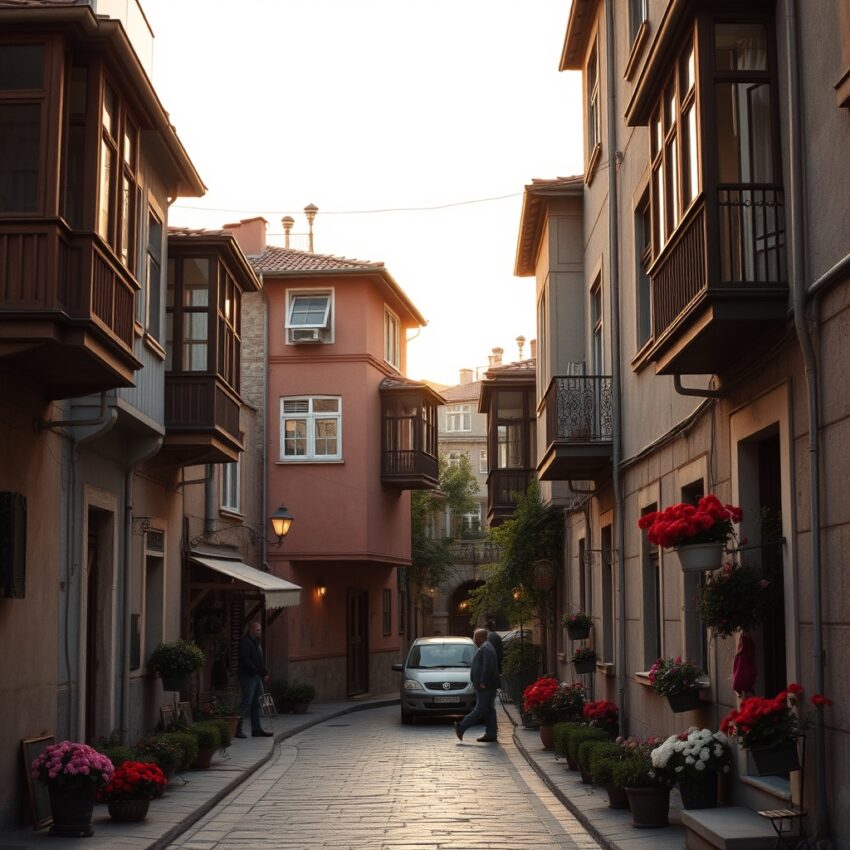
🇹🇷 Türkçe | Eski şehir hayatında mahallenin ilk apartmanlarının eski komşuluk düzenini değiştirdiği dönem: hafızada neden hâlâ bu kadar canlı cam açtıran sabahlar
Bir zamanlar sabahın şehre gelişi, yalnız güneşin doğuşuyla değil, pencerelerin birer birer açılmasıyla anlaşılırdı. Taş kaldırımlar gece serinliğini henüz üstünden atmamışken, sokağın üstüne eğilen cumbalı evlerden tül perdeler kıpırdar, teneke saksılardaki sardunyalar hafifçe sallanırdı. Önce bir mutfaktan çay kaşığının ince sesi gelir, sonra başka bir evde bakır ibriğin kapağı kapanır, biraz öteden fırından dönen birinin ayak sesleri duyulurdu. Mahalle henüz tam uyanmadan, kadınların cam kenarından birbirine günaydın dediği, çocukların okul çantalarını kapıya bıraktığı, bakkal çırağının ekmekleri sepetle dağıttığı bu sabahlar, eski şehir hayatının en canlı törenlerinden biriydi. Hafızada hâlâ bu kadar diri kalmalarının nedeni de belki budur: o saatlerde herkes birbirinin hayatına uzaktan ama sıcak bir temasla değiyordu.
Zamanın İzinde bakıldığında mahallenin ilk apartmanları, yalnız mimari bir değişim değil, gündelik düzenin ritmini de dönüştüren bir eşikti. Tek avlulu, iç içe ses taşıyan evlerin yerini kat kat yükselen yeni yapılar almaya başladığında şehir başka bir terbiyeye geçiyordu. Artık aynı sokakta yaşayanlar birbirini yine tanıyor, yine selam veriyordu; ama sesler daha çok merdiven boşluklarına, apartman kapılarının önündeki kısa karşılaşmalara ve balkonlardan kurulan yeni ilişkilere çekiliyordu. Eskiden avluda birlikte ayıklanan fasulyenin, damda serilen çamaşırın, ortak çeşmede dolan testilerin yarattığı yakınlık; apartman hayatında zil sesleri, kapıcı dairesi, posta kutusu ve ortak merdiven temizliği gibi yeni alışkanlıklara dönüştü. Bu değişim sert bir kopuş gibi değil, yavaş yavaş yer değiştiren bir mahalle dili gibi yaşandı.
Yine de hafızada kalan şey sadece kaybedilen yakınlık değildir. İlk apartman sabahları, eski komşuluk düzeninin bütünüyle silinmediği; tam tersine yeni koşullara uyum aradığı ara dönemi hatırlatır. Birinci kattaki teyzenin üst komşuya tencere uzatması, kapı önlerine bırakılan süt şişeleri, apartman girişinde paylaşılan gazete manşetleri ve pazar dönüşü merdiven başında edilen kısa hâl hatır konuşmaları bu yeni düzenin küçük sahneleriydi. Cam açtıran sabahlar tam da bu yüzden canlıdır: pencere yalnız hava almak için değil, sokağın nabzını tutmak için açılırdı. Kim hastaydı, kim memlekete gitti, hangi evde nişan hazırlığı vardı, hangi çocuk büyüyüp liseye başladı; bütün bunlar çoğu zaman karşılıklı açılan pencerelerin arasından öğrenilirdi. Şehir büyüse de mahalle, sesin ve bakışın kurduğu bu ince ağ sayesinde kendini korumaya çalışırdı.
İlk apartmanların getirdiği dönüşüm, ev içi hayatı da sessizce değiştirdi. Koridorlu planlar, balkonlar, antreler ve daha düzenli oda ayrımlarıyla ailelerin gündelik hareketi başka bir akış kazandı. Misafir ağırlamak daha belirgin salonlara taşındı; mutfak kokuları bazen alt kata, bazen üst kata sızdı; çocuklar avlu yerine apartman önünde ya da merdiven sahanlığında oyalanmaya başladı. Buna rağmen komşuluk, tamamen kapı arkasına çekilmedi. Sabahları cam silen birinin öteki balkondan seslenmesi, turşu kavanozu için boş şişe istemek, terasta kuruyan çamaşırı yağmur bastırınca birlikte toplamak gibi küçük yardımlar, apartman hayatını yabancılaştırmadan sürdüren bağlardı. Demek ki hafızayı canlı tutan sadece mekân değil, mekân değişirken bile kaybolmayan karşılıklı dikkat duygusuydu.
Bugün o sabahları düşündüğümüzde aklımıza çoğu zaman betonun yükselişi değil, pencere eşiğinde duran insan yüzleri gelir. Çünkü ilk apartman dönemi, şehrin modernleşirken komşuluğu tümüyle terk etmediği bir ara iklimdi. Ne eski avlulu hayat bütünüyle sürüyordu ne de bugünkü kadar kapanmış bir yalnızlık vardı. Hafızada capcanlı kalan, işte bu geçiş anının insani sıcaklığıdır. Cam açtıran sabahlar bize şehir hayatının yalnız duvarlardan ibaret olmadığını hatırlatır. Bir apartmanın katları arasında dolaşan tencere kokusu, aşağıdan yukarı taşınan selam, balkondan balkona uzanan kısa cümleler; hepsi eski komşuluk düzeninin yeni hayat içinde bulduğu son zarif yolları anlatır. Bu yüzden o dönem bugün bile yalnız hatırlanmaz, özlenir.
🇬🇧 English | The Period When the Neighborhood’s First Apartment Buildings Changed the Old Order of Neighborliness in Old City Life: Why Are the Mornings That Opened Windows Still So Vivid in Memory?
There was a time when the arrival of morning in the city was understood not only by sunrise, but by the opening of windows one after another. While the stone pavements still carried the coolness of the night, lace curtains moved behind the projecting bay windows and geraniums in tin pots trembled lightly above the street. First came the small sound of a teaspoon from one kitchen, then the lid of a copper pitcher closing in another house, and from farther away the footsteps of someone returning from the bakery. Before the neighborhood was fully awake, women exchanged greetings from their windows, children left their schoolbags by the door, and the grocer’s apprentice delivered bread in a basket. These mornings were among the most vivid rituals of old urban life. Perhaps that is why they remain so alive in memory: at that hour, everyone touched the lives of others from a distance, yet with warmth.
Seen along the trail of time, the neighborhood’s first apartment buildings marked not only an architectural change, but a threshold that altered the rhythm of daily order. Courtyard houses where sounds traveled freely from room to room slowly gave way to taller buildings rising floor by floor. People living on the same street still knew one another and still exchanged greetings, yet voices withdrew toward stairwells, brief encounters at apartment entrances, and new forms of contact established from balconies. The closeness once created by shelling beans together in the yard, hanging laundry on the roof, or filling pitchers at the shared fountain became new habits shaped by doorbells, caretaker rooms, mailboxes, and the collective cleaning of staircases. This change was not felt as a harsh break, but as a neighborhood language slowly shifting into another register.
Yet what remains in memory is not only the intimacy that was diminished. The first apartment mornings recall an in-between era when the old order of neighborliness had not been erased, but was still searching for ways to adapt. The woman on the first floor handing a pot upward to the family above, milk bottles left at apartment doors, newspapers discussed in the entrance hall, and the short exchanges at the landing after a trip to the market were the small scenes of this new order. The mornings that made people open their windows are vivid for this very reason: a window was opened not only for air, but to feel the pulse of the street. Who had fallen ill, who had gone back to their hometown, in which flat engagement preparations had begun, which child had grown old enough for high school; much of this was learned between facing windows. Even as the city expanded, the neighborhood tried to preserve itself through this delicate web of voices and glances.
The transformation brought by the first apartment buildings also changed domestic life in quieter ways. With corridors, balconies, entrance halls, and more clearly divided rooms, the movements of families followed another pattern. Hosting guests shifted into more formal sitting rooms; kitchen smells drifted at times downward and at times upward; children began to linger in front of the building or on stair landings instead of in courtyards. Even so, neighborliness did not retreat entirely behind closed doors. Someone cleaning windows in the morning calling out to the next balcony, borrowing an empty jar for pickles, or gathering laundry together when rain arrived suddenly were the kinds of small help that prevented apartment life from turning cold. What kept those memories bright, then, was not only the place itself, but the mutual attentiveness that survived even as the place changed.
When we think of those mornings today, what comes to mind is not the rise of concrete, but the human faces standing at window ledges. The era of the first apartment buildings belonged to a climate of transition in which the city modernized without wholly abandoning neighborliness. Neither the old courtyard life continued intact, nor did the loneliness of later years fully settle in. What remains vividly alive is the human warmth of that passage. The mornings that opened windows remind us that urban life is never made of walls alone. The smell of a pot carried between floors, a greeting rising from below, and short sentences passed from balcony to balcony all tell of the last graceful ways in which old neighborly order found room within a new life. That is why the period is not only remembered today, but missed.
🇧🇷 Português (Brasil) | O Período em que os Primeiros Prédios do Bairro Mudaram a Antiga Ordem da Vizinhança na Velha Vida Urbana: Por Que as Manhãs que Faziam Abrir as Janelas Ainda Estão Tão Vivas na Memória?
Houve um tempo em que a chegada da manhã à cidade era percebida não apenas pelo nascer do sol, mas pela abertura sucessiva das janelas. Enquanto as pedras da calçada ainda guardavam o frescor da noite, as cortinas rendadas se moviam atrás das janelas salientes e os gerânios em vasos de lata balançavam levemente sobre a rua. Primeiro vinha o som fino de uma colher de chá em uma cozinha, depois a tampa de uma bilha de cobre se fechando em outra casa, e mais adiante ouviam-se os passos de alguém voltando da padaria. Antes de o bairro despertar por completo, mulheres trocavam cumprimentos da janela, crianças deixavam a mochila junto à porta e o ajudante do armazém distribuía pães em uma cesta. Essas manhãs eram um dos rituais mais vivos da antiga vida urbana. Talvez por isso permaneçam tão acesas na memória: naquela hora, todos tocavam a vida dos outros à distância, mas com calor humano.
No rastro do tempo, os primeiros prédios do bairro representaram não só uma mudança arquitetônica, mas um limiar que alterou o ritmo da rotina cotidiana. As casas com pátio, onde os sons corriam livremente de um cômodo para outro, foram pouco a pouco cedendo lugar a edifícios mais altos, erguidos andar por andar. As pessoas da mesma rua continuavam a se conhecer e a se cumprimentar, mas as vozes passaram a se concentrar nos vãos da escada, nos encontros breves diante da portaria e nos novos vínculos criados entre sacadas. A proximidade antes construída limpando feijão no quintal, estendendo roupa no terraço ou enchendo cântaros na fonte comum transformou-se em hábitos novos, moldados por campainhas, caixa de correio, quarto do zelador e limpeza coletiva da escada. A mudança não foi vivida como ruptura brusca, mas como uma linguagem do bairro que mudava devagar de tom.
Mesmo assim, o que ficou na memória não é apenas a intimidade que se perdeu em parte. As manhãs dos primeiros prédios lembram um tempo intermediário em que a antiga ordem de vizinhança não havia desaparecido, mas procurava se adaptar. A senhora do primeiro andar passando uma panela para a família de cima, garrafas de leite deixadas diante das portas, manchetes de jornal comentadas no hall e as breves conversas no patamar depois da feira eram pequenas cenas dessa nova ordem. As manhãs que faziam abrir as janelas continuam vivas justamente por isso: a janela era aberta não só para entrar ar, mas para sentir o pulso da rua. Quem estava doente, quem viajara para a cidade natal, em qual apartamento havia preparativos de noivado, qual criança já tinha idade para o ensino médio; muita coisa era sabida entre janelas voltadas umas para as outras. Mesmo crescendo, a cidade tentava preservar o bairro por meio dessa rede delicada de vozes e olhares.
A transformação trazida pelos primeiros prédios também mudou a vida doméstica de maneira silenciosa. Com corredores, sacadas, antessalas e uma divisão mais clara dos cômodos, o movimento das famílias passou a seguir outro fluxo. Receber visitas foi se deslocando para salas mais formais; os cheiros da cozinha às vezes desciam, às vezes subiam; as crianças passaram a ficar diante do prédio ou no patamar da escada, em vez do pátio. Ainda assim, a vizinhança não se recolheu completamente para trás das portas fechadas. Uma pessoa limpando a janela pela manhã e chamando a da sacada ao lado, o pedido de um vidro vazio para guardar picles ou a ajuda mútua para recolher a roupa quando a chuva chegava de repente eram pequenas formas de ajuda que impediam a vida em prédio de se tornar fria. O que mantém essas lembranças acesas, portanto, não é apenas o espaço, mas a atenção recíproca que sobreviveu mesmo quando o espaço mudou.
Quando pensamos nessas manhãs hoje, não lembramos primeiro do concreto subindo, mas dos rostos humanos apoiados no parapeito. O tempo dos primeiros prédios pertenceu a um clima de transição em que a cidade se modernizou sem abandonar totalmente a vizinhança. Nem a antiga vida de pátio continuava inteira, nem a solidão mais fechada dos anos seguintes havia se instalado por completo. O que permanece vivíssimo é justamente o calor humano dessa passagem. As manhãs que faziam abrir as janelas nos lembram que a vida urbana nunca é feita só de paredes. O cheiro de uma panela atravessando os andares, o cumprimento que sobe de baixo, as frases curtas trocadas de sacada em sacada; tudo isso conta as últimas maneiras elegantes pelas quais a velha ordem da vizinhança encontrou lugar dentro de uma vida nova. Por isso esse período hoje não é apenas lembrado, mas sentido com saudade.