🇹🇷 Türkçe | kış gecelerinde çamaşır ipleri arasında kurulan mahalle manzarası neden eski mahallelerin en sıcak sahnesiydi
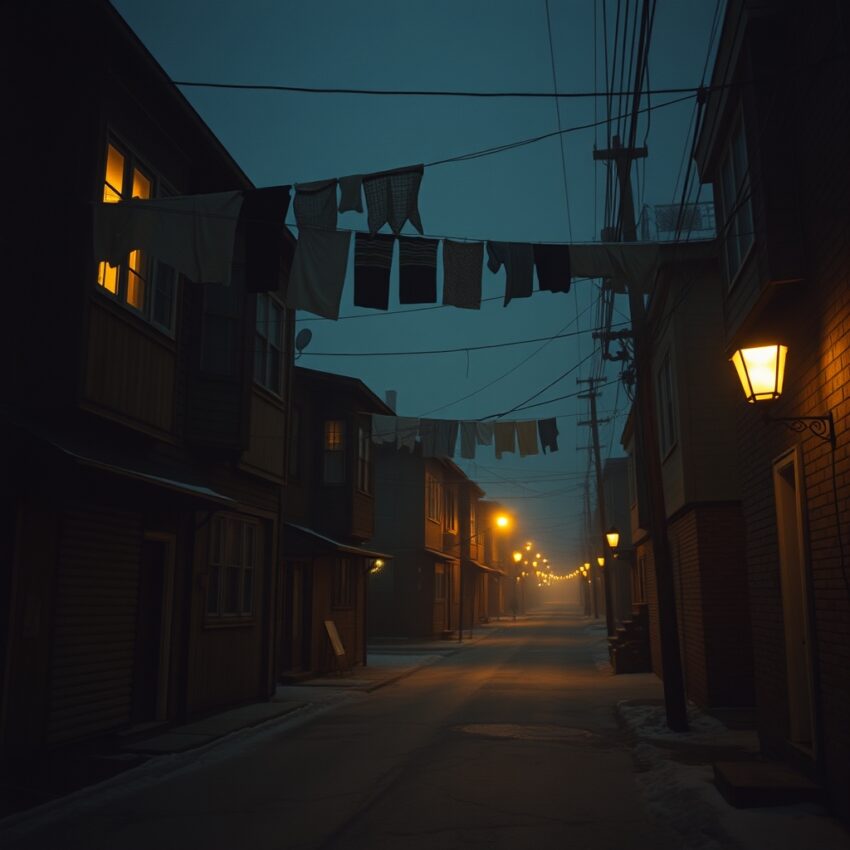
Bir zamanlar kış gecelerinde mahalleler erken kararır, ama tam da o karanlığın içinde en sıcak sahneler kurulurdu. Dar sokakların üstünden geçen çamaşır ipleri, gündüz kurutulmuş çarşafların yerini bazen boş bir çizgiye, bazen de unutulmuş birkaç mandala bırakırdı. Sokak lambasının sarı ışığı bu iplerin üzerine vurduğunda, mahalle birdenbire hem sıradan hem şiirsel görünen bir çerçeve kazanırdı. Pencerelerden yemek kokusu sızar, soba dumanı çatılar arasında ağır ağır dolaşır, kapı önlerinde kısa konuşmalar uzar giderdi. O manzarayı sıcak kılan şey yalnız fiziksel yakınlık değil, görünürde önemsiz nesnelerin etrafında kurulmuş ortak hayat hissiydi.
Mahalle Kültürü açısından bakıldığında çamaşır ipleri, eski mahallelerin gündelik mimarisinin sessiz ama güçlü parçalarından biriydi. İki ev arasına gerilen bir ip, yalnız çamaşır asmak için kullanılmaz; komşuluğun sınırlarını ve yakınlığını da görünür kılardı. Kimin çarşafı daha erken kalkmış, hangi evde çocuklu hayatın telaşı var, hangi pencerede akşam hazırlığı sürüyor, bunların hepsi dolaylı biçimde sokakta okunurdu. Kış gecelerinde iplerin arasında kurulan görüntü, işte bu yüzden sıcak gelirdi: çünkü mahalle hayatı kapalı kapılar arkasında bütünüyle kaybolmaz, sokağa ince işaretler bırakmaya devam ederdi. Bir evin içindeki yaşam, diğerinin bakışına bütünüyle açılmadan ama tamamen de saklanmadan var olurdu.
Bu sahnenin hafızada derin kalmasının bir nedeni de insan ilişkilerindeki yumuşaklıktı. Akşam vakti odun taşınırken, çocuklar son kez kapı önüne çıkarken ya da komşuya boş tabak geri verilirken, çamaşır ipleri bütün bu küçük hareketlerin üstünde sessiz bir tavan gibi dururdu. Mahalleli birbirinin hayatına müdahale etmeden ama farkında olarak yaşardı. Bir kadın mandalları toplarken aşağıdan geçen birine seslenir, bir çocuk ipe takılmamak için başını eğip koşar, bir pencere aralanır ve içeriden “çay yeni oldu” cümlesi sokağa düşerdi. Böyle anlar, eski mahallelerin sıcaklığının büyük olaylardan değil; küçük, tekrar eden ve güven veren ayrıntılardan oluştuğunu gösterirdi.
Bugün apartman yaşamının düzenli ama kapalı dünyasında bu tür sahneler giderek azaldı. Çamaşırlar kurutma makinelerine, komşuluk konuşmaları telefonlara, sokak üstü hayat ise daha dar bir zamana çekildi. Bu yüzden geçmişe dönüp bakınca kış gecelerinde çamaşır ipleri arasında kurulan mahalle manzarası, yalnız nostaljik bir görüntü değil; birlikte yaşamanın daha görünür, daha sezilebilir olduğu bir dönemin simgesi gibi duruyor. O sıcaklık, yalnız sobadan yükselen ısıyla ilgili değildi. Esas sıcaklık, hayatın bütünüyle içe kapanmadığı, insanların birbirinin varlığını gündelik ritim içinde doğal biçimde hissettiği ortamdan doğuyordu.
Belki de bu yüzden eski mahalleler anılırken akla önce büyük olaylar değil, böyle sıradan çerçeveler geliyor. Bir sokak lambası, birkaç mandal, iplerin arasından görünen pencere ışığı ve soğuk havaya rağmen dışarıda kalmaya devam eden birkaç ses. Hepsi birlikte, kaybolmuş bir mahalle duygusunu kuruyor. Kış gecelerinin en sıcak sahnesi denince hatırlanan tam da bu: hayatın sade görünüşünün altında saklı yoğun yakınlık. Çamaşır ipleri bugün çoğu sokakta görünmese de onların kurduğu o görünmez topluluk hissi, eski mahalle hafızasının en dayanıklı parçalarından biri olarak kalıyor.
🇬🇧 English | Why the Neighborhood Scene Set Among Clotheslines on Winter Nights Was the Warmest Scene of Old Neighborhoods
There was a time when neighborhoods grew dark early on winter nights, yet their warmest scenes were built precisely inside that darkness. Clotheslines stretched above narrow streets, and where daytime sheets had hung there might remain only an empty line or a few forgotten clothespins. When the yellow light of the streetlamp fell across those lines, the neighborhood suddenly gained a frame that looked both ordinary and poetic. Smells of dinner drifted from windows, stove smoke moved slowly between rooftops, and short conversations at doorways stretched a little longer than intended. What made the scene feel warm was not physical closeness alone, but the shared sense of life arranged around objects that seemed too simple to matter.
Seen through the lens of neighborhood culture, clotheslines were quiet but powerful pieces of the everyday architecture of old districts. A rope drawn between two houses was not used only to dry laundry; it also made the boundaries and intimacy of neighborly life visible. One could sense whose sheets had already been taken down, which house was busy with children, and in which window the evening meal was being prepared. The image formed among those lines on winter nights felt warm for exactly that reason: life in the neighborhood did not disappear entirely behind closed doors, but continued to leave fine signals in the street. Domestic life remained partly private, yet never completely withdrawn from communal perception.
Another reason the scene stayed so strongly in memory was the softness of human relations woven beneath it. As firewood was carried in, children came outside one last time, or an empty plate was returned to a neighbor, the clotheslines hung overhead like a quiet ceiling for all these small motions. People lived aware of one another without intruding. A woman collecting clothespins called down to someone passing by, a child bent his head to run beneath the line, a window opened slightly, and the phrase “the tea is ready” fell into the street. Such moments show that the warmth of old neighborhoods was made not of grand events, but of small, repeated, reassuring details.
Today, in the more ordered but enclosed world of apartment living, such scenes have largely faded. Laundry moved into dryers, neighborly conversation into telephones, and the life of the street into shorter and narrower intervals. That is why, looking back, the neighborhood scene formed among clotheslines on winter nights appears not only as a nostalgic image, but as the sign of a time when living together was more visible and easier to sense. The warmth was never only the heat rising from the stove. The deeper warmth came from an environment in which life had not entirely folded inward, and people still felt one another’s presence as part of the ordinary rhythm of the evening.
Perhaps that is why old neighborhoods are remembered first not through major events, but through frames like this: a streetlamp, a few clothespins, window light visible between the lines, and a handful of voices that stayed outside despite the cold. Together they create the feeling of a lost neighborhood world. When one thinks of the warmest scene of winter nights, this is what returns: an intense closeness hidden beneath the plain surface of daily life. Even if clotheslines are absent from many streets today, the invisible sense of community they once held together remains one of the most durable parts of neighborhood memory.
🇧🇷 Português (Brasil) | Por Que a Cena do Bairro Montada Entre Varais nas Noites de Inverno Era o Quadro Mais Acolhedor dos Bairros Antigos
Houve um tempo em que os bairros escureciam cedo nas noites de inverno, mas era justamente dentro dessa escuridão que surgiam as cenas mais acolhedoras. Varais atravessavam as ruas estreitas e, onde durante o dia haviam secado lençóis, à noite às vezes restava apenas a linha vazia ou alguns pregadores esquecidos. Quando a luz amarela do poste caía sobre esses fios, o bairro ganhava de repente uma moldura ao mesmo tempo comum e poética. O cheiro da comida escapava das janelas, a fumaça do fogão subia lentamente entre os telhados, e as conversas curtas nas portas se alongavam um pouco mais. O que tornava a cena calorosa não era apenas a proximidade física, mas a sensação de vida compartilhada construída em torno de objetos aparentemente simples demais para importar.
Pela ótica da cultura de bairro, os varais eram partes discretas, mas poderosas, da arquitetura cotidiana dos antigos quarteirões. Uma corda esticada entre duas casas não servia só para secar roupa; também tornava visíveis os limites e a intimidade da vizinhança. Dava para perceber em qual casa os lençóis já tinham sido recolhidos, onde havia a pressa de uma vida com crianças e em qual janela o jantar ainda estava sendo preparado. A imagem formada entre aqueles fios nas noites de inverno parecia acolhedora justamente por isso: a vida do bairro não desaparecia totalmente atrás das portas fechadas, continuava deixando sinais finos na rua. A vida doméstica permanecia parcialmente reservada, mas nunca totalmente separada da percepção coletiva.
Outra razão para essa cena permanecer tão forte na memória era a suavidade das relações humanas tecidas por baixo dela. Enquanto a lenha era levada para dentro, as crianças saíam uma última vez à porta ou um prato vazio era devolvido à vizinha, os varais pairavam acima de tudo como um teto silencioso. As pessoas viviam atentas umas às outras sem invadir demais. Uma mulher recolhendo pregadores chamava alguém que passava, uma criança abaixava a cabeça para correr sob o fio, uma janela se abria e a frase “o chá acabou de ficar pronto” caía na rua. Esses instantes mostram que o calor dos bairros antigos não vinha de grandes acontecimentos, mas de detalhes pequenos, repetidos e reconfortantes.
Hoje, no mundo mais organizado porém mais fechado dos apartamentos, cenas assim quase desapareceram. As roupas foram para as secadoras, as conversas de vizinhança foram para o telefone, e a vida sobre a rua ficou restrita a intervalos mais curtos. Por isso, olhando para trás, a cena criada entre varais nas noites de inverno parece não apenas uma imagem nostálgica, mas o sinal de uma época em que o viver junto era mais visível e mais fácil de perceber. O calor nunca esteve somente na temperatura do fogão. O calor mais fundo vinha de um ambiente em que a vida ainda não tinha se recolhido por completo, e as pessoas sentiam naturalmente a presença umas das outras no ritmo ordinário da noite.
Talvez seja por isso que os bairros antigos sejam lembrados primeiro não pelos grandes fatos, mas por quadros assim: um poste, alguns pregadores, a luz da janela aparecendo entre os fios e algumas vozes que continuavam do lado de fora apesar do frio. Juntos, esses elementos recriam a sensação de um bairro perdido. Quando se pensa na cena mais acolhedora das noites de inverno, é isso que volta: uma proximidade intensa escondida sob a aparência simples da vida cotidiana. Mesmo que muitos varais tenham desaparecido das ruas de hoje, o sentido invisível de comunidade que eles sustentavam continua sendo uma das partes mais resistentes da memória do bairro.