Eski Pano
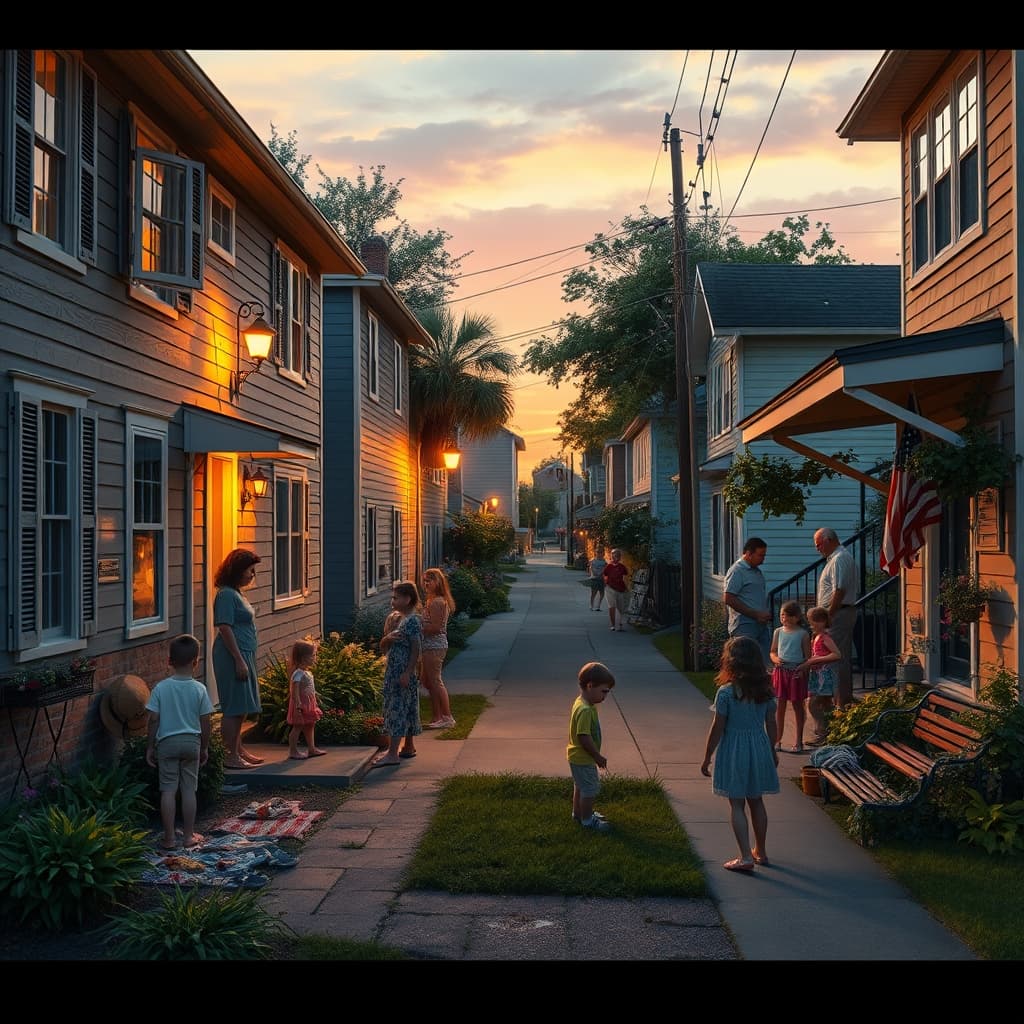
In older neighborhoods, certain evenings could be recognized before the sun had even set. As the summer heat slowly withdrew, windows were opened, the light softening on balconies, and the face of the street began preparing for evening. The family outing planned for Sunday had not yet begun, but news of it was already circulating the day before. Mothers checked the children’s shirts, fathers discussed what hour they would leave the next day, and neighbors standing in front of buildings built a common rhythm through remarks about going early to the park as well. In that setting, the summer evening was not only a time for cooling down. It was a shared space in which the togetherness of the next day was prepared collectively. Even before the outing began, the street itself strengthened the pulse of neighborly life.
Seen through the lens of neighborhood culture, streets preparing for a Sunday family outing offer an important scene for understanding why older forms of neighborliness felt so strong. A neighborhood was strengthened not only when a door was knocked on in time of need, but also when daily plans remained visible. Which family would leave early, which child had new shoes, which mother had prepared pastries, and which household had promised ice cream on the way back were all small pieces of knowledge brushing against one another on the street. This was not gossip. It was the pulse of common life. Even without knowing each other’s plans in detail, people could sense them and could predict that doors would begin opening at similar hours the next day. That ability to sense one another’s rhythm was one of the clearest signs of trust and familiarity in neighborhood life.
Part of the reason these preparations made neighborliness stronger lies in the indirect bonds built through children. On summer evenings, children playing near the pavement spoke of the next day’s outing, describing which ball they would bring or who would carry simit. Around those conversations, adults maintained a relaxed but continuous communication. One person reminded another to take a light cardigan, another recommended a water flask, and someone else would say to drop by on the way back, already opening space at the end of the next day. In that way, the family outing ceased to be only a nuclear family plan and became one of the neighborhood’s shared anticipations. The more people saw one another’s joy and preparation, the more quietly their bond grew stronger.
Small details of daily life make this quiet order more visible. Cloths shaken out in front of doors, children’s clothes for the next day hanging over balcony railings, bottles of soda placed into cool water, summer shoes lined up beside the entrance, and light conversation continuing even after the streetlamp came on were the material details of those old neighborhood evenings. People did not make these preparations to display themselves, yet because life was visibly lived on the street, everyone witnessed the rhythm of everyone else. One family’s bustle found a familiar echo in another. Shared season, shared day, and shared expectation prevented neighborliness from remaining an abstract value. It became a relationship that could be seen, heard, and felt.
Another force making neighborliness solid was the regular repetition of these preparations. The same summer evening atmosphere, the same Saturday bustle, and the same Sunday-morning door sounds repeated over the years until they formed neighborhood memory. People knew not only one another, but also one another’s pace. They knew or sensed which house would leave early, which child would be ready late, and which neighbor might invite someone in for coffee after returning. This familiarity required no deep explanation. Quiet repetition created one of the strongest forms of trust. Today people may speak about neighborliness much more often, but what made it powerful in older streets was precisely that it was lived without so much discussion.
In the end, the reason streets preparing for a Sunday family outing on summer evenings made neighborliness so strong was that they rehearsed shared life. What became visible on the street was not only clothing preparation or a plan for the next day, but also mutual attention, intuition, and shared time. That is why what remains in memory is not just the outing itself. The windows opened the evening before, the conversations by the doorway, the unfinished games of children, and the light tension of preparation spreading through the street all remain as well. Neighborliness endured there as a bond growing stronger almost without being noticed, in the middle of ordinary preparation.
Streets Preparing for a Sunday Family Outing on Summer Evenings: Why Did It Make Neighborliness So Strong?