 Eski Pano
There was a time when winter pickles arriving at the table meant more than a side dish being served. The air of the whole house seemed to change at once. The moment the jar lid was opened, the sharpness of vinegar, the familiar force of garlic, and the hidden scent of dill or peppercorns traveled from the kitchen into the sitting room, drawing even those not yet seated into the rhythm of the meal. For that reason, the smell of pickles was not only a sign of flavor. It announced the winter order settled inside the house, the work prepared in advance, and the appetite of the family table itself. The whole house filling with the same scent showed less the strength of the pickle alone than the central place it held in domestic life.
From the perspective of taste memory, winter pickles are among the most visible and aromatic results of seasonal preparation. The large containers set up at the end of summer or beginning of autumn, the vegetables sorted and cleaned, the brines boiled, and the jars sealed carefully were not merely acts of food storage. They were an important part of the home’s relationship with winter. The labor was done months earlier, yet its reward was most fully felt at winter meals. When the jar appeared on the table, what opened there was not only cabbage, cucumber, or pepper, but also the effort of those preparation days. That is why the smell of pickles called up both present appetite and the kitchen labor of the past at the same time.
The small details of daily life explain clearly why the entire house filled with the same scent. Pickles were often brought to the table at the very last moment. As soon as the lid opened, one child might wrinkle the nose, only to produce the first crunch a few seconds later. Mothers poured the brine carefully, fathers commented that this batch had turned out a little more sour, and the colors on the plate suddenly sharpened as the bread basket was passed around. The smell that began in the kitchen moved into the corridor and then the living room. If the windows were closed, it grew denser; if they were open, it spread farther. For that reason, pickles were not simply a dish sitting on the table. They were a seasonal sign mingling with the whole inner air of the house. Their arrival made the meal feel complete, even if the rest of it was simple.
One reason this shared scent remains in memory is that pickles created not an individual but a collective experience at home. Soup could remain in its pot, rice could wait beneath the lid, but pickles announced themselves to everyone the instant they were opened. They spoke not to one plate, but to the entire house. In that moment, the household met in the same sourness, the same crunch, and the same habit. Pickles were also, in most homes, not a luxury, but a beloved accompaniment shaped by season and routine, one that opened the appetite. Their smell was therefore never extravagant, yet deeply lasting. Years later, even the sound of a jar lid can return a person to childhood dinners, winter tables, and long meals stretching beside the stove.
When we think today about why the whole house filled with the same scent when winter pickles reached the table, we understand that the answer lies not only in vinegar or garlic. The scent belongs to labor prepared in advance, seasonal kitchen knowledge, and appetite shared by the family. That is why it reaches every corner of the home, because it already concerns the order of the entire household. When pickles arrive at the table, winter arrives with them, as do the preparations of late summer and the skill of the hands that sealed the jars. As the house fills with the same scent, it also fills with the same memory. The value of winter pickles is hidden there: what comes out of a jar is not only flavor, but a whole domestic season stored inside.
Why Did the Whole House Fill with the Same Scent When Winter Pickles Reached the Table?
🇹🇷 Kışlık Turşu Sofraya Geldiğinde Neden Bütün Ev Aynı Kokuyla Dolardı
🇵🇹 Por que a Casa Inteira Se Enchia do Mesmo Cheiro Quando os Picles de Inverno Chegavam À Mesa?
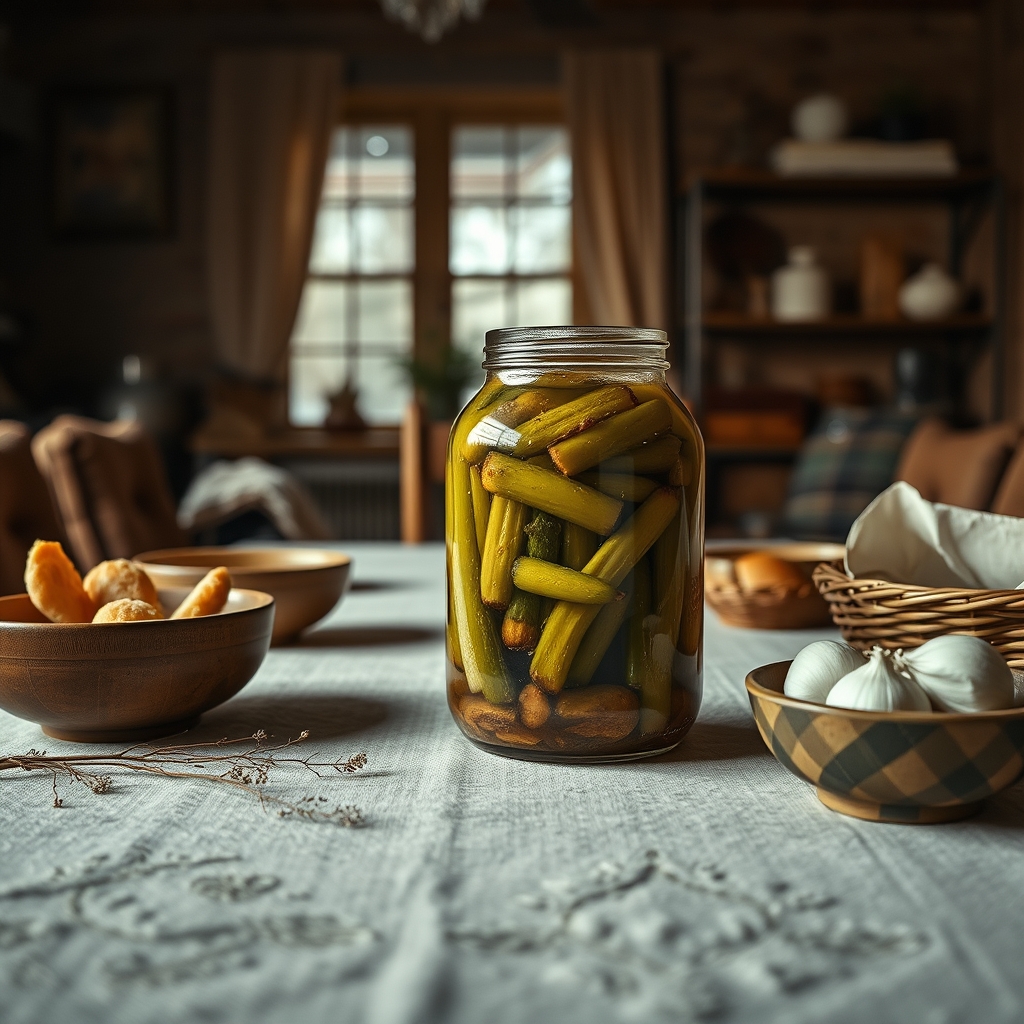
🇬🇧 The Memory of Winter Spreading Through the House When the Jar Lid Opened
🇹🇷 Kavanoz Kapağı Açılınca Eve Yayılan Kış Hafızası
Bir zamanlar kışlık turşu sofraya geldiğinde, yalnız bir yan yemek masaya konmuş olmazdı; bütün evin havası bir anda değişirdi. Kavanoz kapağı açılır açılmaz sirkenin keskinliği, sarımsağın tanıdık sertliği, dereotu ya da tane karabiberin saklı kokusu mutfaktan salona kadar yayılır, sofraya oturmamış olanı bile yaklaşan yemeğin ritmine dahil ederdi. Bu yüzden turşunun kokusu sadece tadın habercisi değildi; kışın eve yerleşmiş düzenini, önceden yapılmış hazırlığı ve aile sofrasının iştahını da duyururdu. Bütün evin aynı kokuyla dolması, turşunun güçlü yapısından çok, onun ev içi yaşamda ne kadar merkezi bir yere sahip olduğunu gösterirdi.
Damak Hafızası açısından kışlık turşu, mevsimlik hazırlığın en görünür ve en kokulu sonuçlarından biridir. Yaz sonu ya da sonbahar başında kurulan turşu bidonları, ayıklanan sebzeler, kaynatılan salamuralar ve özenle kapatılan kavanozlar, yalnız yiyecek saklama işi değildi; evin kışla kurduğu ilişkinin önemli bir parçasıydı. Hazırlık aylar önce yapılır, ama karşılığı çoğu zaman kış sofralarında tam anlamıyla hissedilirdi. Kavanoz masaya geldiğinde, sofrada sadece lahana, salatalık ya da biber değil; o hazırlık günlerinin emeği de açılmış olurdu. Bu yüzden turşunun kokusu hem bugünkü iştahı hem geçmişteki mutfak çalışmasını aynı anda çağırırdı.
Gündelik hayatın küçük ayrıntıları, bütün evin neden aynı kokuyla dolduğunu açıkça anlatır. Turşu çoğu kez sofraya en son anda getirilir, kapağı açılınca çocuklardan biri hemen yüzünü buruşturur, ama biraz sonra ilk çıtırtıyı yine o çıkarırdı. Anneler turşu suyunu dikkatle döker, babalar “biraz daha ekşi olmuş” diye yorum yapar, ekmek sepete uzanırken tabaktaki renkler birden canlanırdı. Mutfakta başlayan koku koridora, oradan oturma odasına geçer; pencere kapalıysa daha yoğun, açıkysa daha geniş bir biçimde eve yayılırdı. Turşu bu nedenle sadece sofrada duran bir tabak değil; evin tüm iç havasına karışan bir mevsim işaretiydi. Onun gelişiyle yemeğin sade bile olsa tamamlandığı hissedilirdi.
Bu ortak kokunun hafızada kalmasının bir nedeni de, turşunun evde bireysel değil toplu bir deneyim yaratmasıdır. Çorba bir tencerede kalabilir, pilav kapağın altında bekleyebilir, ama turşu açıldığı anda varlığını herkese duyurur. Bir kişinin tabağına değil, bütün eve seslenir. O anda ev halkı aynı ekşilikte, aynı çıtırtıda ve aynı alışkanlıkta buluşur. Üstelik turşu, çoğu sofrada lüks değil; alışkanlıkla sevilen, mevsimle yerleşmiş, iştah açan bir eşlikçidir. Bu yüzden kokusu da abartılı değil ama kalıcıdır. İnsanlar yıllar sonra bir kavanoz kapağı sesi duyduğunda bile çocukluk akşamlarını, kış sofralarını ve soba yanında uzayan yemek saatlerini hatırlayabilir.
Bugün kışlık turşunun sofraya gelişiyle bütün evin neden aynı kokuyla dolduğunu düşündüğümüzde, cevabın sadece sirke ya da sarımsakta olmadığını anlarız. Bu koku, önceden hazırlanmış emeğin, mevsimlik mutfak bilgisinin ve ailece paylaşılan iştahın kokusudur. O yüzden evin her köşesine ulaşır; çünkü zaten evin bütün düzeniyle ilgilidir. Turşu sofraya geldiğinde kış da sofraya gelir, yaz sonu hazırlıkları da, annelerin kavanoz kapatma mahareti de. Ev aynı kokuyla dolarken aslında aynı hatırayla da doluyordur. Kışlık turşunun değeri tam burada saklıdır: bir kavanozun içinden sadece lezzet değil, mevsim boyunca biriktirilmiş ev hâli çıkar.
🇵🇹 A Memória do Inverno Se Espalhando Pela Casa Quando a Tampa do Pote Se Abria
Houve um tempo em que a chegada dos picles de inverno à mesa significava mais do que servir um acompanhamento. O ar da casa inteira parecia mudar de uma só vez. No instante em que a tampa do pote era aberta, a acidez do vinagre, a força conhecida do alho e o perfume discreto do endro ou da pimenta em grão saíam da cozinha em direção à sala, envolvendo até quem ainda não estava sentado. Por isso, o cheiro do picles não anunciava apenas o sabor. Ele também anunciava a ordem do inverno instalada na casa, o trabalho preparado com antecedência e o apetite da mesa da família. A casa inteira se enchendo do mesmo cheiro mostrava menos a intensidade do picles sozinho do que o lugar central que ele ocupava na vida doméstica.
Do ponto de vista da memória do paladar, os picles de inverno estão entre os resultados mais visíveis e aromáticos da preparação sazonal. Os tonéis montados no fim do verão ou começo do outono, os legumes separados e limpos, as salmouras fervidas e os potes fechados com cuidado não eram apenas gestos de armazenamento. Eram uma parte importante da relação da casa com o inverno. O trabalho era feito meses antes, mas sua recompensa era sentida por inteiro nas refeições frias. Quando o pote chegava à mesa, o que se abria ali não era somente repolho, pepino ou pimenta, mas também o esforço daqueles dias de preparo. Por isso, o cheiro do picles chamava ao mesmo tempo o apetite do presente e o trabalho de cozinha do passado.
Os pequenos detalhes da vida cotidiana explicam claramente por que a casa inteira se enchia do mesmo cheiro. O picles era muitas vezes levado à mesa no último instante. Assim que a tampa se abria, uma criança podia torcer o nariz, para logo depois produzir a primeira crocância. As mães despejavam a salmoura com cuidado, os pais comentavam que aquele lote tinha ficado um pouco mais azedo, e as cores do prato pareciam se intensificar enquanto a cesta de pão passava de mão em mão. O cheiro que nascia na cozinha seguia para o corredor e depois para a sala. Com as janelas fechadas, ficava mais concentrado; abertas, ele se espalhava ainda mais. Por isso, o picles não era apenas um prato sobre a mesa, mas um sinal de estação misturado ao ar da casa inteira. Sua chegada fazia a refeição parecer completa, mesmo quando o restante era simples.
Uma das razões para esse cheiro compartilhado permanecer tão vivo na memória é que o picles criava em casa uma experiência coletiva, e não individual. A sopa podia ficar na panela, o arroz podia esperar sob a tampa, mas o picles anunciava sua presença a todos no instante em que era aberto. Ele não falava com um prato só, mas com a casa inteira. Nesse momento, todos se encontravam na mesma acidez, na mesma crocância e no mesmo costume. Além disso, o picles, na maioria das casas, não era luxo, mas um acompanhamento querido, moldado pela estação e pelo hábito, capaz de abrir o apetite. Seu cheiro, por isso, nunca era exagerado, mas profundamente duradouro. Anos depois, até o som de uma tampa de pote pode devolver alguém aos jantares da infância, às mesas de inverno e às refeições prolongadas ao lado do fogão.
Quando pensamos hoje por que a casa inteira se enchia do mesmo cheiro quando os picles de inverno chegavam à mesa, entendemos que a resposta não está apenas no vinagre ou no alho. Esse perfume pertence ao trabalho preparado com antecedência, ao saber sazonal da cozinha e ao apetite compartilhado em família. É por isso que ele alcança todos os cantos da casa, porque já diz respeito à organização do lar inteiro. Quando o picles chega à mesa, chega também o inverno, assim como os preparos do fim do verão e a habilidade das mãos que fecharam os potes. Enquanto a casa se enche do mesmo cheiro, também se enche da mesma memória. O valor do picles de inverno está exatamente aí: de dentro de um pote sai não só sabor, mas uma estação doméstica inteira guardada ali dentro.