 Eski Pano
There was a time when Ramadan evenings that coincided with holiday days carried a special softness in old neighborhoods. The ease that lasted through the day slowly gave way, in the afternoon, to a preparation that was lively yet never frantic. As the sun began to lean lower, one could feel the streets quietly gathering themselves: flatbreads that had to reach the bakery in time, plates to be delivered to neighbors, a few final groceries, and small shopping bags carried by children all met within the same scene. Streets stirring before iftar were therefore not merely places of preparation, but the clearest stage on which the warmth of the neighborhood appeared. Everyone had a different task, yet everyone shared the same feeling: moving toward the same evening, the same call to prayer, the same table.
From the perspective of neighborhood culture, these hours offered one of the most visible forms of old communal life. The ease of holiday days did not shut people indoors; instead, it sent them outside in a slower and more attentive way. Two neighbors waiting by the grocer asked one another what they had prepared for iftar, children carrying dishes appeared in apartment entrances, and voices rose from balconies asking whether bread had been bought. Old newspapers describing Ramadan routines, bakery crowds, and the cadence of district life often found their liveliest image in this short interval. The street before iftar became more than the sum of errands. It became a public threshold through which a shared feeling moved. People hurried, but they did not pass one another without acknowledgement.
The details of daily life make this warm scene unforgettable. The smell of flatbread rising from the bakery, a paper parcel in the hand of someone returning from the butcher, a sherbet seller or peddler waiting at the corner, the sound of washing carried from a courtyard, and an open window carrying the scent of food on the stove all announced the pulse the neighborhood kept as iftar approached. Children fulfilled the small tasks given to them with great seriousness. One brought yogurt, another carried bread, and another delivered a warm dish to a neighbor. Adults, meanwhile, carried at once the pressure of finishing the meal and the responsibility of maintaining neighborly attention. That is why the streets ceased to be simple passageways and became spaces of visible solidarity and sharing.
What makes this movement the warmest scene of old neighborhoods is that it produced not just physical activity, but emotional closeness. When the loose rhythm of a holiday day blended with the rising tempo of pre-iftar preparation, a very particular warmth emerged. People were trying to finish dinner, yet they did not neglect to ask after an elderly neighbor’s bread, call to a child passing by, or exchange a brief greeting at the doorway. That short stretch of time made the modest but durable bonds of neighborhood life visible. Tables were set inside homes, yet the path toward iftar began outside, on the street. The heart of the neighborhood beat most clearly in those final hours.
When we think today about streets stirring before iftar, we understand more clearly why old neighborhoods are remembered as warmer. That warmth did not come only from the air, the light, or the scent of food. It came from the nearness produced by shared preparation. Even in the looseness of holiday days, people remained alert to one another, attentive, and ready to share. For that reason, the street before iftar remains like a small summary of old neighborhood culture: a time when neighborliness was visible, children grew through responsibility, shopkeepers joined the rhythm, and the table drew people closer before it was even set. That is why it deserves to be called the warmest scene. In those hours, the neighborhood was not only lived in; it was felt together.
Why Streets Stirring Before Iftar in the Ease of Holiday Days Were the Warmest Scene of Old Neighborhoods
🇹🇷 Tatil Günlerinin Rehavetinde İftar Öncesi Hareketlenen Sokaklar Neden Eski Mahallelerin En Sıcak Sahnesiydi
🇵🇹 Por que as Ruas que Se Animavam Antes do Iftar na Calmaria dos Dias de Feriado Eram a Cena Mais Acolhedora dos Bairros Antigos
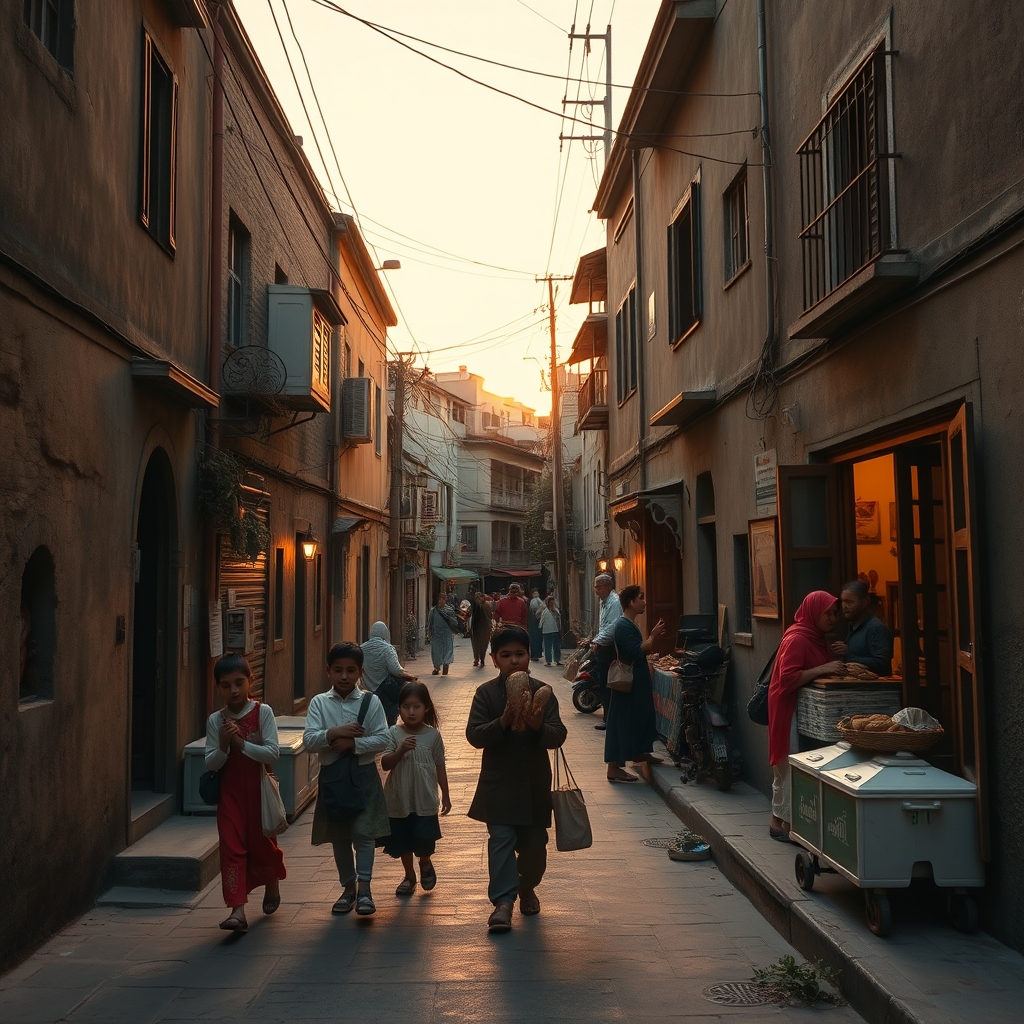
🇬🇧 The Neighborhood Heart Warming Toward the Hour of Iftar
🇹🇷 İftar Saatine Doğru Isınan Mahalle Kalbi
Bir zamanlar tatil günleriyle birleşen Ramazan akşamları, eski mahallelerde bambaşka bir yumuşaklığa sahipti. Gün boyu süren rehavet, öğleden sonra yavaş yavaş yerini hareketli ama telaşsız bir hazırlığa bırakırdı. Güneş eğilmeye başladığında sokaklarda hafif bir toparlanma hissedilir, fırına yetişecek pideler, komşuya ulaştırılacak tabaklar, marketten alınacak son birkaç eksik ve çocukların ellerinde taşıdığı küçük fileler aynı görüntüde buluşurdu. İftar öncesi hareketlenen sokaklar bu yüzden sadece bir hazırlık alanı değil; mahallenin sıcaklığını en açık biçimde gösteren sahneydi. Çünkü o saatlerde herkesin farklı işi olsa da duygusu ortaktı: aynı akşama, aynı ezana, aynı sofraya yaklaşmak.
Mahalle Kültürü bakımından bu saatler, eski komşuluk düzeninin en görünür hâllerinden birini sunardı. Tatil günlerinin rehaveti, insanları eve kapatmak yerine sokağa daha dikkatli ve yavaş çıkarırdı. Bakkal önünde bekleyen iki komşu iftara ne yaptığını sorar, apartman kapılarında tabak taşıyan çocuklar görünür, balkonlardan “ekmek alındı mı” diye seslenilirdi. Eski gazetelerde Ramazan hazırlıkları, fırın yoğunluğu, iftar saatleri ve mahalle hayatının ritmi anlatılırken, en canlı resim çoğu kez bu kısa zaman aralığında belirirdi. Çünkü iftar öncesi sokak, gündelik işlerin toplamı değil; ortak bir duygunun dolaştığı kamusal bir eşik hâline gelirdi. İnsanlar acele ederdi ama birbirini görmeden geçmezdi.
Gündelik hayatın ayrıntıları bu sıcak sahneyi unutulmaz kılar. Fırından yükselen pide kokusu, kasaptan dönen birinin elindeki kâğıt paket, sokak başında bekleyen şerbetçi ya da seyyar satıcı, avludan taşan bulaşık sesi, ocakta pişen yemeğin kokusunu üzerinde taşıyan açık pencere, her biri mahallenin iftara doğru attığı nabzı duyururdu. Çocuklar, ellerine verilen küçük görevleri büyük bir ciddiyetle yerine getirir; kimi yoğurt alır, kimi ekmek taşır, kimi de komşuya sıcak yemek bırakırdı. Büyükler ise hem sofrayı yetiştirme telaşını hem de komşuluk sorumluluğunu aynı anda taşırdı. Bu yüzden sokaklar, sadece geçilen yerler olmaktan çıkar; paylaşımın ve görünür dayanışmanın mekânına dönüşürdü.
Bu hareketliliğin eski mahallelerin en sıcak sahnesi sayılmasının sebebi, onun yalnız fiziksel bir kalabalık değil, duygusal bir yakınlık üretmesidir. Tatil günlerinin gevşek ritmi ile iftar öncesi hazırlığın artan temposu birbirine karışınca, mahallede çok özel bir sıcaklık doğardı. İnsanlar bir yandan yemeği yetiştirmeye çalışır, öte yandan yaşlı komşunun ekmeğini sormayı, yoldan geçen çocuğa seslenmeyi, kapı önünde kısa bir selam vermeyi ihmal etmezdi. Bu kısa zaman dilimi, komşuluğun gösterişsiz ama güçlü bağlarını görünür kılardı. Sofralar evlerin içinde kurulsa da iftara giden yol sokakta başlardı. Mahallenin kalbi, tam da o son saatlerde daha belirgin atardı.
Bugün iftar öncesi hareketlenen sokakları düşündüğümüzde, eski mahallelerin neden daha sıcak hatırlandığını daha iyi anlıyoruz. Çünkü o sıcaklık sadece hava, ışık ya da yemek kokusundan gelmiyordu; ortak hazırlığın doğurduğu yakınlıktan geliyordu. Tatil günlerinin rehavetinde bile insanlar birbirine karşı uyanık, dikkatli ve paylaşmaya hazırdı. Bu yüzden iftar öncesi sokak, eski mahalle kültürünün küçük bir özeti gibi kalır: komşuluğun görünür olduğu, çocukların sorumlulukla büyüdüğü, esnafın ritme dahil olduğu, sofranın daha kurulmadan insanları birbirine yaklaştırdığı bir zaman. En sıcak sahne denmesinin nedeni de budur; çünkü mahalle o saatlerde yalnız yaşanmaz, birlikte hissedilirdi.
🇵🇹 O Coração do Bairro Se Aquecendo Até a Hora do Iftar
Houve um tempo em que as noites de Ramadã coincidentes com dias de feriado tinham uma suavidade muito particular nos bairros antigos. A calmaria que durava o dia inteiro ia cedendo, aos poucos, a uma preparação animada, mas nunca apressada demais. Quando o sol começava a baixar, sentia-se a rua se reorganizando com delicadeza: pães que precisavam chegar a tempo da padaria, pratos levados aos vizinhos, as últimas compras do mercado e pequenas sacolas carregadas pelas crianças apareciam na mesma cena. As ruas que se animavam antes do iftar eram, por isso, mais do que um espaço de preparação; eram o palco em que o acolhimento do bairro se mostrava com mais clareza. Cada um tinha uma tarefa diferente, mas o sentimento era comum: caminhar para a mesma noite, o mesmo chamado, a mesma mesa.
Do ponto de vista da cultura de bairro, essas horas ofereciam uma das formas mais visíveis da antiga convivência comunitária. A calmaria dos dias de feriado não trancava as pessoas dentro de casa; ao contrário, fazia com que saíssem para a rua de maneira mais lenta e atenta. Dois vizinhos esperando diante da mercearia perguntavam um ao outro o que haviam preparado para o iftar, crianças carregando pratos apareciam nas entradas dos prédios, e vozes vinham das varandas perguntando se o pão já tinha sido comprado. Os jornais antigos que descreviam a rotina do Ramadã, o movimento das padarias e o ritmo do bairro encontravam muitas vezes sua imagem mais viva justamente nesse curto intervalo. A rua antes do iftar se tornava mais do que a soma dos afazeres. Virava um limiar público por onde circulava um sentimento compartilhado. As pessoas tinham pressa, mas não passavam umas pelas outras sem se notar.
Os detalhes da vida cotidiana tornam essa cena acolhedora inesquecível. O cheiro do pão saindo da padaria, o pacote de papel na mão de quem voltava do açougue, o vendedor de sherbet ou ambulante na esquina, o som de louça vindo do pátio e a janela aberta carregando o aroma da comida no fogão revelavam o pulso com que o bairro avançava em direção ao iftar. As crianças cumpriam com muita seriedade as pequenas tarefas recebidas. Uma buscava iogurte, outra levava pão, outra entregava um prato quente à vizinha. Os adultos, por sua vez, carregavam ao mesmo tempo a urgência de terminar a refeição e a responsabilidade de manter a atenção com a vizinhança. Por isso, as ruas deixavam de ser apenas espaços de passagem e se transformavam em lugares de solidariedade visível e partilha.
O que faz desse movimento a cena mais acolhedora dos bairros antigos é o fato de ele produzir não só atividade física, mas também proximidade emocional. Quando o ritmo solto do dia de feriado se misturava ao aumento do preparo antes do iftar, surgia um calor muito especial. As pessoas procuravam concluir a refeição, mas não deixavam de perguntar pelo pão do vizinho idoso, chamar uma criança que passava ou trocar uma breve saudação na porta. Esse curto trecho de tempo tornava visíveis os laços discretos, porém fortes, da vida de bairro. As mesas eram arrumadas dentro de casa, mas o caminho até o iftar começava do lado de fora, na rua. O coração do bairro batia com mais clareza justamente nessas últimas horas.
Quando pensamos hoje nas ruas que se animavam antes do iftar, entendemos melhor por que os bairros antigos são lembrados como mais acolhedores. Esse calor não vinha apenas do clima, da luz ou do cheiro da comida. Vinha da proximidade produzida pela preparação compartilhada. Mesmo na calmaria dos dias de feriado, as pessoas continuavam atentas umas às outras, cuidadosas e prontas para dividir. Por isso, a rua antes do iftar permanece como um pequeno resumo da antiga cultura de bairro: um tempo em que a vizinhança era visível, as crianças cresciam com responsabilidade, os comerciantes participavam do compasso, e a mesa aproximava as pessoas antes mesmo de estar posta. É por isso que ela merece ser chamada de cena mais acolhedora. Naquelas horas, o bairro não era apenas vivido; era sentido em conjunto.