 Eski Pano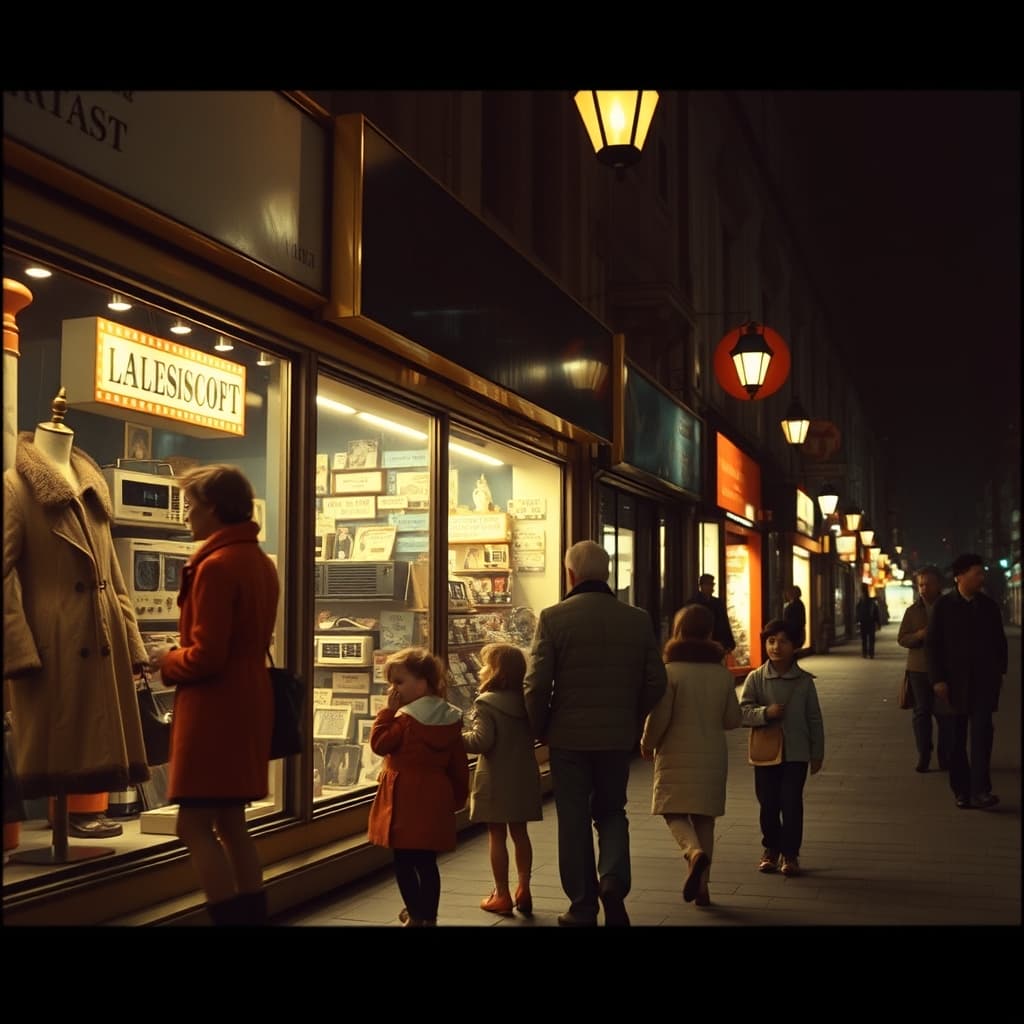
Window-shopping once gave an evening walk a destination without requiring a purchase. Families and friends moved from one illuminated pane to the next, comparing clothes, radios, furniture, toys, books, and kitchenware. A shop window offered colour after dusk and a preview of possible futures. The entertainment took place on the pavement, where commercial design became part of public street life.
Shopping streets differed by town, decade, climate, trade, opening rules, and household income. Department stores, specialist shops, arcades, bazaars, and small neighbourhood businesses used different display techniques. A photograph of a decorated window may mark a holiday, sale, school term, fashion season, or official campaign. Dated advertisements, shop ledgers, permits, catalogues, and oral testimony help identify the occasion.
A Display Was Carefully Composed
Owners and display workers selected a focal object, arranged height and colour, hid supports, cleaned glass, positioned price cards, and controlled reflections. Fabric, paper, painted backdrops, mannequins, stands, electric lights, and moving mechanisms could turn stock into a scene. The display had to look abundant while remaining secure and protecting goods from sunlight, dust, heat, and theft.
Seasonal change kept the street worth revisiting. Coats and school supplies announced cooler mornings; holiday sweets, tableware, and gifts signalled family preparations. New stock created conversation even among people who could not afford it. The shop window was therefore both information and aspiration, offering knowledge of materials, styles, prices, and social expectations.
Looking Was Free, but Desire Had a Cost
A walk past windows allowed participation without entry, yet the displays also defined what counted as modern, respectable, festive, or successful. Children compared toys, couples imagined furnishings, and workers calculated wages against price tags. Credit, instalments, layaway, and familiar shopkeepers sometimes made purchases possible, while also creating debt and pressure.
Not everyone experienced the same welcome. Clothing, class, ethnicity, age, disability, gender expectations, and shop policy influenced who felt comfortable entering. Security staff and sales practices could treat some viewers with suspicion. A nostalgic image of polite pavement crowds should not hide exclusion or the embarrassment of wanting goods beyond a household budget.
The Pavement Was Part of the Exhibition
Street lighting, clean glass, weather protection, and safe pavements determined whether people could see and linger. Crowds around a popular window could block doorways, kerbs, and public transport stops. Accessible routes, seating, controlled glare, readable prices, and uncluttered entrances make retail streets more welcoming. Decorative electrical installations require proper wiring and fire precautions.
Photography of windows has its own limits. Glass reflects the photographer, traffic, opposite buildings, and passers-by, creating useful urban evidence but also privacy concerns. Captions should distinguish what was displayed from what appears only in reflection. Brand names and prices need accurate transcription, while images of identifiable people require appropriate permission and context.
Shopping streets changed through supermarkets, malls, online retail, pedestrianisation, chain stores, rising rents, and redevelopment. Some windows became larger and more standardised; others disappeared behind shutters or digital screens. Online browsing offers vast choice but lacks the shared pace of neighbours stopping before the same object. Neither system is automatically more democratic or less commercial.
A Digital Nostalgia Archive can connect display photographs with shop catalogues, receipts, price cards, lighting plans, trade directories, fashion records, street maps, and voices from owners, workers, and viewers. Window-shopping became entertainment because craft, desire, light, and walking met at a transparent boundary. Preserving it means admiring the display while recording labour, affordability, exclusion, accessibility, electrical safety, and the changing economy behind the glass.