 Eski Pano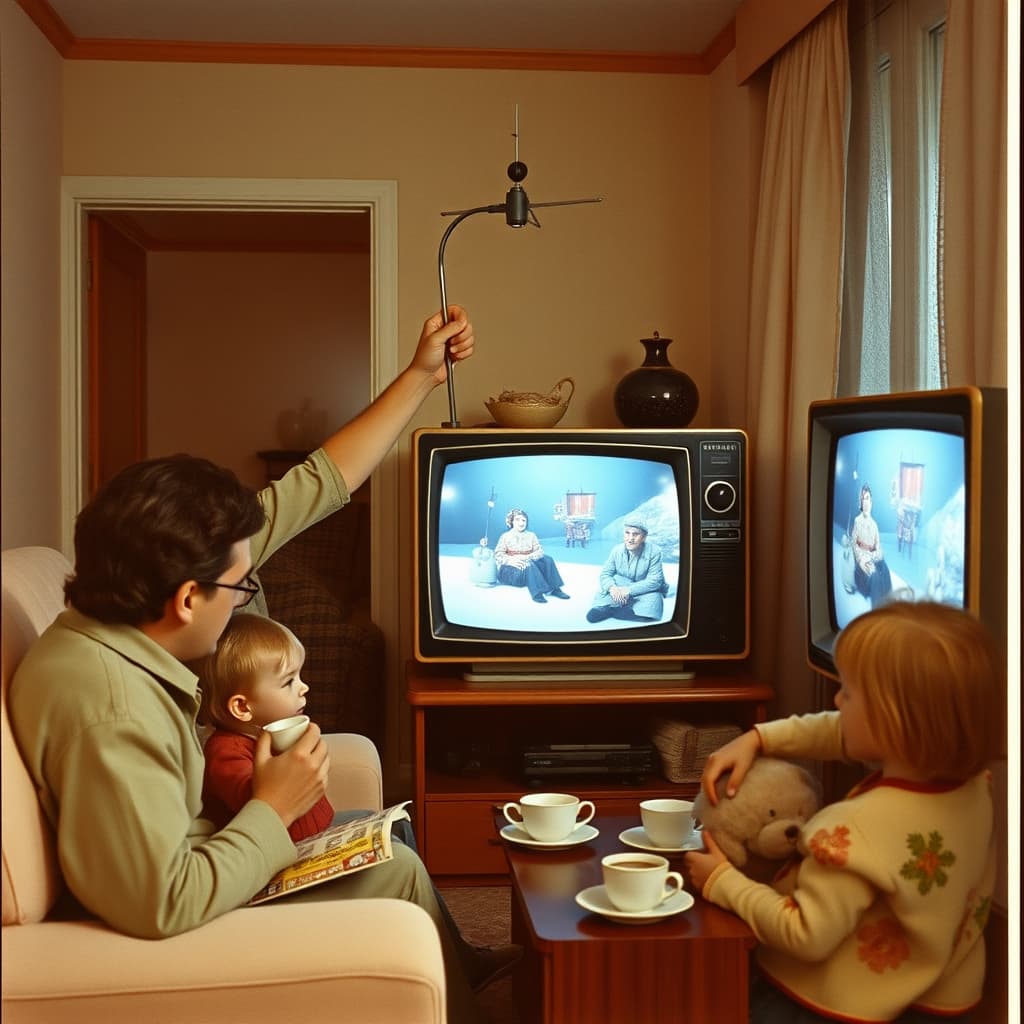
Before a much-anticipated holiday programme, the television picture could become a family project. One person watched the screen, another turned an indoor aerial or called instructions toward a balcony, and voices reported whether the snow, rolling, or ghost image had improved. When the picture finally steadied, the technical success felt woven into the celebration that followed.
Analogue reception varied with television standard, frequency band, transmitter, distance, terrain, buildings, weather, aerial type, cable, and receiver condition. Rooftop Yagi aerials, communal systems, telescopic rods, loops, and indoor designs behaved differently. Aerial direction did not simply point toward hope; it aligned equipment with a real transmitter and signal environment that should be identified through maps and technical records.
The Screen Displayed Several Kinds of Fault
Snow could indicate weak signal or receiver noise. A duplicate ghost image often came from reflected signals arriving by different paths. Horizontal or vertical instability might involve synchronisation, interference, tuning, or an internal fault. Sound without a stable picture had other possibilities. Viewers developed useful observations, but a technician needed measurements and model-specific diagnosis.
Fine tuning, channel selectors, aerial position, cable connections, and later amplifiers could improve reception. Excessive amplification might also overload a receiver or magnify interference. Foil, improvised wire, wet cloth, and unsafe connectors were unreliable and could introduce hazards. A better picture should never be pursued by defeating isolation or exposing live electrical parts.
Rooftop Adjustment Was Not a Casual Chore
Roofs, ladders, balconies, and overhead lines create serious fall and electrical risks. Wind, rain, darkness, fragile tiles, metal poles, and unguarded edges increase danger. Aerial installation and repair belong to trained people using safe access, fall protection, correct grounding where applicable, and separation from power infrastructure. No broadcast is worth an improvised rooftop climb.
Communal apartment aerials added negotiation. One change could affect several flats, and splitters, cables, amplifiers, and sockets needed organised maintenance. Residents compared reception, contacted a caretaker or technician, and shared costs. The system created cooperation but also disputes about responsibility, access, and whose picture received priority.
The Broadcast Organised the Room
Holiday entertainment, news, music, ceremonies, films, and children's programmes brought relatives toward one screen. Seating, tea, conversation, and visiting schedules formed around the announced time. Yet family viewing was not automatically equal. Age, gender, hearing, authority, and control of the channel shaped who watched, who served, and who missed part of the programme.
Old televisions carry additional hazards. Cathode-ray-tube sets can retain dangerous voltages after disconnection, contain fragile evacuated glass, and require trained service. Damaged cords, overheating, blocked ventilation, and unstable furniture need immediate attention. Children should not climb near the set, and a heavy television must sit on suitable support.
Preserving broadcasts requires more than photographing a television. Programme guides, station logs, recordings, audience letters, transmitter maps, service notes, and recollections establish context. Home-recorded material may carry copyright and privacy restrictions. A memory of seeing a programme live should be checked because repeats and anniversary compilations can shift dates.
A Digital Nostalgia Archive can connect television sets with aerials, cables, rooftop plans, repair invoices, programme schedules, family photographs, and oral histories from viewers and technicians. Adjusting the aerial became ritual because the household worked together to cross the distance between transmitter and sitting room. Preserving that excitement means keeping technical uncertainty and shared anticipation beside rooftop safety, unequal domestic labour, electrical risk, and verified broadcast history.