 Eski Pano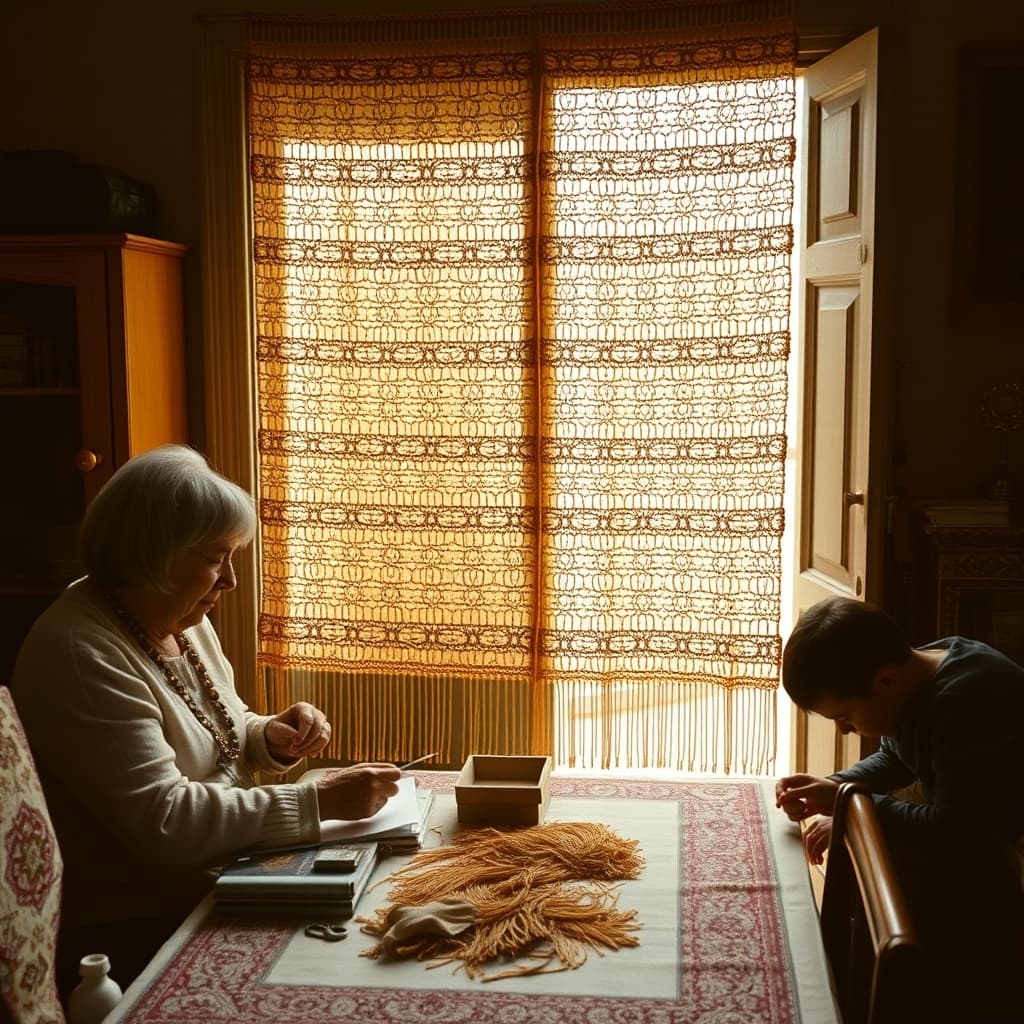
A beaded curtain announces movement before a person enters the room. Strands separate, beads tap together, and a pattern briefly breaks before returning to place. When the curtain passes between generations, its sound and motion can feel as important as its image. The heirloom carries patience because hundreds or thousands of small decisions remain suspended in one doorway.
Beaded curtains vary by region, decade, maker, purpose, and material. Wood, glass, ceramic, shell, seed, metal, early plastics, later plastics, wire, cord, and fishing line can appear alone or together. Some curtains were handmade at home, some assembled in workshops, and others commercially produced. Material identification, tool marks, packaging, photographs, and testimony are necessary before assigning an origin.
Pattern Required Counting and Control
The maker planned strand length, colour sequence, density, spacing, and the way a motif would appear across a moving surface. Beads were sorted, holes checked, and damaged pieces set aside. One counting error could shift a geometric design several rows later. Templates, sample strands, pencilled charts, and remembered counting phrases reveal the intellectual work behind apparently decorative repetition.
Attachment mattered. Strands needed secure knots or fittings and a header capable of supporting combined weight. Too much tension could snap cord; too little created uneven lengths. Door width, floor clearance, humidity, sunlight, and daily traffic affected performance. A successful curtain balanced visual pattern with the practical movement of people and air.
Use Added Repairs to the Design
A strand caught on clothing, a child pulled a bead, sunlight weakened cord, or a doorway shifted. Families tied new knots, replaced missing beads with near matches, shortened strands, or moved the curtain to a quieter room. These changes are evidence of continued care. Restoring every strand to speculative perfection can erase the object's working history.
Inheritance may be remembered through the person who made, repaired, packed, or rehung the curtain. The most visible object does not always reveal who performed the labour. Names, dates, homes, moves, photographs, and repair stories should be recorded with their source and uncertainty. A family claim about age should be respected as testimony and checked against material evidence.
A Doorway Object Has Safety Limits
Loose beads and broken strands can create choking hazards for young children and animals. Heavy or sharp materials can strike faces, catch mobility aids, snag clothing, or obstruct rapid exit. Beaded curtains should never compromise fire doors, accessible routes, kitchen safety, or visibility at stairs. Heritage display may require a fixed panel or barrier rather than active doorway use.
Old plastics can yellow, crack, become sticky, release odours, or be vulnerable to solvents. Metal may corrode; cord and natural materials attract pests or mould. Household polish, soaking, heat, and aggressive brushing may spread damage. Conservation begins with identifying components, isolating unstable material, supporting weight, controlling light and humidity, and seeking specialist advice.
Documentation should capture the whole curtain, header, knots, strand order, repairs, both sides, dimensions, weight, and sound. If dismantling is necessary, each strand needs a numbered map and safe enclosure. Digital reconstruction can show the complete pattern without replacing original beads. Detached pieces should remain linked to the record rather than entering an unlabelled jar.
A Digital Nostalgia Archive can connect the curtain with bead packets, pattern charts, household photographs, doorway measurements, moving lists, repair tools, and oral histories from makers and users. Its craft survives because counting, touch, sound, repair, and inheritance meet in one moving surface. Preserving it means keeping patience visible while respecting material instability, safe passage, accessibility, named labour, and the honest irregularities left by use.