 Eski Pano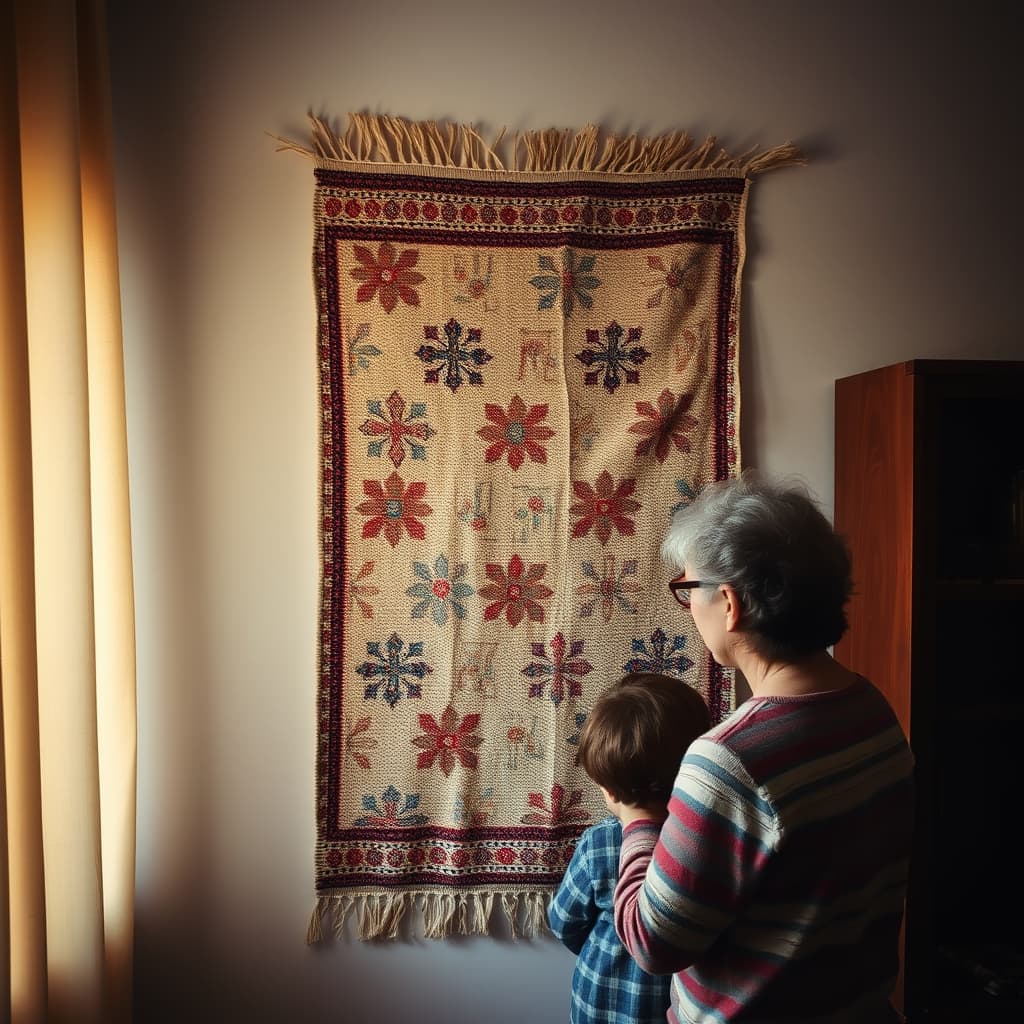
A wall rug changed a room without being walked upon. Hung above a sofa, bed or chest, it introduced colour, texture and a framed field of pattern to a vertical surface. Its position protected it from foot traffic but exposed it to light, dust, smoke and the strain of its own weight. When passed between generations, the textile carried not only an image but decisions about where and how it deserved to be seen.
Wall rugs include many materials and methods. Pile, flat weave, embroidery and machine production can produce very different objects. Motifs may travel widely and be copied, so pattern alone does not prove a region, age or maker. A responsible account examines fibre, structure, edge finishing, dimensions and documented provenance before making a precise attribution.
Hanging Left Evidence Along The Upper Edge
Nails, rings, a sewn sleeve or wooden support distributed weight differently. Poor support could distort the upper edge or concentrate tears at a few points. Rust stains and replacement loops reveal changes in display. The back often preserves information hidden from the room: knots, colour differences, repairs and areas protected from light. Both sides should be photographed before conservation.
Cleaning demanded knowledge of dyes and fibres. Beating or harsh washing could loosen structure, spread colour or remove material. Dust should be managed with appropriate methods rather than treating every old textile like a modern washable rug. Sunlight that made colours glow in a room could also fade them unevenly over years. Moving or shading the piece became part of care.
Repair Shows Continuity, Not Perfection
A rewoven area, reinforced edge or differently coloured thread may document an attempt to keep the rug displayable. The repair deserves recording rather than concealment. It can show available materials and the value placed on the object. It cannot, without evidence, identify which relative performed the work. Honest uncertainty protects the textile from a story invented to make it more attractive.
Inheritance changes context. A rug sized for one wall may be folded in another home or displayed behind glass. Family testimony about who owned it, where it hung and when it moved should be recorded with names and dates when known. The testimony remains distinct from conclusions drawn from material analysis. Together, the two forms of evidence create a stronger archive.
The wall rug belongs in a Digital Nostalgia Archive because it makes patience visible at room scale. Repeated units, controlled tension and repaired edges preserve craft, while fading and hanging marks preserve domestic use. Seen today through a display case, it should not be reduced to decoration or a mysterious ancestral token. Its cultural force lies in the meeting of skilled construction, long exposure and successive acts of care that allowed a textile to remain part of family space.
Transport posed another risk. Rolling around a wide support usually protected structure better than sharp folding, but the correct method depended on construction and condition. A label attached to wrapping rather than textile could preserve identification without piercing the fibres.