Eski Pano
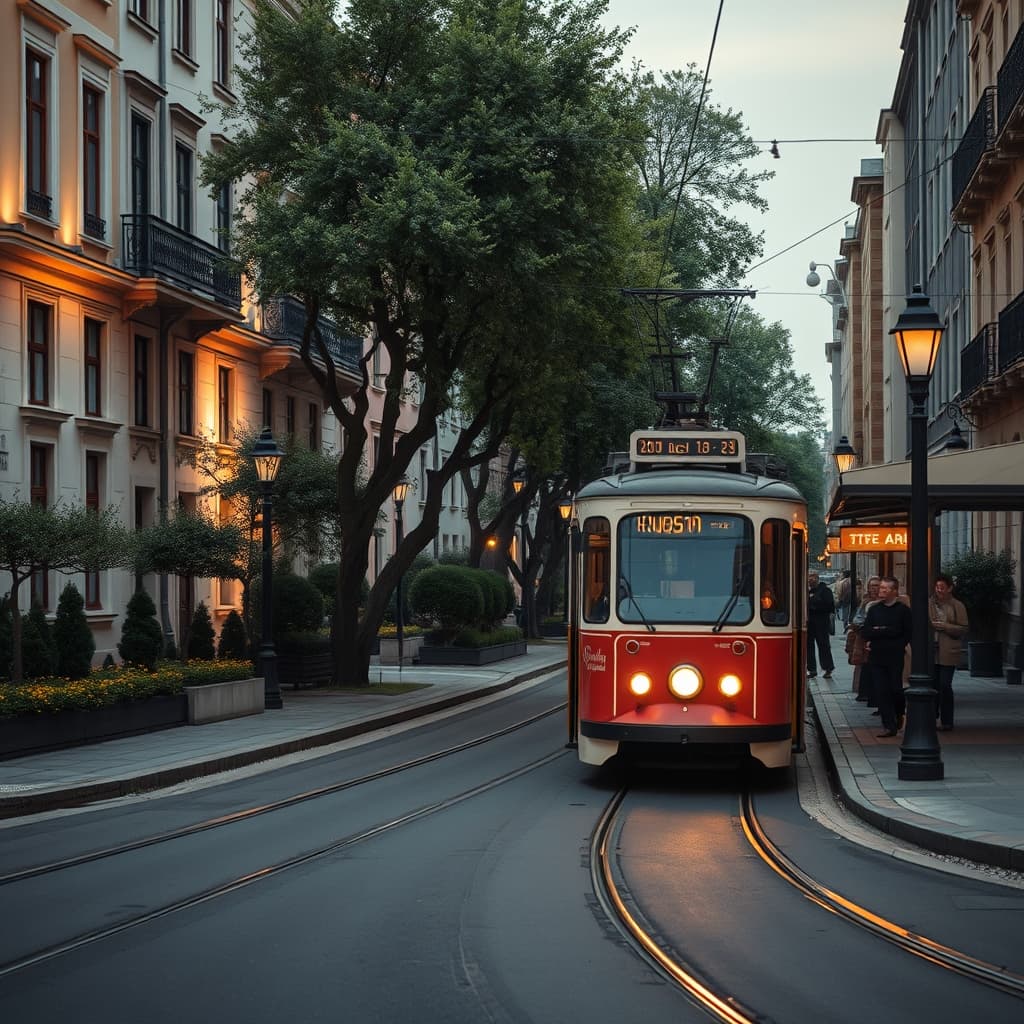
There was a time when the city’s morning began not only with the rise of the sun, but with the rhythm trams left upon the rails. Before shop shutters were fully open, while the night’s coolness still clung to the stones of the street, a thin bell heard from afar checked the whole neighborhood like an invisible clock. When a tram passed, windows trembled lightly, the leaves of roadside trees stirred for a moment, and the scent of linden rising behind garden walls mixed with the metallic smell of the tracks. This scene, which never fell from the neighborhood calendar, was not merely the arrival of a vehicle. It was the pulse of urban life being established again each day.
Seen in the trail of time, the tram holds a place in the city’s memory far greater than that of a mechanical means of transport. Appearing again and again in old newspaper city columns, postcards, municipal posters, and the backgrounds of family albums, it was one of the most graceful daily touches of modernity. While the rails connected districts, they also allowed different lives to brush against one another. The clerk going to work in the morning, the student placing a schoolbag on their knees and looking out the window, the woman headed to the market with a mesh bag by her feet, all entered the same rhythm. In that way the tram became a quiet mechanism that arranged not only the roads of the city, but its sense of time.
Part of the reason those years are still remembered like an ache lies in the details. The smell of vanilla rising from the pastry shop near the stop, the clink of spoons from the coffeehouse by the rails, children in school uniforms running to catch the car at the last moment, passengers hurrying for the window seat, the conductor’s full and familiar voice, all belonged to the same scene. On one side the city was accelerating, new apartment buildings were rising, shop windows were changing; on the other, laundry drying in gardens and geraniums watered in the late afternoon kept the old order warm. On the streets where the tram passed, modernity and neighborhood memory could stand side by side without pushing each other away.
The gardens turning to the scent of linden are not remembered here by accident. Along the tram lines, those tree-lined roads made the city feel like something more than stone and iron. People walked to the stop beneath shaded pavements, older residents sat on benches watching who came and went, and children were warned carefully as they passed near the rails. The city’s tempo was not harsh but measured; there was haste, yet not the sharp strain of today. The sound of the tram was like a shared background music for lives scattered through the neighborhood. That may be why, when those years are remembered, what first comes to mind is not a vehicle but an atmosphere: garden gates, cool apartment entrances, polished shoes, ironed shirts, and a red-and-cream carriage moving quietly through them all.
Looking back now, what is missed is not only a nostalgic form of transportation. What is truly missed is the measured urban life shaped around the tram. Every stop was a small place of encounter; every trip, a little ceremony that gave form to the day. People boarded shoulder to shoulder, watched the stories of the same district through the same windows, and shared the first and last light of the day on the same rails. That is why the years when trams set the city’s tempo are still remembered with a sting. The memory carries not only the past itself, but also a slower, more fragrant, more human way of living together. The gardens turning to the scent of linden and the sound of the rails still meet in the same place: the most delicate corner of urban memory.
The Years When Trams Set the Tempo of the City as a Scene That Never Fell from the Neighborhood Calendar: Why Are Gardens Turning to the Scent of Linden Still Remembered Like an Ache Today?