🇹🇷 Türkçe | Tamirciler Sokağında Kurulan Güven Duygusu
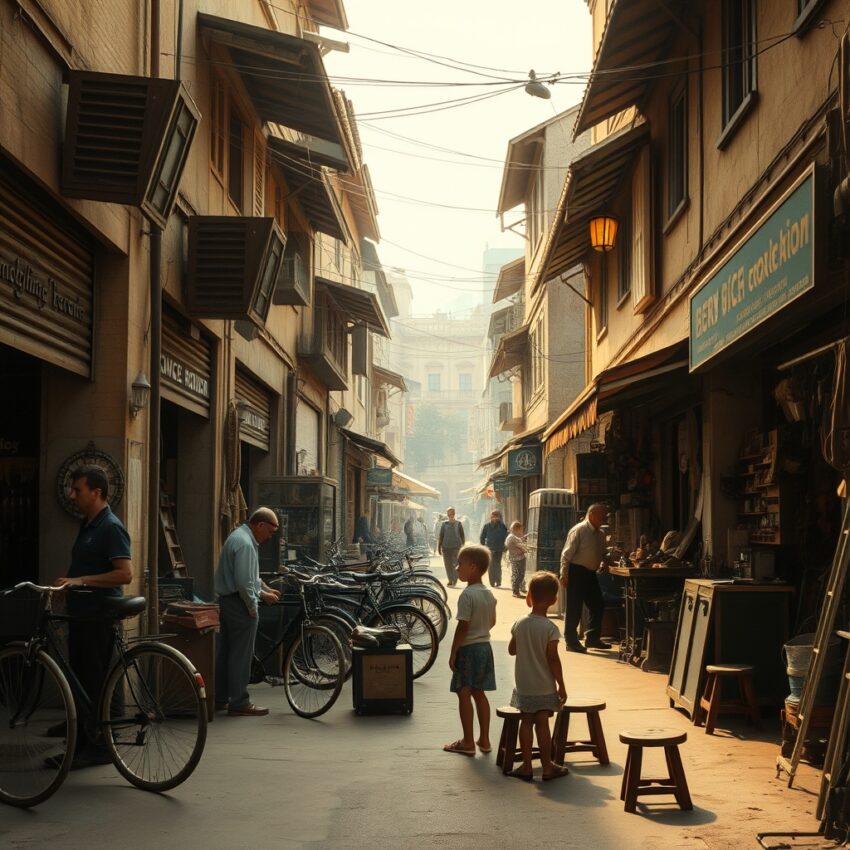
Bir zamanlar her mahallenin hafızasında, adı söylenince iç rahatlatan bir sokak olurdu. Kimi yerde terziler çarşısı, kimi yerde bakırcılar geçidi, kimi yerdeyse herkesin basitçe tamirciler sokağı dediği o uzun ve çalışkan hat. Tatil günlerinin rehaveti mahalleye yayıldığında bile bu sokak bütünüyle sessiz kalmazdı. Kepenkler yarıya kadar açık olur, içeriden anahtar sesleri, tornavida tıkırtıları, yağ kokusu ve radyodan sızan hafif müzik duyulurdu. Çocuklar bisikletinin gevşeyen vidasını göstermek için uğrar, babalar saat kayışını değiştirtir, anneler bozulan mutfak aletinin onarılıp onarılamayacağını sorardı. Orada her dükkân bir hizmet noktası olmaktan öte, mahallenin arızaya karşı geliştirdiği ortak savunma hattı gibiydi. Bir şey bozulduğunda hemen çöpe atılmayacağını bilmek, insanlar için yalnız ekonomik değil duygusal bir rahatlıktı.
Mahalle Kültürü içinde tamirciler sokağı, güven duygusunun somutlaştığı kamusal alanlardan biridir. Çünkü bu sokakta yalnız eşya değil, ilişki de onarılırdı. Usta müşterisini tanır, çocuğun adını bilir, geçen hafta getirilen ütünün durumunu hatırlar, bazen tamir süresince çay ikram ederdi. Tatil günü bile dükkânda bir hareket olması, mahallenin tamamen dağılmadığını hissettirirdi. İnsanlar evde otururken bile birkaç sokak ötede çalışan ellerin varlığını bilirdi. Bu bilgi, görünmez ama kuvvetli bir toplumsal emniyet yaratırdı. Her şeyin kırılgan olduğu bir dünyada tamir mümkünse hayat da toparlanabilir gibi gelirdi. Belki bu yüzden bir neslin güven duygusu, polis karakolundan ya da resmi kurumlardan önce mahallenin bu küçük ustalık adalarında büyüdü.
Tamirciler sokağının hafızada böylesine canlı kalmasının bir nedeni de, oranın tatil günlerinde bile üretken bir gevşeklik taşımasıdır. Resmî ciddiyet azalır, ama emek kaybolmazdı. Esnaf kapının önüne tabure atar, komşu dükkândan biriyle laflarken eli yine penseye, zımparaya ya da dikiş makinesine giderdi. Çocuk için burası bir keşif alanıydı: açılmış saat kapakları, raflarda dizili ampuller, kablo yığınları, bisiklet zilleri, dikiş makinesi kayışları, metal parçalar ve usta ellerin sürati. Büyükler içinse sorunların çözülebilir kaldığı bir yerdi. Eve alınan her eşyanın kaderi tek kullanımlık değildi; ustaya götürülür, bakılır, konuşulur, bazen beklenir ama sonunda tekrar hayata dönerdi. Bu kültür, tüketimden çok bakım ve süreklilik düşüncesine dayanıyordu.
Bugün tamirciler sokağını düşününce özlenen şey yalnız dükkânların görüntüsü değildir. Asıl özlenen, bozulmanın son değil geçici bir durum olduğuna dair yaygın inançtır. Bir neslin güven duygusunu besleyen de buydu: çevresinde çözüm üretebilen insanlar vardı. Tatil günlerinin yavaşlığında bile çalışan o kalabalık, mahalleye şunu fısıldardı: hayat aksasa da tamamen dağılmaz. Bir vida sıkılır, bir kablo yenilenir, bir kilit düzeltilir, bir ayakkabı dikilir. Bu küçük müdahaleler yalnız eşyalara değil, gündelik hayata da dayanıklılık kazandırırdı. Tamirciler sokağı bu yüzden bir ekonomik alışkanlıktan daha fazlasıydı; güvenin, ustalığın ve birlikte yaşama kültürünün somut bir haritasıydı. O sokaklarda büyüyenler, dünyanın her zaman onarılabilir kalabileceğine bir süre daha inanabildi.
🇬🇧 English | The Sense of Security Built on the Repairmen’s Street
There was once, in the memory of every neighborhood, a street whose very name brought relief. In some places it was the tailors’ market, in others the coppersmiths’ row, and elsewhere the long industrious line that everyone simply called the repairmen’s street. Even when the languor of holidays spread through the district, that street never fell entirely silent. Shutters stood half-open, and from within came the sounds of keys, screwdrivers, the smell of oil, and light music leaking from a radio. Children stopped by to show a loose screw on a bicycle, fathers asked for a watch strap to be replaced, and mothers wanted to know whether a broken kitchen appliance could still be saved. Each shop there was more than a point of service; it was like a common defense line the neighborhood had built against breakdown itself. Knowing that a broken thing would not be thrown away at once gave people not only economic relief, but emotional comfort as well.
Within neighborhood culture, the repairmen’s street is one of the clearest public spaces in which a sense of security became tangible. For on that street, not only objects but relationships were repaired. A master knew his customers, remembered a child’s name, recalled the iron brought in the week before, and sometimes offered tea while a repair was underway. The simple fact that there was movement in the shops even on a holiday made people feel that the neighborhood had not dissolved. Sitting at home, they knew that a few streets away there were still working hands. That knowledge created an invisible yet powerful social assurance. In a world where everything could feel fragile, the possibility of repair made life itself seem capable of being gathered back together. Perhaps that is why a generation’s sense of safety grew first in these small islands of craftsmanship before it ever grew in official institutions.
Another reason the repairmen’s street remains so vivid in memory is the productive looseness it carried on holidays. Formal seriousness faded, yet labor did not disappear. A tradesman would set a stool outside, chat with the neighbor from the next shop, and still keep one hand on pliers, sandpaper, or the sewing machine. For a child, it was a field of discovery: open watch backs, light bulbs lined on shelves, coils of cable, bicycle bells, sewing-machine belts, metal parts, and the quickness of skilled hands. For adults, it was a place where problems remained solvable. Everything brought into the home did not belong to the fate of single use; it could be taken to a craftsman, examined, discussed, perhaps waited on, and finally returned to life. This culture depended less on consumption than on care and continuity.
What we miss when we think of the repairmen’s street today is not merely the appearance of the shops. What is really missed is the widely shared belief that breakdown was not an ending, but a temporary state. That was what nourished a generation’s sense of security: there were people nearby who could produce solutions. Even in the slow mood of a holiday, that busy crowd whispered the same thing to the neighborhood: life may falter, but it does not wholly fall apart. A screw can be tightened, a cable renewed, a lock adjusted, a shoe stitched. These small interventions gave resilience not only to objects, but to daily life itself. That is why the repairmen’s street was more than an economic habit; it was a concrete map of trust, craftsmanship, and the culture of living together. Those who grew up in such streets could believe, for a while longer, that the world might always remain repairable.
🇧🇷 Português (Brasil) | O Sentimento de Segurança Construído na Rua dos Consertos
Houve um tempo em que toda lembrança de bairro guardava uma rua cujo nome já trazia alívio. Em alguns lugares era a rua dos alfaiates, em outros a dos caldeireiros, e em muitos a longa faixa trabalhadora que todos chamavam simplesmente de rua dos consertos. Mesmo quando a preguiça dos feriados se espalhava pelo bairro, essa rua nunca ficava completamente silenciosa. As portas permaneciam meio abertas, e de dentro vinham o som das chaves, o toque das chaves de fenda, o cheiro de óleo e uma música leve escapando do rádio. Crianças apareciam para mostrar o parafuso frouxo da bicicleta, pais pediam a troca da pulseira do relógio, mães perguntavam se um utensílio de cozinha ainda podia ser consertado. Cada oficina ali era mais do que um ponto de serviço; parecia uma linha comum de defesa que o bairro criara contra a própria ideia de quebra. Saber que algo quebrado não seria jogado fora imediatamente oferecia às pessoas não só alívio econômico, mas também conforto emocional.
Dentro da cultura de bairro, a rua dos consertos é um dos espaços públicos onde o sentimento de segurança se tornou mais concreto. Porque ali não se consertavam apenas objetos, mas também relações. O mestre conhecia os fregueses, sabia o nome da criança, lembrava do ferro deixado na semana anterior e às vezes oferecia chá enquanto o trabalho seguia. O simples fato de haver movimento nas lojas até em dia de feriado fazia as pessoas sentirem que o bairro não tinha se desfeito. Mesmo em casa, elas sabiam que a poucas ruas dali havia mãos trabalhando. Esse conhecimento criava uma segurança social invisível, mas muito forte. Num mundo em que tudo podia parecer frágil, a possibilidade de conserto fazia a própria vida parecer passível de recomposição. Talvez por isso o sentimento de segurança de uma geração tenha crescido primeiro nessas pequenas ilhas de habilidade, antes mesmo das instituições oficiais.
Outra razão para a rua dos consertos permanecer tão viva na memória é a soltura produtiva que ela carregava nos feriados. A formalidade diminuía, mas o trabalho não desaparecia. O comerciante puxava um banco para a porta, conversava com o vizinho da loja ao lado e ainda assim mantinha a mão no alicate, na lixa ou na máquina de costura. Para a criança, aquilo era um território de descoberta: fundos de relógio abertos, lâmpadas alinhadas nas prateleiras, rolos de cabo, campainhas de bicicleta, correias de máquina de costura, peças metálicas e a rapidez das mãos experientes. Para os adultos, era um lugar onde os problemas continuavam solucionáveis. Tudo o que entrava em casa não estava condenado ao uso único; podia ser levado ao mestre, examinado, discutido, às vezes aguardado, e depois voltava à vida. Essa cultura se apoiava menos no consumo e mais no cuidado e na continuidade.
O que sentimos falta ao lembrar da rua dos consertos não é apenas da aparência das oficinas. O que realmente faz falta é a crença compartilhada de que quebrar não era o fim, mas um estado passageiro. Era isso que alimentava o sentimento de segurança de uma geração: havia por perto pessoas capazes de encontrar soluções. Mesmo na lentidão dos feriados, aquela multidão trabalhadora sussurrava ao bairro a mesma mensagem: a vida pode falhar, mas não se desfaz por completo. Um parafuso pode ser apertado, um cabo renovado, uma fechadura ajustada, um sapato costurado. Essas pequenas intervenções davam resistência não só aos objetos, mas ao próprio cotidiano. Por isso, a rua dos consertos era mais do que um hábito econômico; era um mapa concreto de confiança, habilidade e convivência. Quem cresceu em ruas assim pôde acreditar, por mais algum tempo, que o mundo sempre poderia ser reparado.