🇹🇷 Türkçe | Sessiz İhtişamın Saklandığı Albümler ve Raflar
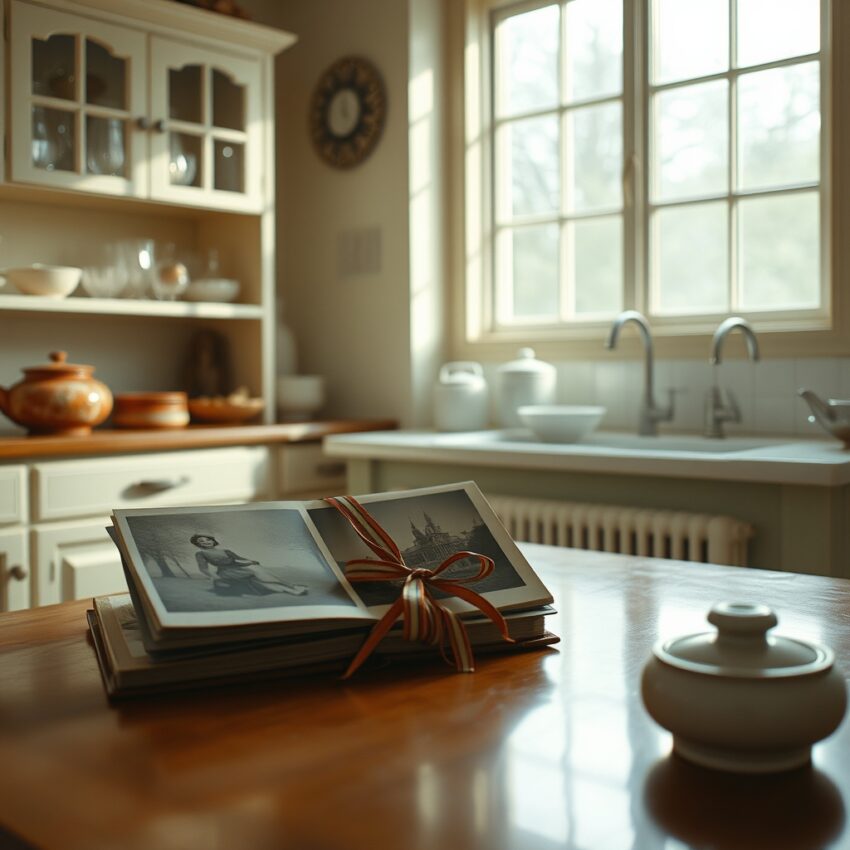
Bazı nesneler vardır; ilk bakışta gösterişli görünmezler, ama bir eve yıllarca eşlik ettikleri için yavaşça ihtişam kazanırlar. Kurdeleli fotoğraf albümü de, mutfak raflarında özenle saklanan bardak takımı da böyledir. Biri aile hafızasını sayfalar arasında tutar, diğeri gündelik emeğin estetiğini cam, porselen ve düzen duygusuyla görünür kılar. Eski evlerde bu tür nesneler, yüksek sesle değil sessizce konuşurdu. Albümün kapağı açılırken çıkan hafif hışırtı, sayfalar arasına yerleştirilmiş siyah beyaz fotoğrafların kenarındaki tırtıklı kesim, kurdelenin yıllar içinde matlaşan dokusu; hepsi sabırla kurulmuş bir dünyayı anlatırdı. Mutfak raflarında ise bardakların, tabakların, emaye kapların belli bir sırayla dizilişi yalnız düzen değil, el emeğine duyulan saygıydı. Sessiz ihtişam dediysek, kastımız tam da budur: gösterişsiz ama özenli bir güzellik.
Obje Hikayeleri içinde bu nesneler, geçmiş kuşakların estetik anlayışını ve kullanım kültürünü birlikte taşır. Fotoğraf albümü yalnız anı biriktirme aracı değildi; hangi fotoğrafın seçileceği, nasıl yerleştirileceği, altına not düşülüp düşülmeyeceği bile başlı başına bir ustalık işiydi. Aynı biçimde mutfak rafları da yalnız depolama alanı sayılmazdı. Rafın yüksekliği, örtünün temizliği, fincan kulplarının aynı yöne bakması, misafirlik takımıyla günlük takımın ayrı tutulması, ev içi terbiyenin görünür bir parçasıydı. Bu düzen bugünün hızlı tüketim kültüründen farklı olarak eşyayla uzun süreli bir ilişki kurardı. Bir nesne alındığında hemen eskimesi beklenmez, yıllarca kullanılacak, korunacak, gerektiğinde tamir edilecek bir yol arkadaşı sayılırdı. Ustalık da biraz burada saklıydı: yalnız üretimde değil, kullanma biçiminde.
Kurdeleli albümlerin ve raflarda saklı eşyaların hafızamızda bu kadar güçlü yer etmesinin sebebi, onların aile içi zamanın ritmine eşlik etmesidir. Bayramdan önce albümün çıkarılması, yeni çekilen fotoğrafların eski sayfalar arasına dikkatle yerleştirilmesi, çocukların parmak izleri kalmasın diye uyarılması; bunların hepsi ortak bir törendi. Mutfakta da benzer bir dikkat vardı. Rafların tozu kuru bezle alınır, en güzel bardaklar misafir gelince indirilir, günlük kullanım kapları bile kırılmasın diye birbirine saygılı biçimde yerleştirilirdi. Bu nesneler yalnız saklanmaz, aynı zamanda davranış öğretirdi. Yavaş olmayı, dikkat etmeyi, emeğe kıymet vermeyi ve hafızayı maddi şeyler içinde korumayı öğretirdi. Bugün dijital albümlerin ve kapalı dolapların çağında bu eski düzeni düşündüğümüzde, eksikliğini hissettiğimiz şey biraz da nesneyle kurulan bu etik yakınlıktır.
Belki de bu yüzden kurdeleli fotoğraf albümü ile mutfak raflarının sessiz ihtişamı hâlâ bize bir şey söyler. Onlar geçmişin yalnız görüntüsünü değil, çalışma ahlakını ve sabrını da taşır. Bir albümün kapağında, elle dizilmiş fotoğraflarda, raf örtüsünün ütülü çizgisinde ve camların parlatılmış yüzeyinde görünmeyen bir emek birikir. Bu emek gösteriş için değil, hayatı güzelleştirmek için harcanır. Eski evlerde güzellik çoğu zaman böyle kurulurdu: bağırmadan, sergilenmeden, gündelik düzenin içine sinerek. O yüzden bu nesnelere bakınca yalnız eski eşya görmeyiz; bir kuşağın incelikli dünya kurma çabasını da hissederiz. Sessiz ihtişamın bugün hâlâ etkileyici olmasının nedeni, sabrın ve ustalığın zamana rağmen görünür kalabilmesidir.
🇬🇧 English | Albums and Shelves Where Silent Splendor Was Kept
There are certain objects that do not seem grand at first glance, yet slowly acquire splendor because they accompany a household for many years. A ribboned photo album is one of them, and so is a carefully arranged set of glasses kept on kitchen shelves. One preserves family memory between pages; the other makes the aesthetics of daily labor visible through glass, porcelain, and order. In old homes, such objects did not speak loudly, but quietly. The faint rustle made when opening an album, the serrated edges of black-and-white photographs placed between its pages, the texture of a ribbon made dull by time, all spoke of a world built with patience. On kitchen shelves, the alignment of glasses, plates, and enamelware according to a certain order expressed not merely neatness, but respect for handiwork. That is precisely what is meant by silent splendor: a beauty that is careful rather than ostentatious.
Within the stories of objects, these things carry both the aesthetic sense and the culture of use belonging to earlier generations. A photo album was not merely a tool for storing memories; deciding which photograph deserved a place, how it should be positioned, and whether a note should be written beneath it was itself a matter of craft. In the same way, kitchen shelves were never seen as simple storage. The height of a shelf, the cleanliness of the cloth laid upon it, the way cup handles faced the same direction, and the separation between everyday sets and guest sets all formed a visible part of domestic discipline. This order fostered a long-term relationship with objects, unlike today’s culture of rapid consumption. When something was bought, it was not expected to age quickly, but to be used for years, preserved, and repaired when necessary. Craftsmanship lived not only in production, but in the manner of use.
The reason ribboned albums and shelf-kept objects remain so powerful in memory is that they accompanied the rhythm of family time. Before a holiday, the album would be taken down, new photographs carefully placed among older pages, and children warned not to leave fingerprints. All of that formed a shared ritual. The kitchen knew a similar attentiveness. Dust was wiped from the shelves with a dry cloth, the finest glasses were brought down when guests arrived, and even ordinary cups were arranged so they would not strike and chip against one another. These objects were not only stored; they taught behavior. They taught people to move slowly, to be attentive, to value labor, and to preserve memory within material things. Now, in an age of digital albums and closed cabinets, what we feel missing is partly this ethical closeness between people and their objects.
That may be why the silent splendor of the ribboned photo album and the kitchen shelf still has something to say to us. They carry not only the image of the past, but also its work ethic and patience. Invisible effort gathers in an album cover, in photographs arranged by hand, in the ironed line of a shelf cloth, and in the polished surface of glass. That effort is spent not for display, but for the beautification of life. In old houses, beauty was often built in exactly this way: without shouting, without exhibition, absorbed into daily order. That is why, when we look at such objects, we do not see merely old belongings; we feel a generation’s refined effort to build a world. Silent splendor still moves us today because craftsmanship and patience can remain visible despite the passing of time.
🇧🇷 Português (Brasil) | Álbuns e Prateleiras Onde se Guardava um Esplendor Silencioso
Existem objetos que, à primeira vista, não parecem grandiosos, mas aos poucos ganham esplendor porque acompanham uma casa por muitos anos. O álbum de fotos com fita é um deles, assim como o conjunto de copos guardado com cuidado nas prateleiras da cozinha. Um conserva a memória da família entre páginas; o outro torna visível a estética do trabalho cotidiano por meio do vidro, da porcelana e da ordem. Nas casas antigas, objetos assim não falavam alto, mas em silêncio. O leve ruído ao abrir o álbum, as bordas serrilhadas das fotografias em preto e branco, a textura da fita já opaca com o passar do tempo, tudo isso narrava um mundo construído com paciência. Nas prateleiras da cozinha, o alinhamento dos copos, pratos e peças esmaltadas segundo uma certa ordem não era apenas organização, mas respeito pelo trabalho manual. É justamente isso que se pode chamar de esplendor silencioso: uma beleza sem ostentação, mas cheia de cuidado.
Dentro das histórias dos objetos, essas peças carregam ao mesmo tempo o senso estético e a cultura de uso de gerações passadas. Um álbum de fotos não servia apenas para guardar lembranças; escolher quais imagens entrariam, decidir como seriam colocadas e se receberiam ou não uma anotação era por si só um gesto de habilidade. Da mesma forma, as prateleiras da cozinha jamais eram vistas apenas como lugar de armazenamento. A altura da prateleira, a limpeza do pano estendido sobre ela, a posição igual das alças das xícaras e a separação entre a louça do dia a dia e a reservada para visitas compunham uma parte visível da disciplina doméstica. Essa ordem criava uma relação duradoura com os objetos, muito diferente da cultura atual de consumo rápido. Quando algo era comprado, não se esperava que envelhecesse logo, mas que servisse por anos, fosse preservado e reparado quando necessário. A habilidade estava não só na fabricação, mas também no modo de usar.
O motivo de os álbuns com fita e os objetos guardados nas prateleiras continuarem tão fortes na memória é que acompanhavam o ritmo do tempo familiar. Antes de uma festa ou feriado, o álbum era retirado, novas fotos eram colocadas cuidadosamente entre as antigas, e as crianças eram advertidas a não deixar marcas de dedo. Tudo isso formava um ritual comum. Na cozinha havia atenção semelhante. O pó das prateleiras era tirado com pano seco, os melhores copos eram descidos quando chegavam visitas, e até as peças de uso diário eram colocadas com cuidado para não lascarem umas nas outras. Esses objetos não eram apenas guardados; ensinavam conduta. Ensinavam a ir devagar, a prestar atenção, a valorizar o trabalho e a preservar a memória dentro das coisas materiais. Hoje, na era dos álbuns digitais e dos armários fechados, o que sentimos falta é também essa proximidade ética entre as pessoas e seus objetos.
Talvez seja por isso que o esplendor silencioso do álbum com fita e das prateleiras da cozinha ainda tenha algo a nos dizer. Eles carregam não só a imagem do passado, mas também sua ética de trabalho e sua paciência. Um esforço invisível se acumula na capa do álbum, nas fotografias arrumadas à mão, na linha bem passada do pano da prateleira e na superfície polida dos copos. Esse esforço não é gasto para exibir riqueza, mas para tornar a vida mais bonita. Nas casas antigas, a beleza era muitas vezes construída assim: sem alarde, sem espetáculo, incorporada à ordem do cotidiano. Por isso, ao olhar para esses objetos, não vemos apenas coisas velhas; sentimos o esforço refinado de uma geração para construir um mundo. O esplendor silencioso ainda impressiona porque a habilidade e a paciência conseguem permanecer visíveis apesar do tempo.